
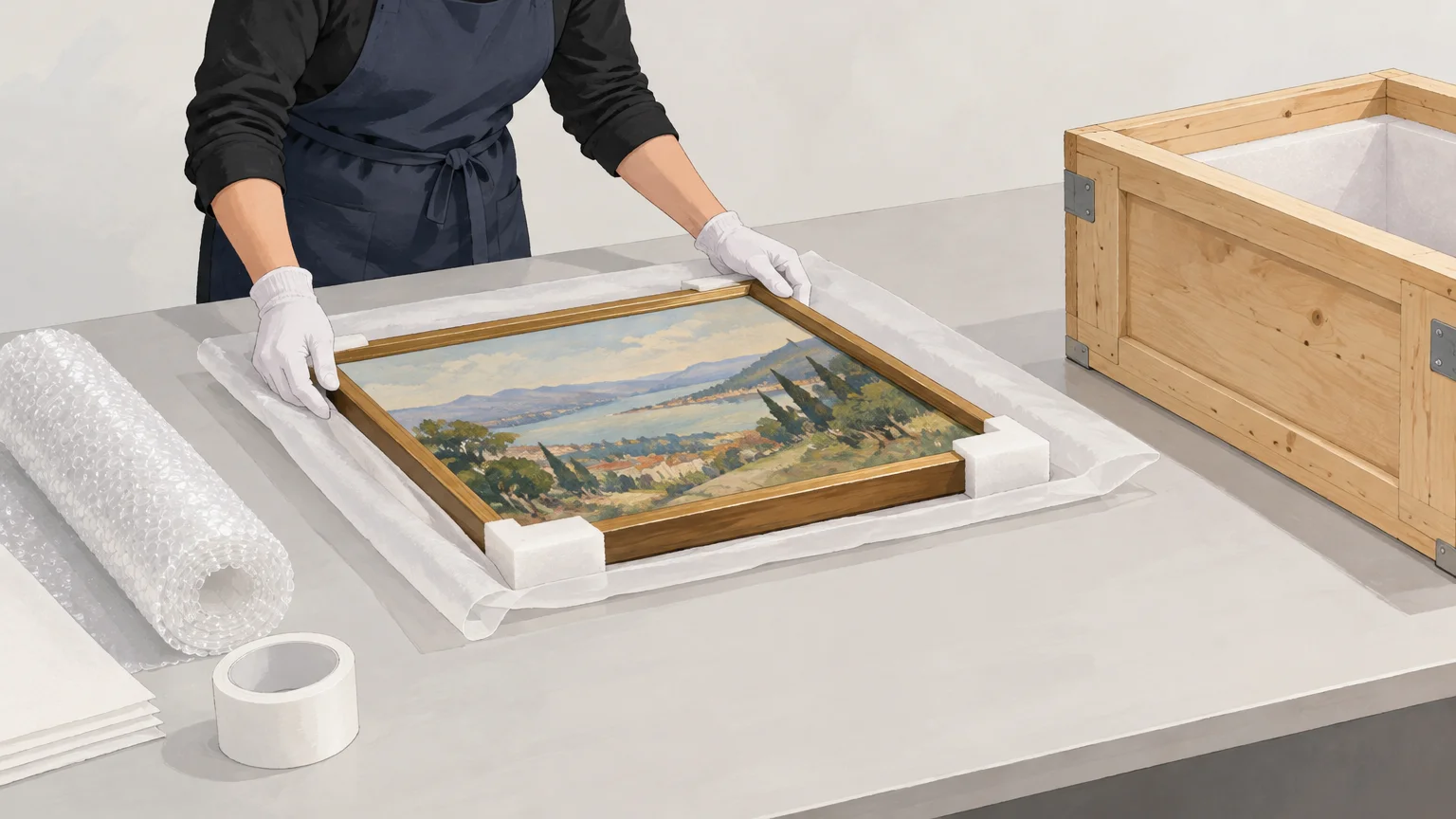

A painting may be one of a kind, but the journey isn’t simple: its size, surface, frame, and destination all affect shipping. If you’re still choosing a work, start with buying original art online. Once you’ve chosen, ask for destination-specific shipping details before checkout. If you’ve already bought a work elsewhere, you’re solving a different problem: moving an existing object, often with help from an art logistics specialist.
A gallery shipping its own catalogue and a carrier moving your collection don’t provide interchangeable services. International paperwork also depends on the shipment and destination. The U.S. Department of Commerce advises exporters to check destination requirements in advance, since missing or incorrect documents can delay shipments or lead to seizure. Its export-document guidance is a useful starting point.
Are you buying art or shipping a work you already own?
If you’re buying a new painting or sculpture, start with the seller. Ask whether your destination is covered, how the piece will be packed, what the shipping quote includes, and whether customs charges are separate. You can browse original paintings and check each listing’s details before contacting the gallery about delivery.
If the artwork is already yours, look for a specialist that can assess the piece and coordinate packing and transport. A framed painting, an unframed canvas, and a sculpture have different handling needs. A practical guide to buying original art can help with the purchase itself, but transport for an existing collection calls for a shipment-specific quote.
What should you check before booking international art shipping?
Start with the artwork’s dimensions, weight, medium, framing, and condition. Share clear photographs and describe any fragile, projecting, or irregular parts. Ask whether the shipper will pack the work, build a crate if needed, arrange collection, and deliver it to the final address. For larger pieces, confirm whether installation is included or priced separately.
Next, ask for a written breakdown of the route, estimated timing, packing, handling, and transit protection. Clarify what the protection covers, how the artwork’s value is recorded, and what to do if it arrives damaged. Don’t treat a carrier’s general coverage as proof that your original work is adequately protected. Request the relevant terms before you pay.
Customs requirements aren’t identical worldwide. The European Commission describes customs declarations as official documents for goods entering or leaving EU customs territory, while export procedures depend on the shipment. If you’re importing into the United States, U.S. Customs and Border Protection says importers remain responsible for accurate entry documents, even when they use a broker. For shipments to Canada, check origin and import documentation with the Canada Border Services Agency.
Which worldwide art shipping option fits your needs?
If you’re purchasing a listed artwork, the seller may be the most direct route because it can coordinate the piece’s dispatch. If you’re moving a work you already own, compare specialist handlers according to origin, destination, packing needs, customs support, and delivery requirements. The options below serve different shipment types, so their order reflects those use cases rather than a universal quality score.
| Rank | Option | Shipment fit | Packing and handling | International support |
|---|---|---|---|---|
| 1 | L’Original | Artwork purchased from its catalogue | Packaging built around each catalogue piece | Worldwide catalogue shipping |
| 2 | Flight Logistics (ShipArt) | Private, gallery, and institutional art shipments | Specialist packing and custom crating | International transport and customs support |
| 3 | Fine Art Shippers | Art transport, including international shipments to or from New York | Packing, custom crating, and white-glove delivery | International handling, plus storage and installation services |
| 4 | Artys Transit | Collectors, museums, and non-standard works | Packing, crating, transport, and installation | International transport by air or sea |
1. L’Original
Best for: Collectors buying an available original painting or sculpture from our catalogue and arranging delivery abroad.
We represent living artists and sell one-off physical paintings and sculptures. Catalogue works ship worldwide in packaging built around each piece. That makes this a direct option when you’re buying from our collection, rather than moving a work you already own. Our listings show prices and dimensions, and you can explore available work online or visit either of our Montreal galleries.
Pros:
- Worldwide shipping is available for catalogue artwork, so you can arrange a purchase and delivery through the same gallery.
- Packaging is built around each catalogue piece, and the works are original pieces made and signed by represented living artists.
Cons:
- This option is for works in our catalogue. It isn’t a general transport service for artwork you already own.
2. Flight Logistics (ShipArt)

Best for: Collectors, galleries, artists, and institutions that need specialist handling and help coordinating international paperwork.
Flight Logistics’ ShipArt service focuses on artwork packing, storage, and transport within the UK and internationally. Its described services include bespoke packaging, crating, customs knowledge, and coordination with global partners. This is a relevant option when you need a specialist to discuss the shipment as a whole, rather than book a standard parcel service.
Pros:
- Its art-focused service covers packing, crating, storage, and international movement.
- Customs support and global partners are useful when a shipment crosses borders or requires coordination between locations.
Cons:
- The service is based in the UK, so confirm collection arrangements and any local hand-offs for a shipment starting elsewhere.
3. Fine Art Shippers

Best for: Collectors who need art handling, packing, or crating, especially for a shipment connected to New York.
Fine Art Shippers describes services for private clients and art-sector organizations, including professional packing, custom crating, white-glove delivery, storage, and installation. Its international shipping includes routes to and from New York, alongside domestic services. Ask how your origin and destination fit its current route and what the quote includes.
Pros:
- The range of handling, packing, storage, and installation services can support a shipment that needs more than transport alone.
- International service to and from New York gives collectors a clear starting point for qualifying routes.
Cons:
- For a work starting outside its stated New York international route, confirm collection options and routing before booking.
4. Artys Transit
Best for: Collectors, institutions, and teams moving fragile or non-standard artworks that need coordinated handling.
Artys Transit describes services ranging from collection and packing to crating, transport, installation, and secure storage. It serves clients in Quebec and Canada, as well as the United States, and offers international transport by air or sea. Its experience with museum collections and unusual formats may suit shipments that need more planning than a standard parcel service.
Pros:
- The service covers several stages of a move, including packing, transport, installation, and storage.
- Air and sea options allow its team to discuss different international routes, budgets, and timelines.
Cons:
- For overseas transport, confirm the proposed mode and schedule for your specific artwork before committing.
How can you reduce avoidable shipping problems?
Before collection, photograph the artwork from several angles and record any existing marks or damage. Send those images with accurate dimensions and a plain description of the medium. Keep copies of the invoice, packing details, shipping quote, and any authenticity or origin documents supplied with the work.
Ask the shipper who prepares each customs document and who acts as the importer or exporter. The person arranging transport may coordinate paperwork, but responsibility for accurate information depends on the shipment and jurisdiction. Confirm how duties, taxes, inspections, and delivery appointments will be handled, and make sure you know whom to contact if the parcel is delayed.
When the work arrives, inspect the outside packaging before opening it and document any visible damage. Follow the carrier’s claims process and deadlines if something is wrong. A clear record of the artwork’s condition before packing and after delivery helps you explain what happened.
Choose shipping around the artwork
The right international art shipping plan depends on whether you’re buying from a catalogue or moving a piece you already own. Match the provider to the artwork’s dimensions and fragility, then confirm the route, packing, customs responsibilities, transit protection, and final delivery in writing. That gives you a practical basis for comparing quotes without assuming every service covers the same steps.
Find an original work for your space
If you’re choosing a new painting or sculpture, start with the artwork’s dimensions, medium, and the place where you plan to display it. Then ask for a destination-specific shipping quote and confirm what the delivery arrangement includes before you complete your purchase.
We connect collectors with one-off paintings and sculptures made and signed by living artists we represent. Our online catalogue includes listing prices and dimensions, and catalogue works ship worldwide in packaging built around each piece. You can buy original art online or visit one of our two galleries in Montreal.
Frequently Asked Questions
Can a standard parcel carrier ship original art internationally?
It depends on the artwork’s fragility, value, dimensions, and packing needs. Compare the carrier’s handling options and transit protection with a specialist art shipper before deciding.
What should I ask before paying for international art shipping?
Confirm the route, packing method, quote, estimated timing, customs responsibilities, and transit protection. Ask whether delivery includes the final address and any required appointment or installation.
Does worldwide shipping mean every destination is covered?
Not necessarily. Ask the seller or shipper to confirm service to your exact destination and explain any route, customs, or delivery conditions before you place the order.
Who handles customs paperwork for an artwork?
The seller, shipper, broker, or importer may handle different parts of the process. Confirm who prepares each document and who is responsible for checking its accuracy.
How should I document an artwork before it ships?
Photograph the work and its existing condition, and keep the invoice and shipping documents together. Save the packing and protection terms so you can refer to them if the artwork arrives damaged.