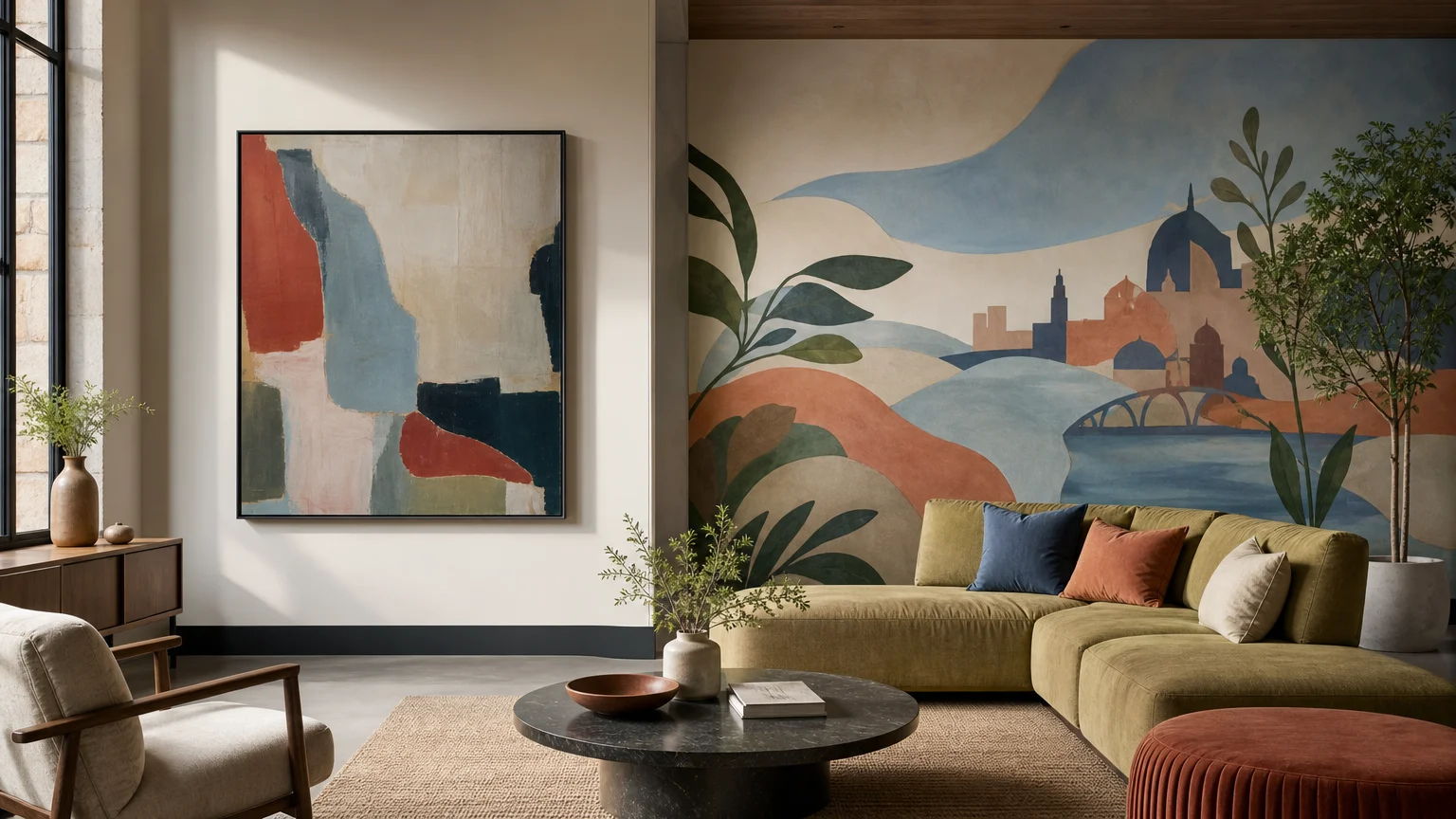

A painting is usually the safer starting point, while a mural creates a stronger transformation. If you are asking What's better: a painting or a mural for my space?, begin with the role you want the artwork to play. A framed or canvas piece can anchor a room without taking it over, as these painting or mural for your space ideas demonstrate.
A mural becomes part of the architecture. It can follow a wall's proportions, wrap around an alcove, tell a story, or turn a blank surface into the room's main experience. The choice is not simply about size. It is about whether you want movable artwork or a site-specific artwork designed for one particular wall.
The short answer: choose based on the wall’s role
Choose a painting if you want one artwork to define a room without permanently defining the wall. A painting works especially well above a sofa, bed, console, fireplace, dining table, or desk. You can move it, reframe it, rearrange it, or take it with you when you move.
Choose a mural if you want the wall to become an immersive visual field. Murals suit large blank walls, stairwells, entryways, offices, restaurants, lobbies, and rooms where the architecture needs more personality. They can make a space feel deeper, more expressive, or more connected to a brand, story, or personal memory.
There is also a practical distinction. “Mural” can mean a hand-painted artwork created directly on the wall, a printed wall covering, or artwork painted on panels and installed later. In this article, the comparison focuses on an original painting that hangs on the wall versus a custom mural designed for the wall itself.
- Choose a painting for flexibility, portability, easier updates, and a concentrated focal point.
- Choose a mural for scale, immersion, customization, and a closer relationship with the architecture.
- Consider both if you want a mural-like effect without covering the entire wall. A large canvas can deliver visual impact while remaining movable.
What changes between a painting and a mural?
A painting has a defined border. That border gives your eye a place to pause, which helps the artwork sit comfortably among furniture, lighting, textiles, and other decorative elements. Even a large canvas can feel contained and intentional.
A mural removes that boundary. The composition can extend from edge to edge, continue behind architectural features, or use the shape of the wall as part of the artwork. This makes a mural feel less like an object displayed in the room and more like an environment surrounding you.
Original paintings also offer a distinct collecting experience. They are physical works created independently of your wall, often with their own surface, texture, signature, and history. Our catalogue focuses on original paintings for your space, including one-off works made and signed by living artists.
A custom mural starts with your space instead. The artist considers the wall's dimensions, surface, lighting, access, surrounding furniture, and intended atmosphere. That approach can produce a more integrated result, but it also creates a project that requires more planning than selecting an available painting.
Which option creates the right visual impact?
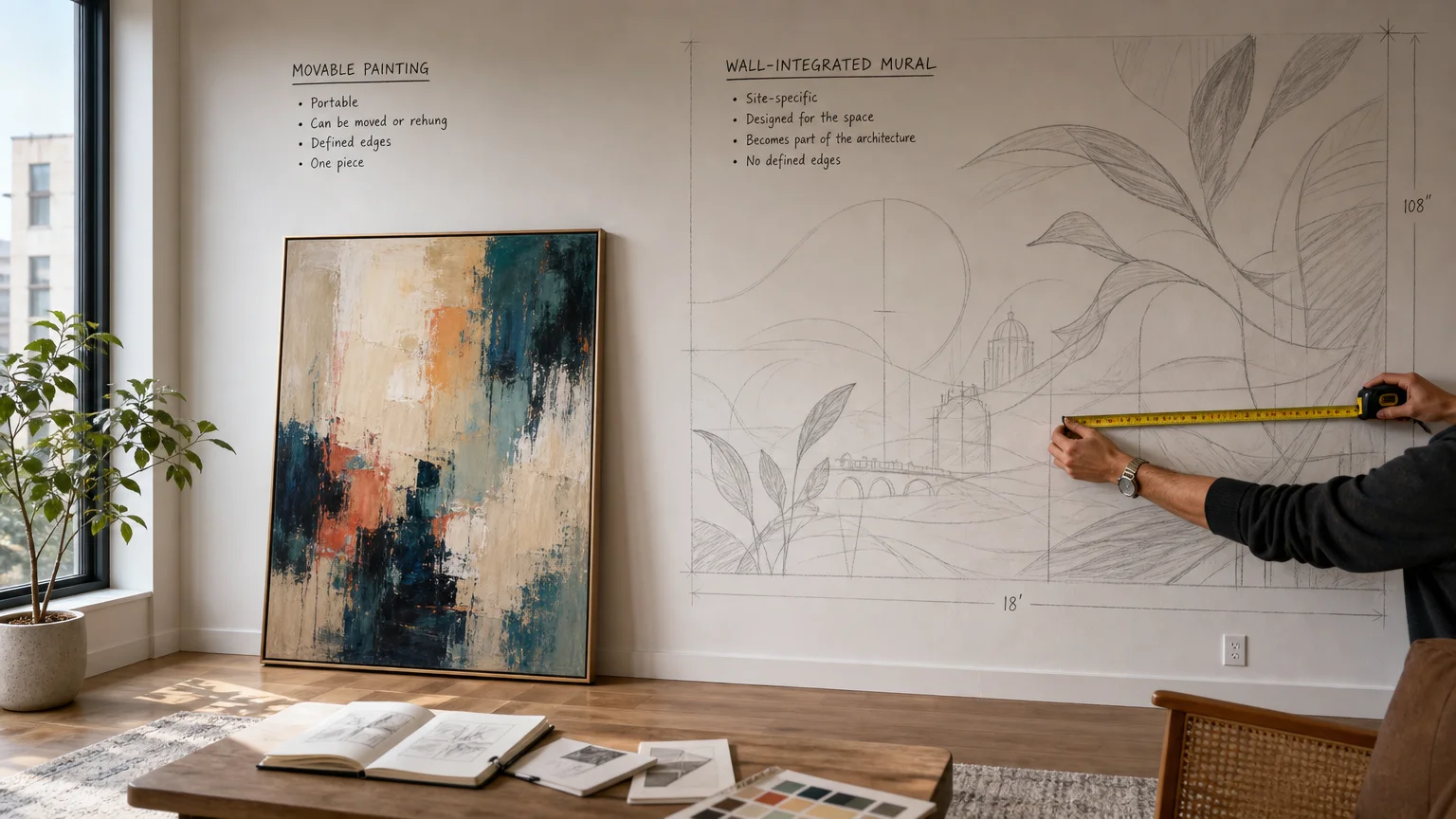
A painting creates impact through contrast, composition, color, and placement. It does not need to cover a large area to command attention. A textured abstract, expressive portrait, or dramatic landscape can become a room's emotional center while leaving the surrounding walls calm.
A mural creates impact through immersion and scale. It can make a narrow hallway feel more intentional, give a home office a stronger identity, or turn a reception area into a memorable first impression. Perspective-based designs can also suggest distance, such as a forest path, architectural opening, or horizon line.
Scale still matters. A mural that is too busy for a small room can make the space feel crowded. A painting that is too small for a large wall can look disconnected from the furniture below it. Before choosing, measure the wall and consider what will remain visible around the artwork.
Large-format art does not always need to be painted directly onto the wall. A very large canvas can provide a dramatic statement while preserving flexibility. You can explore large-format paintings when you want a substantial presence without committing the wall to one permanent design.
What will your wall and project require?
Wall condition is one of the most important differences between the two options. A painting usually needs a secure hanging point, suitable hardware, and enough clearance from doors, furniture, heat sources, or high-contact areas.
A mural needs a clean, stable, accessible surface. Loose paint, grease, dust, cracks, moisture, and heavy texture can affect adhesion or paint performance. A municipal mural installation guide similarly emphasizes the importance of a clean, dry surface without loose material.
Preparation may include washing, sanding, patching, priming, or applying a compatible base coat. Brick, concrete, drywall, plaster, and previously painted walls can behave differently. The correct preparation depends on the substrate, the mural medium, the location, and the expected wear.
Access also affects the project. A low wall may require only basic tools, while a tall wall can need ladders, lifts, scaffolding, protective coverings, or work outside normal operating hours. Furniture, outlets, windows, doors, and irregular corners should be included in the design discussion before work begins.
Our mural process starts with the wall, the intended effect, and the conditions of the space. We can assess preparation needs, match you with an artist, refine the proposal by video, and plan protective measures before painting begins. You remain responsible for providing a clean and accessible wall, unless preparation is assigned to our team after assessment.
How do permanence, maintenance, and changeability compare?
A painting is usually easier to change. You can replace it with another piece, move it to a different room, or update the surrounding décor without repainting the wall. This makes paintings especially useful in rentals, flexible workplaces, children’s rooms, and homes that evolve often.
A mural is more permanent in practical terms. A hand-painted mural can be painted over, but removal usually means preparing the wall again. A printed mural may be removable, depending on its material and adhesive. Neither option should be considered automatically damage-free.
Maintenance also depends on the surface and finish. A painting may need dusting, careful handling, and protection from direct sunlight or humidity. A mural in a busy corridor, kitchen, restaurant, or public area may need a protective finish that supports cleaning and reduces surface wear.
Technical guidance from professional mural resources covers substrate preparation, material selection, and protective finishing. The right coating is not universal. It depends on whether the mural is indoors or outdoors, exposed to sunlight, cleaned frequently, or vulnerable to contact.
We can help you compare options such as industrial varnish, UV-resistant sealant, or anti-graffiti coating when appropriate. Our article on choosing a mural protective finish explains why the location and expected use should guide the decision.
Which choice fits your room or business?
In a living room, a painting often works well when the furniture already provides visual interest. It gives you a focal point without competing with windows, shelving, rugs, or architectural details. A mural can work when one wall feels empty and you want the room to have a stronger identity.
In a bedroom, both options can succeed. A calming painting above the bed is easier to replace as your taste changes. A soft botanical, landscape, or abstract mural can create a more enveloping atmosphere, especially on a single feature wall.
In a home office, choose a painting if you want a sophisticated accent that can move with you. Choose a mural if the room needs a distinct creative identity or if the wall can support a large composition without distracting you during work.
For a rental, a painting is usually the lower-risk option. A removable mural may be possible, but you should confirm the product, adhesive, wall finish, and lease requirements before installation. Test a small sample first if removal or deposit protection matters.
For a business, the decision depends on whether the artwork should be flexible or integrated into the customer experience. A painting can add polish to an office, boutique, studio, or waiting room. A mural can communicate a story, reinforce a visual identity, or make an otherwise ordinary space more memorable.
Commercial projects also need clear agreements. A mural may appear in photographs, advertising, social media, or press coverage. The U.S. Copyright Office guidance explains that visual artists retain important rights in their work, so commercial image use should be addressed in writing.
How can you decide without second-guessing?
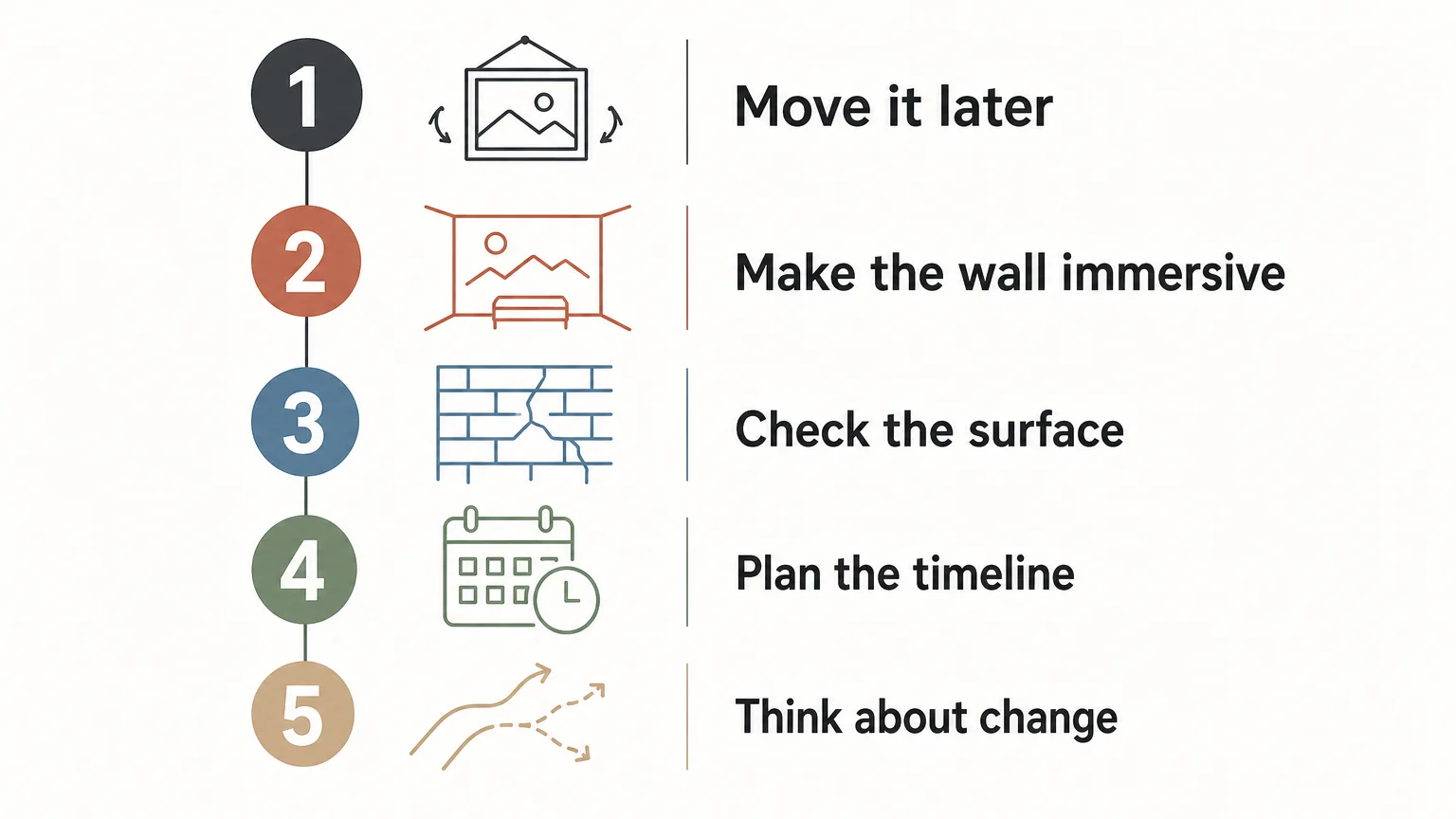
When both options appeal to you, answer these five questions before requesting a quote or buying artwork:
- Do you need flexibility? If you may move, redecorate, or change the room soon, start with a painting.
- Should the wall become the focal point? If yes, a mural may create the stronger architectural effect.
- Is the wall ready? Check its condition, texture, moisture exposure, and accessibility before choosing a mural.
- How much disruption can you accept? A painting can be installed quickly. A mural requires design, preparation, painting, drying, and protection.
- Will the space need to evolve? If the answer is likely, choose a movable work or limit the mural to one manageable feature wall.
It also helps to create a simple visual mockup. Photograph the wall, mark the artwork dimensions, and consider sightlines from the doorway, seating area, desk, or reception point. For a mural, review how the design interacts with switches, windows, trim, furniture, and natural light.
If you are unsure which direction fits your taste, we can help you compare an existing work with a custom commission. Our artist matching process considers your space, desired atmosphere, surface, and preferred effect before a quote is prepared.
Which is better for your space?
The better choice between a painting and a mural depends on the relationship you want between art and architecture. Choose a painting when you value portability, easy updates, and a focused visual statement. Choose a mural when you want a custom, immersive result that belongs to the wall and transforms the room around it. If you are still undecided, begin with the wall’s condition, the project timeline, and your plans for the space. Those practical answers usually make the artistic decision much clearer.
Turn your wall idea into original art
Once you know whether you want a movable artwork or a wall-integrated statement, the next step is finding the right artistic language. Your choice should reflect the room, the people who use it, and the feeling you want visitors to take away.
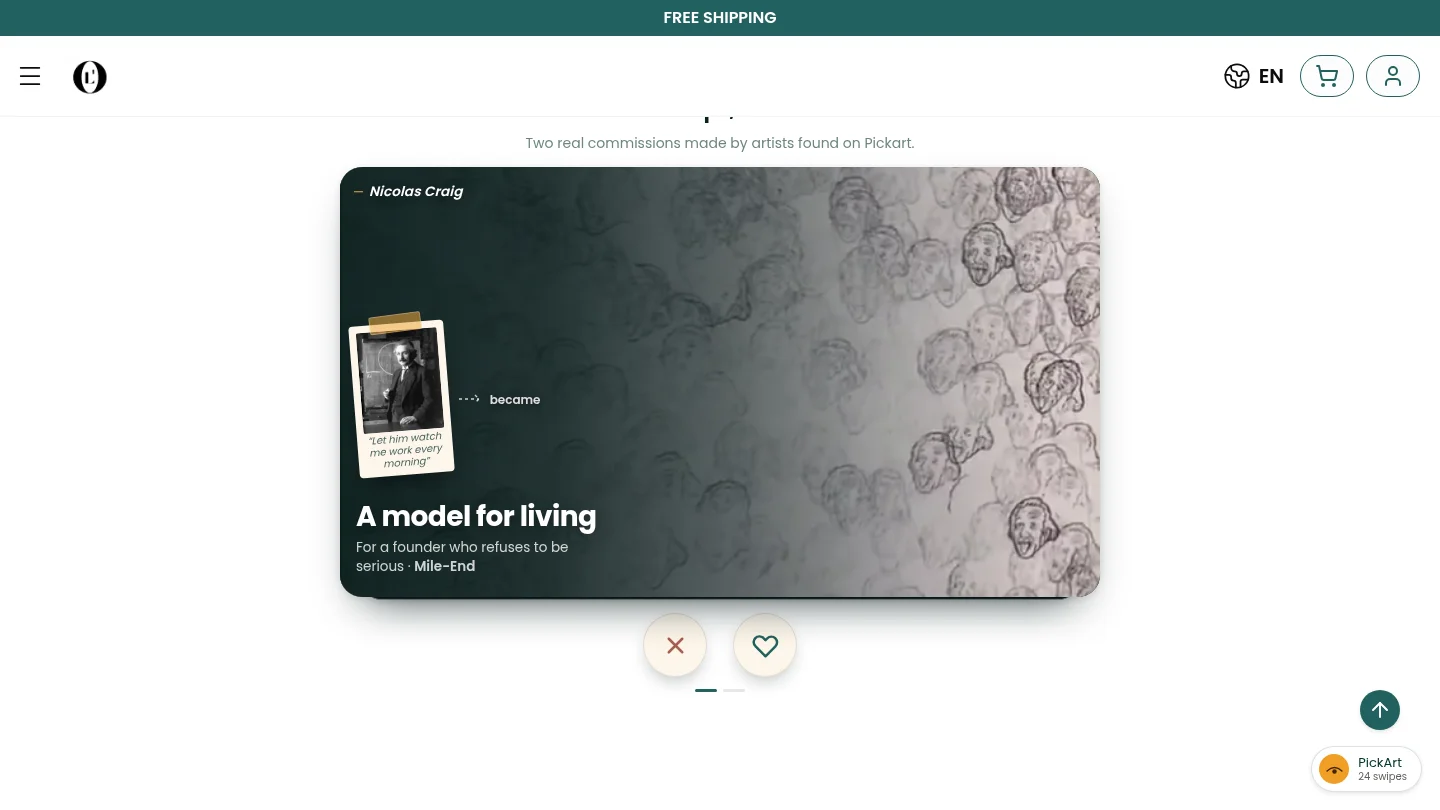
We connect clients with living artists for custom work shaped around homes, offices, lobbies, and other distinctive spaces. You can describe your wall, share your goals, review a proposal, and discuss finishes, preparation, timing, and image rights before the project begins. When a mural is the right fit, you can shop murals for your space and start a conversation about the possibilities.
Frequently Asked Questions
Is a painting or mural better for a small room?
A painting is usually easier to balance in a small room because it leaves visible wall space around the artwork. A mural can still work if it uses a simple composition, lighter colors, or perspective that creates depth.
Are murals more expensive than paintings?
Not always, but custom murals involve design, wall preparation, labor, materials, access, and protective finishing. A painting has a listed purchase price, while a mural normally requires a project quote based on the wall and the design.
Can a mural be removed later?
A hand-painted mural can usually be painted over, but the wall may need preparation first. Printed murals may be removable, although the result depends on the material, adhesive, paint finish, and installation conditions.
How long does a custom mural project take?
Many mural projects are scheduled for 2 to 5 working days, although size, design complexity, surface preparation, and access can change the timeline. A precise schedule should be agreed upon before work begins.
Can L'Original help me choose between a painting and a mural?
Yes. We can help you describe the space, compare an existing original painting with a custom artwork, or explore a mural matched to your wall and intended effect. Our process includes artist matching and a quote before custom sketching begins.