

Are you looking for a broad audience, or a route that includes curation and sales support? The right channel depends on what you make, how much control you want, and whether you can manage promotion, payments, and delivery yourself. If you create original paintings, sculptures, or murals and want a curated representation pathway, you can join as a digital artist with us.
Online discovery matters, but it is one sales channel, not a promise of buyers. The 2026 Art Basel report estimates that online art sales fell to $9.2 billion in 2025, or 15% of market sales by value. That context makes fit important: the best websites for artists to sell work match your medium, pricing, and preferred level of support.
What should you compare before choosing a site?
Start with the type of work each site accepts. A platform for original paintings and sculpture may not suit prints, digital work, or handmade goods. Check whether you apply for curation or simply create a listing, then confirm how the platform introduces your work to buyers.
Next, calculate the full cost of a sale. A commission, listing charge, payment processing fee, subscription, advertising charge, and shipping cost can affect your net income in different ways. The National Endowment for the Arts’ discussion of creative commerce distinguishes gallery, independent, and wholesale sales models. That’s a useful reminder to choose a channel that fits how you want to run your art business.
Finally, decide how much post-sale work you want to handle. Review who communicates with buyers, prepares packaging, arranges shipping, and supports transaction administration. Our article on online art galleries for artists explores gallery considerations, while selling art through a gallery or online compares the broader approaches.
| Rank | Website | Artist access | Seller costs | Sales and fulfilment |
|---|---|---|---|---|
| 1 | L’Original | Committee-reviewed applications from living painters, sculptors, and mural artists | Accepted artists receive 62% of each sale; participation plans apply | Online catalogue, Artsy access, sales administration, and logistics support; physical exposure may be available |
| 2 | Saatchi Art | Online art marketplace for original work | 40% commission on original artwork sales | Art-focused online listings; confirm the responsibilities that apply to your work and sale |
| 3 | Etsy | Self-managed shop in a broader marketplace | U.S. example: $0.20 listing fee and 6.5% transaction fee, plus other applicable charges | Seller manages listings and order fulfilment |
| 4 | Artplode | Direct listings for artists and other art sellers | $60 one-time listing fee; no seller commission | Buyer and seller deal directly; confirm payment and delivery arrangements |
| 5 | eBay | Self-managed listings in a general marketplace | U.S. schedule varies by category; final value fees and per-order fees may apply | Seller manages listings, buyer communication, and shipping |
Fee details depend on location, listing type, and optional services. Treat the Etsy and eBay figures here as U.S. examples, and check the current terms for your account and country before setting prices.
1. L’Original
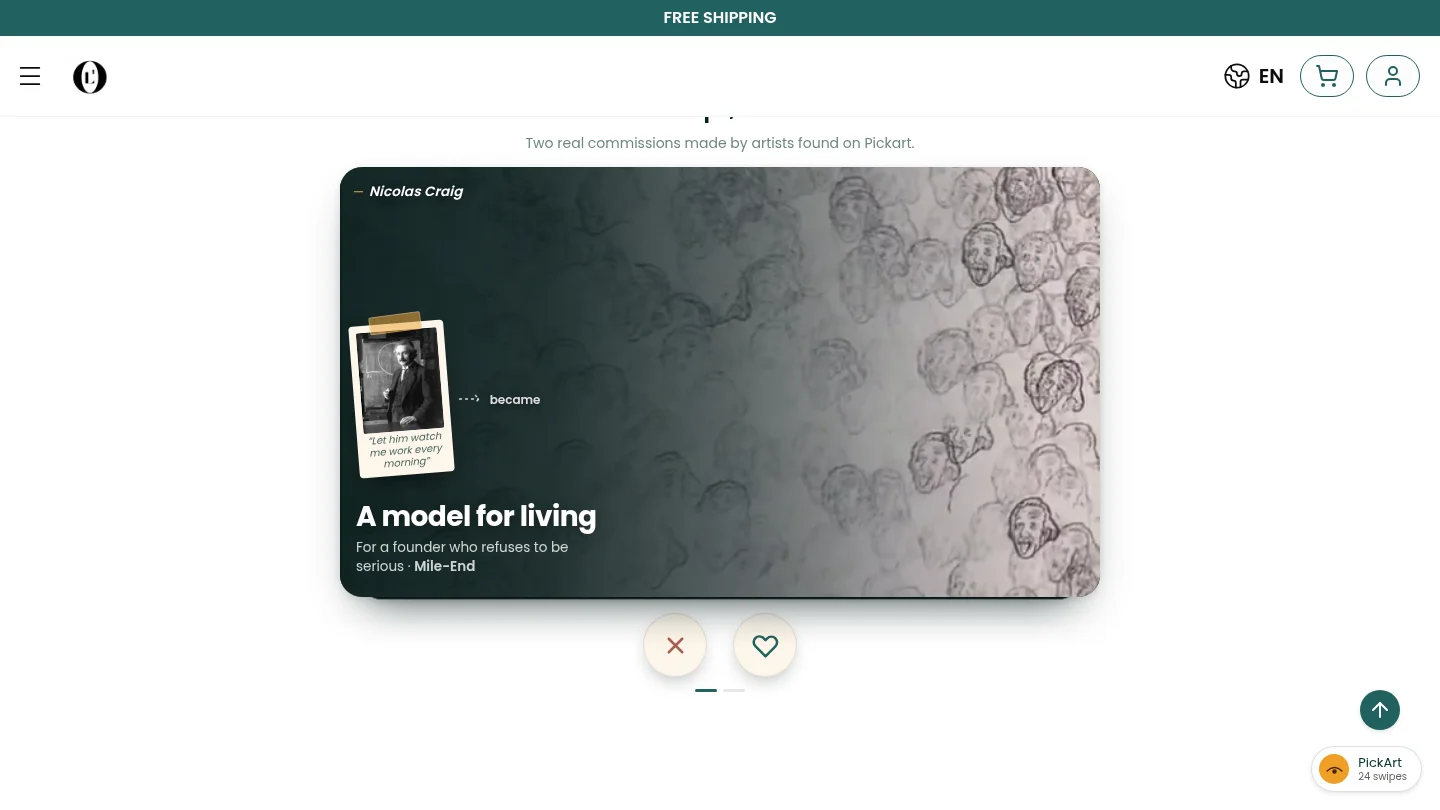
Best for: Living painters, sculptors, and mural artists seeking curation, online visibility, and help with sales administration and logistics.
We review artist applications online, and artists can apply from anywhere. Accepted artists receive an online gallery presence, listing opportunities, Artsy access, and support with transaction paperwork and sold-work pickup logistics. Our artist program pays accepted artists 62% of each sale, while the gallery retains 38%; sales are not guaranteed.
Physical gallery exposure may be available for established artists or those with strong online performance. Other accepted artists are shown online through L’Original and Artsy, with gallery screens displaying online artworks. The program is for living artists, and prints and digital reproductions are not accepted.
Pros:
- Curated listings connect an online catalogue with two physical galleries in Montreal.
- Accepted artists receive 62% of each sale, plus sales administration and logistics support.
- Artists can apply online from anywhere, and selection focuses on the work rather than a résumé.
Cons:
- Applications go through committee review, so the program is not an open self-serve marketplace.
- Participation is subscription-based. The $22 monthly plan includes the program benefits, while the $8 monthly plan requires a dedicated page on your personal website and includes the same benefits. Listed prices must exceed $1 per square inch, remain consistent across your sales channels, and include our commission.
- Prints and digital reproductions are not eligible, and physical exhibition is not guaranteed.
2. Saatchi Art
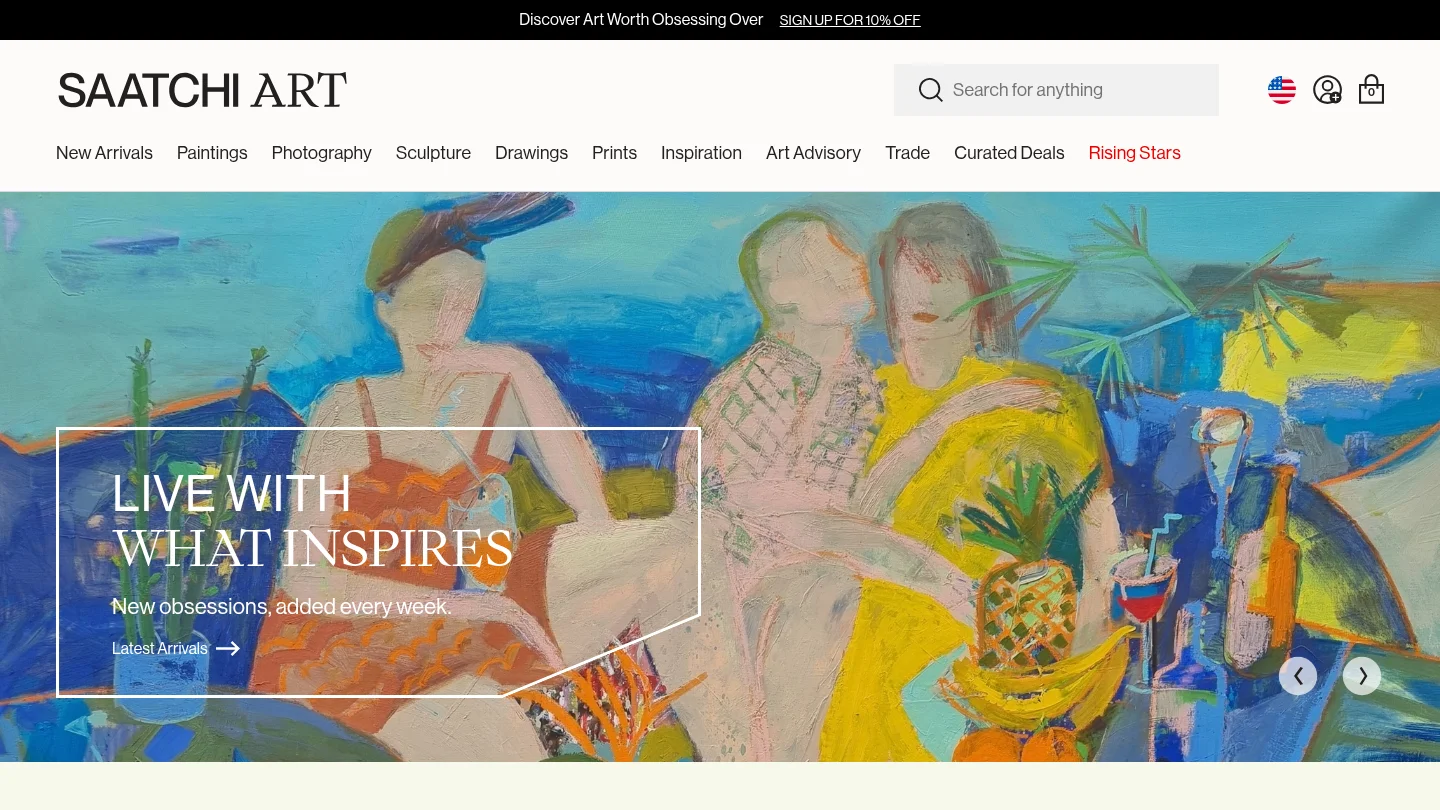
Best for: Artists who want to list original work on an art-focused online marketplace.
Saatchi Art provides an online venue for original artwork. Its artist help information states that the platform receives a 40% commission on the artwork price when an original work sells. Factor that share into your pricing, and confirm the terms that apply to your account before listing.
The art-focused setting is a practical contrast with general marketplaces, but it does not remove the need to present your work clearly. Prepare accurate dimensions, medium details, strong images, and a price that leaves room for the commission and your own costs.
Pros:
- The marketplace is focused on art rather than a wide range of unrelated goods.
- Artists can present original work to people browsing for art online.
Cons:
- The 40% commission on original artwork reduces the amount you retain from a sale.
- Check the current artist terms for any additional responsibilities and costs related to your listing and sale.
3. Etsy
Best for: Artists who want to run their own shop in a broad online marketplace.
Etsy gives sellers a self-managed shop and access to a marketplace that includes art and handmade goods. Its U.S. fee policy lists a $0.20 charge to publish or renew an item and a 6.5% transaction fee. Payment processing, advertising, currency conversion, and other charges can affect your final proceeds.
This model gives you control over listings and shop presentation, but you need to attract attention among many kinds of products. Plan your photographs, titles, descriptions, pricing, and buyer communication. Include packaging and shipping in your cost calculations, particularly for large or fragile originals.
Pros:
- You control your shop’s listings and how you present your work.
- The marketplace supports a mix of art and handmade products.
Cons:
- Listing, transaction, payment processing, and optional advertising charges can add up.
- You manage your shop and should account for order fulfilment and shipping in your plan.
4. Artplode
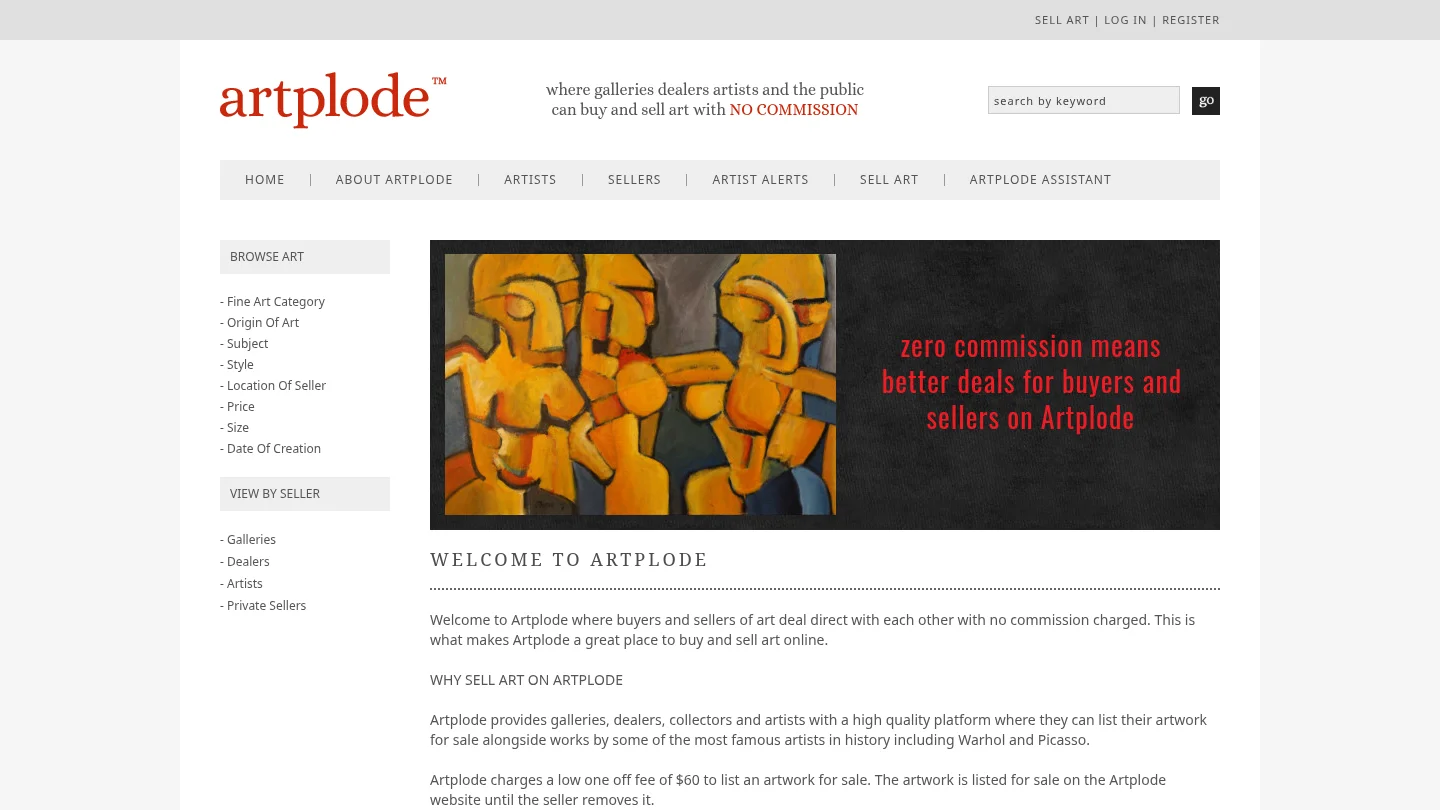
Best for: Artists who prefer a direct listing model and want to avoid a seller commission.
Artplode lets artists and other sellers list artwork for buyers to browse. Its current site lists a one-time fee of $60 per artwork and says it charges no seller commission. Listings remain on the site until the seller removes them.
Because the buyer and seller deal directly, this model may suit you if you are comfortable managing buyer conversations and agreeing on the transaction details. Before listing, confirm how payment, packaging, shipping, and any applicable taxes will be handled for your sale.
Pros:
- The stated model has a one-time listing charge rather than a seller commission.
- The listing remains available until you remove it.
- Artists can list alongside other types of art sellers.
Cons:
- You pay the listing charge whether or not the artwork sells.
- Direct dealing means you should clarify payment and delivery responsibilities with the buyer.
5. eBay
Best for: Artists who are comfortable setting up listings and managing sales through a general marketplace.
eBay allows artwork listings, but it is not dedicated to art. Its U.S. fee schedule gives most casual sellers up to 250 listings without an insertion fee each month. Final value fees vary by category, and other fees can apply, including optional listing upgrades or advertising.
Check the fees for the exact category and seller account you plan to use. You are responsible for making the listing clear and arranging packaging and delivery. eBay’s art policy also requires listings and artwork to respect copyright and other intellectual property rights.
Pros:
- You can create and manage your own artwork listings.
- The platform supports different listing formats, subject to its current terms.
Cons:
- It is a general marketplace, so your work appears among listings from many other categories.
- Fees depend on category, account, listing options, and sale details, so calculate them before pricing.
What should you settle before listing your work?
Work out your net proceeds before you publish a listing. Start with your asking price, then subtract the platform’s commission or fees, payment charges, packaging, shipping, and any subscription. For example, compare the same artwork across two platforms using the same price and delivery assumptions. That makes the difference between a percentage commission and a listing charge easier to see.
Set clear expectations for the physical work, too. Record its dimensions and medium, photograph it in good light, and state whether framing is included. For international orders, check who handles shipping, insurance, customs paperwork, and any charges due at delivery. Delivery arrangements differ, so confirm the details before you accept an order.
Also decide what buyers may do with images of your work. For U.S. visual artists, the U.S. Copyright Office’s guidance for visual artists explains that copyright protects original visual works and covers rights such as copying and public display. State any image-use permissions clearly, and check the rules that apply in your own country.
Choose a sales channel that fits your practice
The strongest websites for artists to sell work are the ones whose accepted formats, costs, audience, and seller responsibilities suit your goals. If you want a self-managed shop, a broad marketplace gives you control but leaves more day-to-day work in your hands. If you want curation and transaction support, compare representation terms, eligibility, and the share you retain. Before committing, calculate your net proceeds and confirm how each sale will be packed and delivered.
Apply to sell through a curated art program
If you make original paintings, sculptures, or murals, consider whether a curated representation pathway suits the way you want to reach buyers. You can apply online from anywhere, without visiting a gallery. Applications are reviewed by committee, and acceptance depends on the work and the program’s criteria.
Accepted artists receive an online gallery presence, listing opportunities, Artsy access, and support with sales administration and sold-work logistics. Accepted artists receive 62% of each sale, but sales are not guaranteed. Participation plans are monthly or yearly, and the $8 monthly plan requires a dedicated page on your personal website. Review the requirements, then sell your art online with us.
Frequently Asked Questions
Can I sell original art and prints on the same website?
Some marketplaces support different formats, while others curate specific types of work. Check each site’s current rules, since our Artist Partnership Program does not accept prints or digital reproductions.
How should I compare the fees?
Calculate your expected net proceeds after commissions, listing charges, processing, subscriptions, advertising, packaging, and shipping. Check the fees that apply to your country and account before setting your price.
Does a large marketplace guarantee sales?
No website can guarantee that buyers will choose your work. Your presentation, pricing, fit with the platform, and ongoing promotion all matter, and our artist program does not guarantee sales.
Who handles packaging and shipping?
Responsibilities depend on the platform and sale terms. Confirm who prepares the artwork, books delivery, handles insurance, and communicates any international charges before accepting an order.
Do you keep copyright when you sell an original artwork?
Selling a physical artwork does not automatically answer every question about image use or reproduction rights. State any permissions in writing, and check the law that applies where you and your buyer are located.