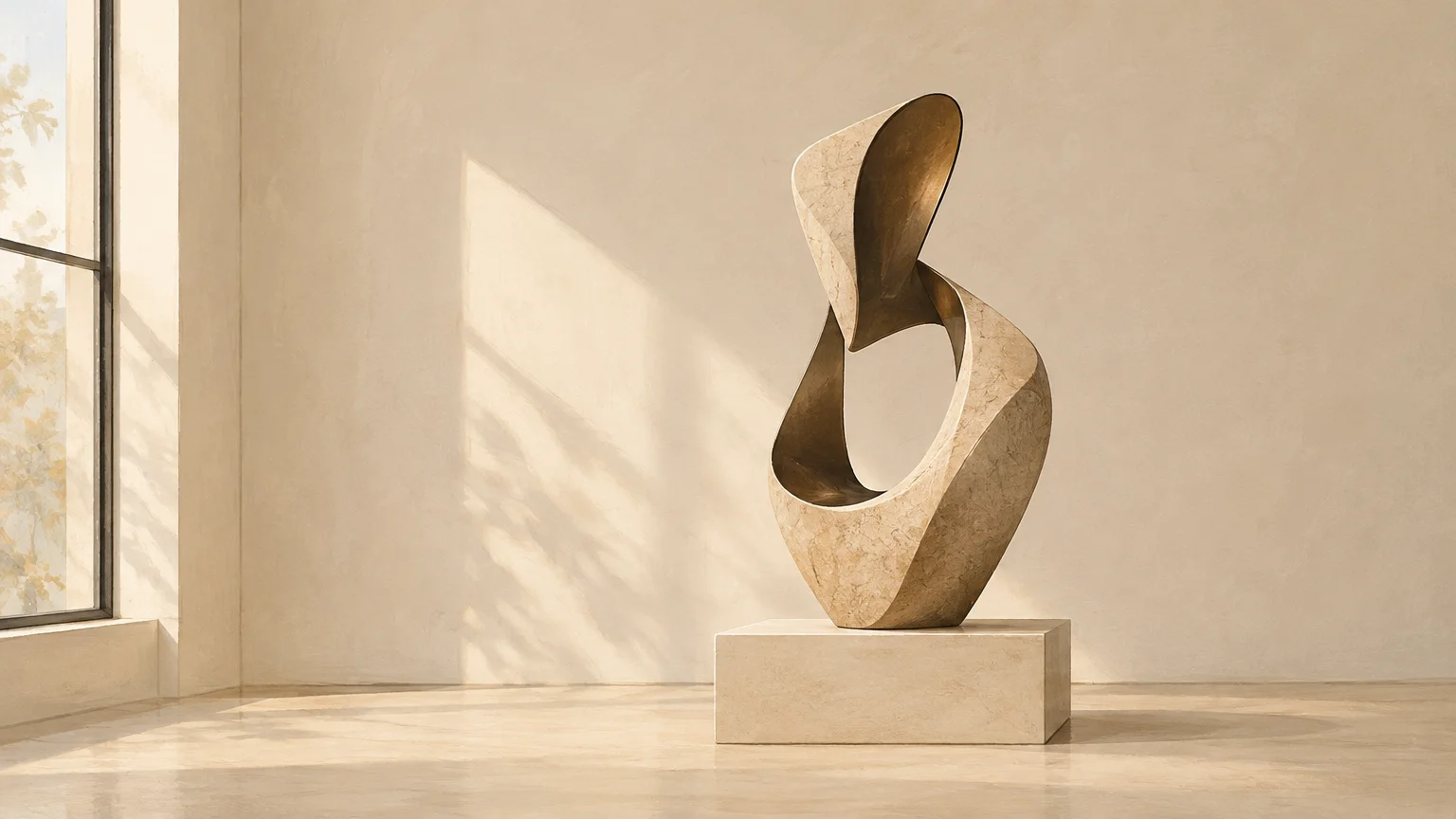

A sculpture changes as you move around it, so a single listing photo rarely shows the whole experience. If you’re drawn to work with a sense of motion, our article on bronze sculpture and the art of movement offers one way to consider how pose, surface, and material shape a piece. When you look for original sculptures, pay attention to more than the image: consider how the work was made, what “original” means in its listing, and where you plan to display it.
There isn’t one material, subject, or style that makes every sculpture original. Some works are unique; others are made in documented editions. At L’Original, our sculpture listings are one-off physical works made and signed by living artists we represent. Whether you’re buying your first piece or adding to a collection, clear details about the artwork help you judge whether it fits your taste, space, and budget.
What makes a sculpture original?
Start with the artwork’s description rather than assuming that “original” always means one of a kind. Sculptures can be modeled, carved, assembled, or cast. Some artists make a unique object, while others authorize an edition of works made from a mold. A cast sculpture can still be an original artwork, but the edition, artist’s role, and production details should be clear.
Look for the artist’s name, the stated medium, the date or period of creation, and any edition number or signature. Ask whether the listed object is the original model, a cast, or a reproduction. These distinctions describe how the work was made; they don’t automatically determine its artistic merit or future price.
For a practical overview of what to check as a buyer, our art for collectors article explains how to approach original work and buying details. Use the listing to confirm exactly what you’ll receive, then ask the seller about anything that remains unclear.
Which materials and forms fit your space?
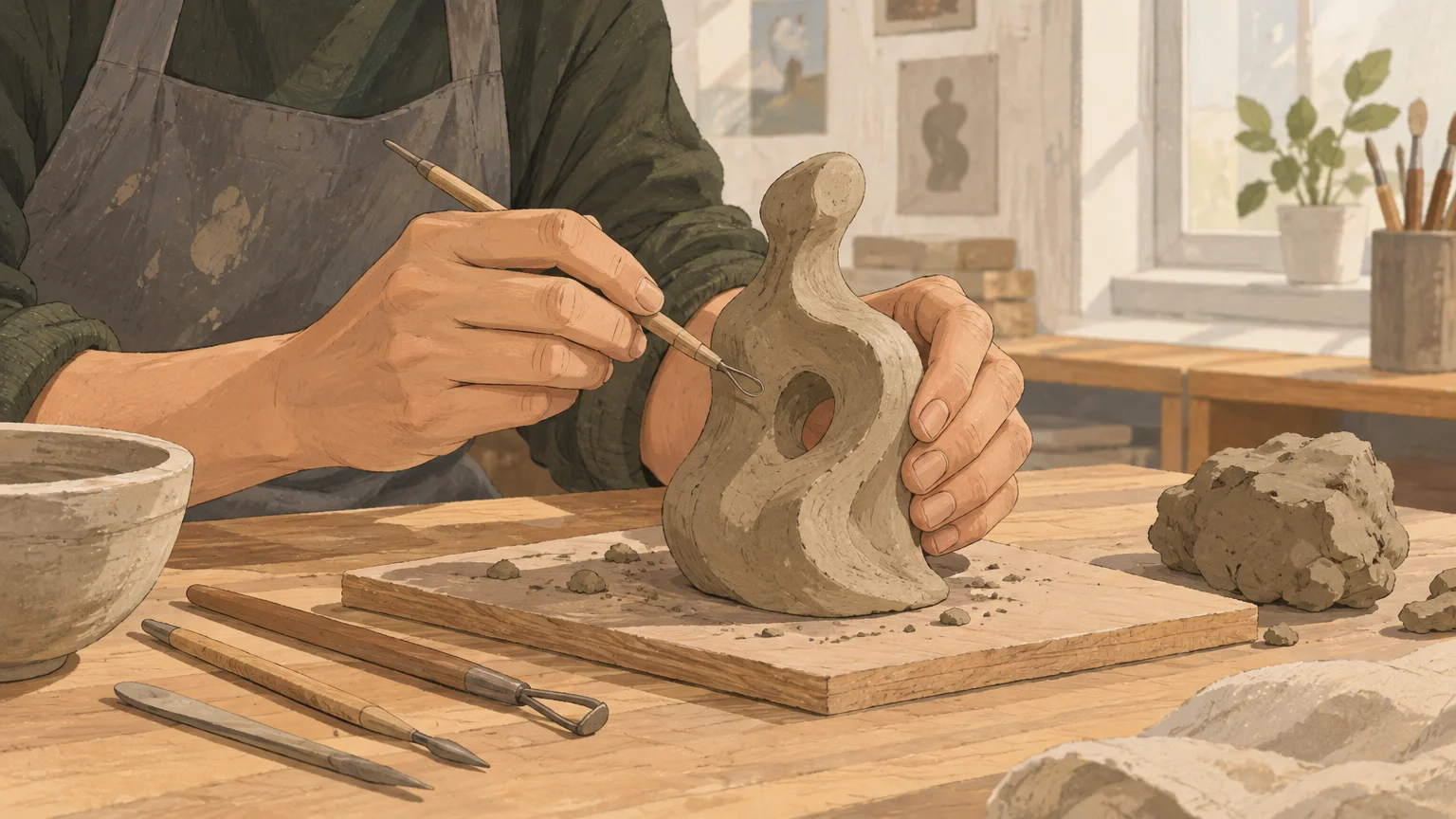
Material affects a sculpture’s surface, weight, and how it responds to light. The National Gallery’s technique overview describes several methods, including carving, modeling, molding and casting, and assemblage. These processes can produce very different finishes, even when two works share a subject or a similar shape.
Carved sculpture is shaped by removing material from a solid block, often stone or wood. Modeled sculpture is built up from a softer substance such as clay or wax. In assemblage, the artist brings together distinct elements; in casting, a mold helps form the work. The method can tell you what to ask about, but the listing should still identify the actual materials used in the piece you’re considering.
Think about how the material will look alongside the surfaces and objects already in your room. A polished or reflective finish catches light differently from a matte, textured one. If you’re choosing a work for a prominent spot, consider whether its subject, color, and visual balance will feel right from more than one viewpoint.
How should you assess size and placement?
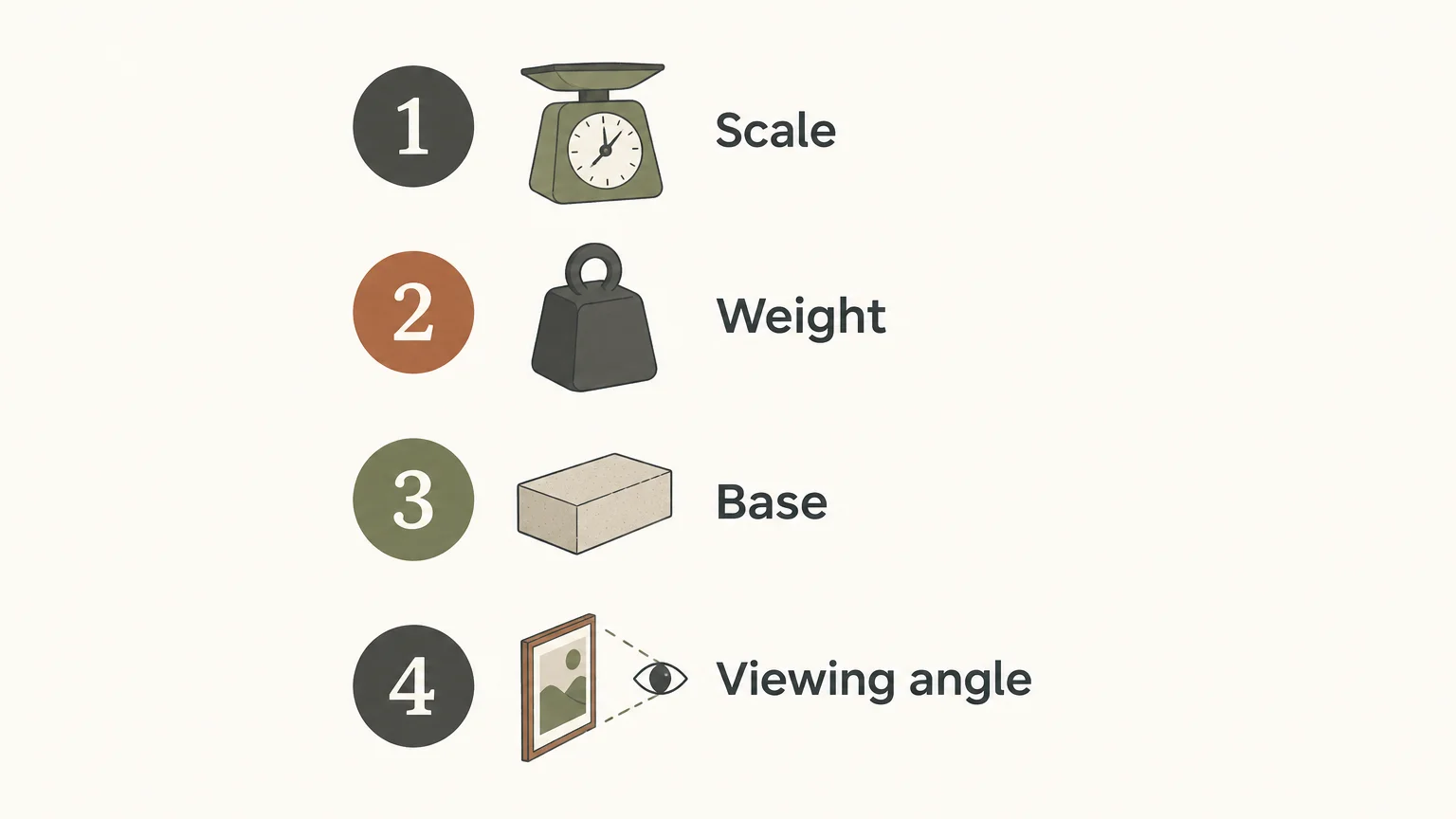
Before you buy, measure the intended display area and compare it with the sculpture’s listed dimensions. For a shelf or console, check the available width and depth, then leave room around the work so it doesn’t look crowded. For a floor piece, consider how it will relate to nearby furniture and whether it will still have a clear view from the main entrances to the room.
Dimensions aren’t the only practical issue. Ask about weight, stability, and whether the sculpture needs a plinth, wall fixing, or special support. Confirm that the surface where it will sit can bear the load. If the listing doesn’t specify a base or mounting hardware, check whether those are included before you buy.
For an online purchase, request additional views when the piece’s depth, underside, or rear matters to your decision. A scale reference in a photograph can help, but it doesn’t replace stated measurements. Also consider lighting: directional light can emphasize texture, while strong backlighting may change how a translucent or open-form sculpture reads.
What do price, editions, and value tell you?
Price is best assessed in context. Compare it with the work’s stated dimensions, materials, fabrication method, edition details, and the information supplied about the artist. A higher price doesn’t by itself establish authenticity or quality, and a lower price doesn’t tell you whether the piece is unique, an edition, or a reproduction.
Market interest is also different from a price forecast. The 2025 collecting survey found that 37% of high-net-worth respondents planning to buy art in the following 12 months intended to purchase a sculpture. That figure records buying intentions among surveyed collectors, not completed sales or a prediction of what any individual artwork will be worth.
If you’re collecting for personal meaning, consider whether the piece will continue to interest you in its intended setting. If resale or investment matters to you, don’t rely on broad market interest alone. Ask what documentation exists for the work and keep your invoice, certificate, edition information, and correspondence with the seller.
What should you check about authenticity and delivery?
Read the listing for the artist’s name, title, material, dimensions, signature, and any certificate or edition information. If details are missing, ask for them in writing before purchase. A certificate can support a work’s documentation, but you still need to know what it certifies and who issued it.
Casting deserves a specific question when relevant. The Victoria and Albert Museum’s sculpture techniques guide explains that bronze can be made using methods such as sand casting or lost-wax casting. Ask whether the work is an edition, how many casts were made, and whether the edition is limited or still open. The process alone doesn’t tell you how many examples exist.
Confirm the shipping method, packaging, insurance arrangements, and who handles delivery to the final display point. For a heavy or fragile piece, check whether you’ll need help carrying or installing it. We package catalogue artworks around each piece and ship worldwide; delivery times are estimates and may vary. Our page on museum-quality art also discusses the information and care considerations that matter when evaluating a work for a collection.
Should you buy a finished work or commission one?
A finished sculpture gives you a specific object to assess before you buy. A commission is different: you describe the space, mood, inspiration, and format you have in mind, then review a proposal and quote. It can suit you when a particular scale, subject, or setting matters, but confirm the concept, materials, schedule, delivery, and total cost before work begins.
We offer custom artwork commissions that include sculpture, as well as a catalogue of existing original works. For made-to-order artworks, confirm the agreed concept and terms before committing: they’re generally non-refundable and non-exchangeable except in exceptional circumstances. If a ready-made piece already meets your needs, compare its listed dimensions and details with your space rather than commissioning a new work by default.
Choose a sculpture with confidence
The right sculpture brings together visual appeal and practical fit. Check what “original” means for the specific work, understand its materials and edition details, measure its display area, and confirm authenticity information, shipping, and care. When those details are clear, you can choose original sculpture that feels right for your space and your reasons for collecting.
Find a sculpture that feels right for your space
You don’t need specialist knowledge to choose a sculpture thoughtfully. Start with the forms and materials you respond to, then use the listing details to compare dimensions, price, and authenticity information. If you’re weighing a few options, our team can help you explore the collection or discuss a custom artwork commission.
Our online catalogue features one-off paintings and sculptures made and signed by living artists we represent, with prices and dimensions shown on listings. You can browse from anywhere, and our two Montreal galleries offer a chance to see works in person. Browse original paintings and sculptures to find a piece for your collection or your space.
Frequently Asked Questions
Does “original sculpture” always mean one of a kind?
No. Some original works are unique, while others are made in editions. Check the listing for edition details and ask the seller what the specific work represents.
Can a cast sculpture be an original artwork?
Yes. Casting is a method artists use to make sculptures, including works produced in editions. Ask who made the work, how many casts exist, and whether the edition is limited.
What should I measure before buying a sculpture?
Measure the space’s width, depth, and height, and compare them with the sculpture’s listed dimensions. Also check the work’s weight, base, and any mounting or support requirements.
Can I buy an original sculpture online from L’Original?
Yes. Our online catalogue includes one-off sculptures made and signed by living artists we represent, and we ship catalogue works worldwide. Delivery times are estimates and may vary.
Can I return a made-to-order sculpture?
Made-to-order artworks are generally non-refundable and non-exchangeable except in exceptional circumstances. Review the proposal and terms before approving a commission.