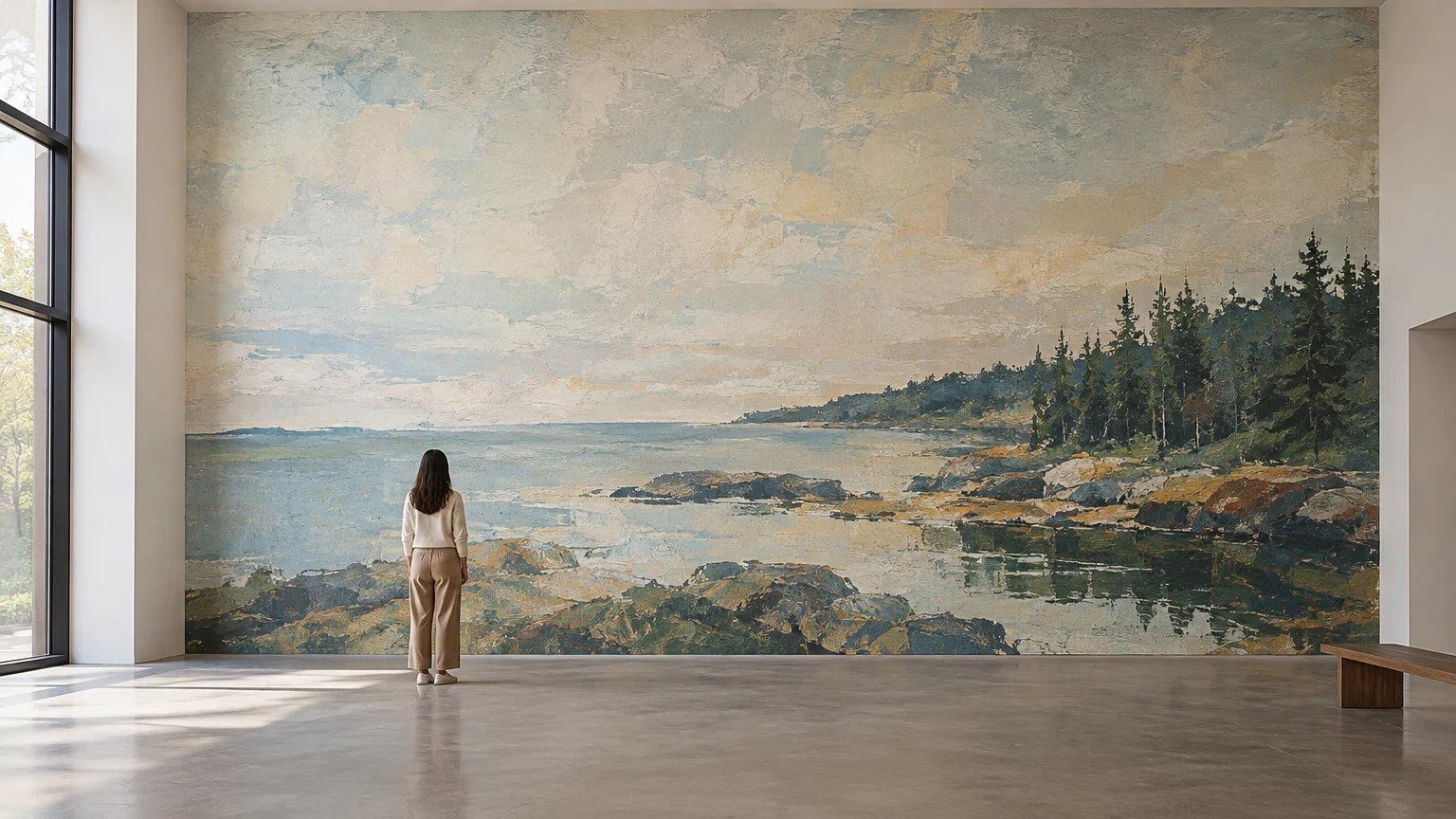

Two walls can show the same scene, yet only one may have been painted directly onto its wall. If you’re starting with explore the mural collection, decide whether you want a unique, site-specific artwork or a printed design that brings art to your space in a different format.
Original murals are not always easy to distinguish from printed coverings in a product photo. The word “original” can refer to an artist’s design, the physical artwork, or the way it was made. Looking beyond the image helps you understand whether the piece is painted by hand, printed from a digital file, or created using a combination of methods.
What qualifies as an original mural?
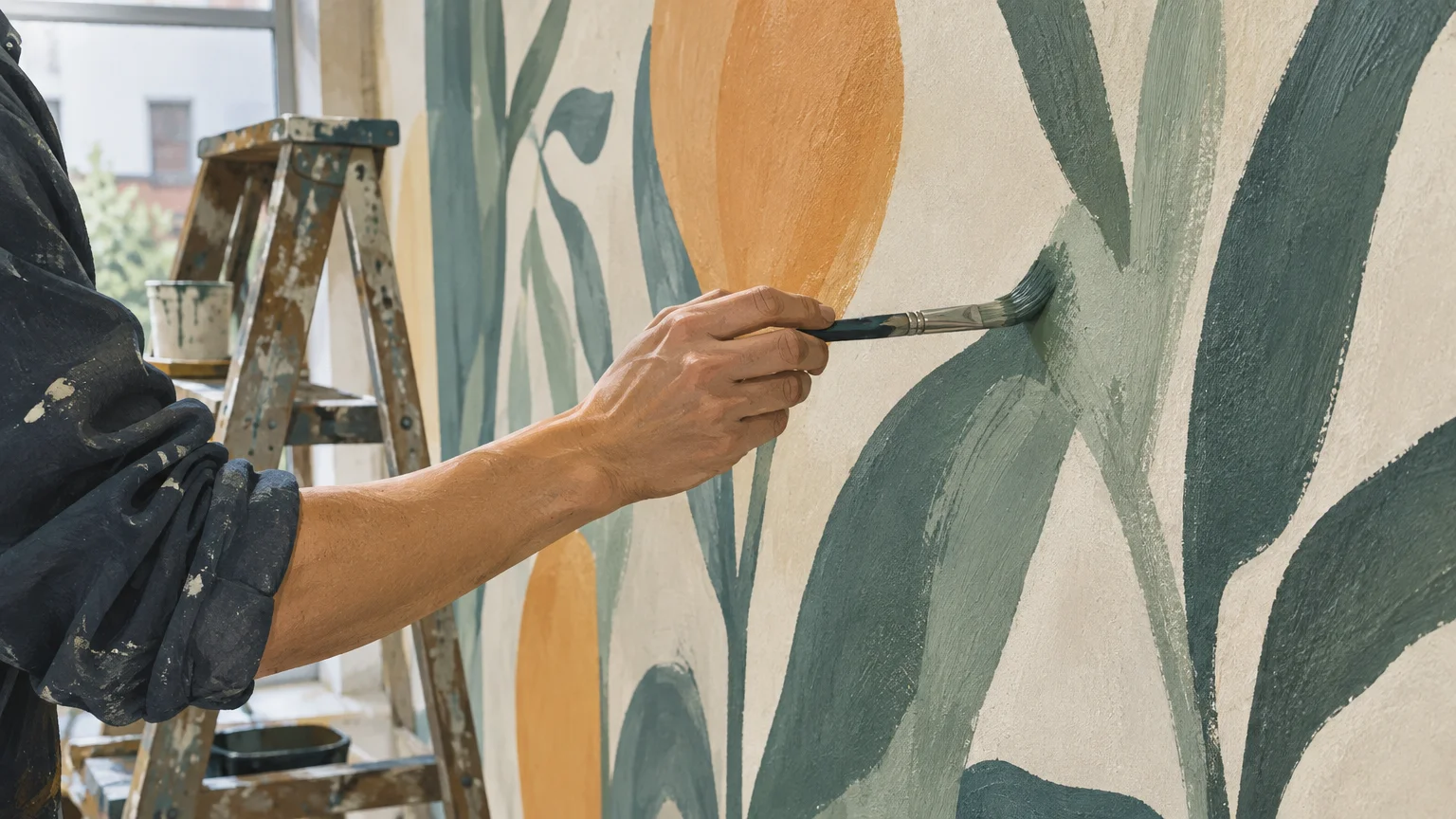
Imagine an artist adapting a design to a wall’s shape, light, texture, and surroundings. That connection between artwork and place is one sign of site-specific art. A mural might be painted or tiled directly onto a surface, or made for installation as a physical artwork.
There is no single definition for every setting. For example, Portland’s local permit guidance defines an original art mural as a hand-produced work painted or tiled by hand directly onto, or affixed to, an exterior wall. It excludes mechanically produced or computer-generated images such as digitally printed vinyl. That is a local regulatory definition, not a universal rule for every mural or artwork. Portland’s mural definition
For a purchase or commission, ask what “original” means in that specific listing. Is the actual wall image made by hand? Is the design unique to your site? Will the same image appear on other walls? Clear answers help you distinguish a one-off physical work from an original design that is reproduced in multiple copies.
Original artwork or printed wallcovering?
A printed mural can reproduce an original design without being a one-off, hand-painted work. Printed coverings are produced from an image and applied to a wall, while a hand-painted mural is made on the wall itself or on a physical surface intended for installation. Some projects combine approaches, so ask how each part is created.
There is also an important distinction between an original print and a reproduction. The Smithsonian American Art Museum explains that prints made through an artist’s printmaking process can exist as original impressions in an edition, while reproductions may be commercially printed copies of a painting or drawing. Smithsonian’s print guide For a mural, check whether the listing describes an artist-made print, a reproduction of existing art, or a hand-painted wall installation.
Neither a printed covering nor a hand-painted mural is automatically the right choice for every room. A printed format can suit a project where repeatability or a pre-designed image matters. Choose a hand-painted work when the artist’s physical process and direct response to the wall are part of what you want.
Why does the wall itself matter?
A hand-painted mural develops in a particular place. The artist can respond to the wall’s dimensions, surface, lighting, and nearby features, such as a doorway or architectural detail. Paint layers and brush marks can also create texture that is distinct from the image on a printed surface.
A 2026 scholarly study of mural painting and reproduction discusses how a mural’s location, scale, material, and community context shape its experience. The practical takeaway is simple: a photograph of a mural communicates its subject, but not everything about seeing the physical work in its original setting. 2026 mural research
For a site-responsive example, Murale marine — Nanaimo was created on a retaining wall in Nanaimo. Its coastal imagery includes an orca, a sea otter, kelp, and mountain silhouettes, connecting the scene to the Pacific Northwest. That description shows how a mural can relate to its setting without implying a particular production technique.
How can you verify originality before you buy?
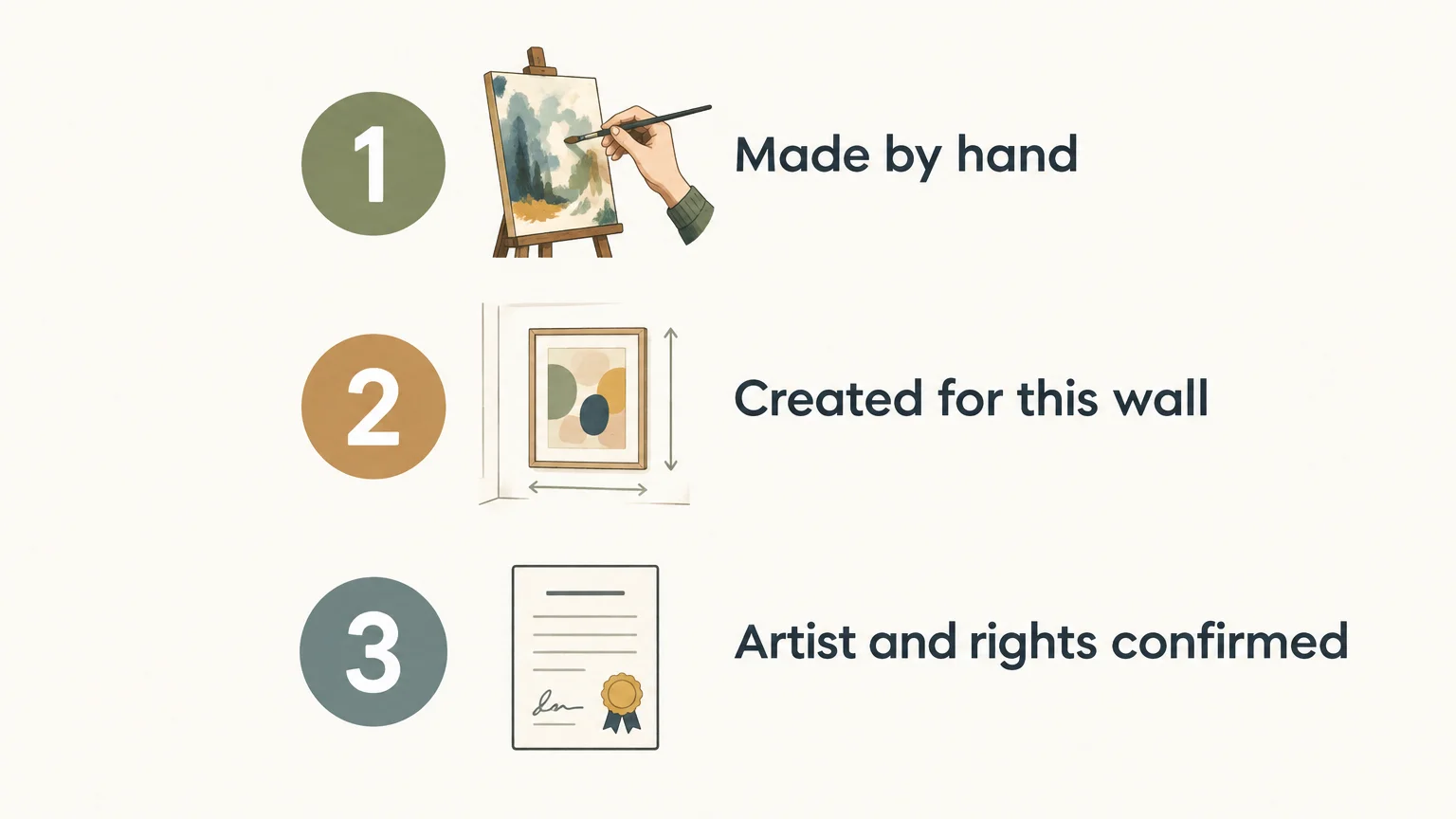
Before you commit, ask direct questions about the making process and the artwork’s history. Request recent photos of the work in progress or completed examples on walls, and ask whether the artist painted directly on site, painted on a panel, or used a printed base. A certificate or written record can support the details, but it does not replace a clear description of the medium and process.
- Confirm the process. Ask whether the mural is painted by hand, printed, or made using a combination of methods.
- Confirm the design. Find out whether it is made for your wall, adapted from an existing design, or reproduced for multiple locations.
- Confirm the rights. Agree in writing on who owns the artwork and how photographs or commercial images of it may be used.
Assess the proposal as carefully as the image. Our guide on how to assess a custom mural covers practical quality considerations before you buy or commission a piece. Look for a defined scope, suitable surface preparation, agreed materials, and a plan for the finish.
Which format suits your space?
For a permanent feature designed around a particular wall, a hand-painted mural gives the artist room to respond to the surface and surroundings. It also involves on-site work and depends on the wall’s condition and access. A printed wallcovering can suit a project built around a pre-existing image or a repeatable design, but it does not become a hand-painted mural simply because its image looks painterly.
Start by measuring the wall and noting its material, condition, access, and exposure to wear or sunlight. A mural artist can assess whether the surface needs preparation and which paints or protective finish suit the setting. If a mural will be outdoors or in a high-traffic area, discuss maintenance and protection before approving the design. You can also read about protecting a mural’s finish.
For our custom mural projects, you describe the wall, surface, and effect you want. We match you with an artist whose style fits, then provide a quote before sketching begins. Wall preparation is assessed as part of the project, and clients must provide a clean, accessible wall. Preparation responsibility is determined after that assessment.
What should a mural commission agreement cover?
A clear agreement records what will be made, where it will go, and how the project will proceed. Specify the design scope, wall dimensions and surface, materials, preparation responsibilities, protective finish, schedule, payment stages, and how revisions or unexpected wall conditions will be handled.
Include copyright and image-use terms, especially if the mural will appear in advertising, on merchandise, or in other commercial materials. Ask how progress will be reviewed and what approval is needed before work begins. When choosing an artist, compare relevant examples and communication about the project, not just a single image. Our article on choosing a trusted mural artist offers questions to guide that conversation.
For our projects, the proposal includes a precise schedule before work begins, though timing estimates may vary. Made-to-order artworks are generally non-refundable and non-exchangeable except in exceptional circumstances, so review the approved scope and terms before committing.
Choose the mural that fits your priorities
A one-off mural made for a particular wall offers a different experience from a printed covering, even when both show compelling art. Confirm the process, authorship, site fit, and image rights, then weigh those details against your wall condition, budget, and desired permanence. A clear description of how the work is made is the most useful first test of originality.
Find a mural for your space
If you want a wall artwork shaped around your home or workplace, consider what the surface, setting, and intended mood call for. A site-specific commission gives you a chance to explain those details and discuss an artistic direction before the work begins.
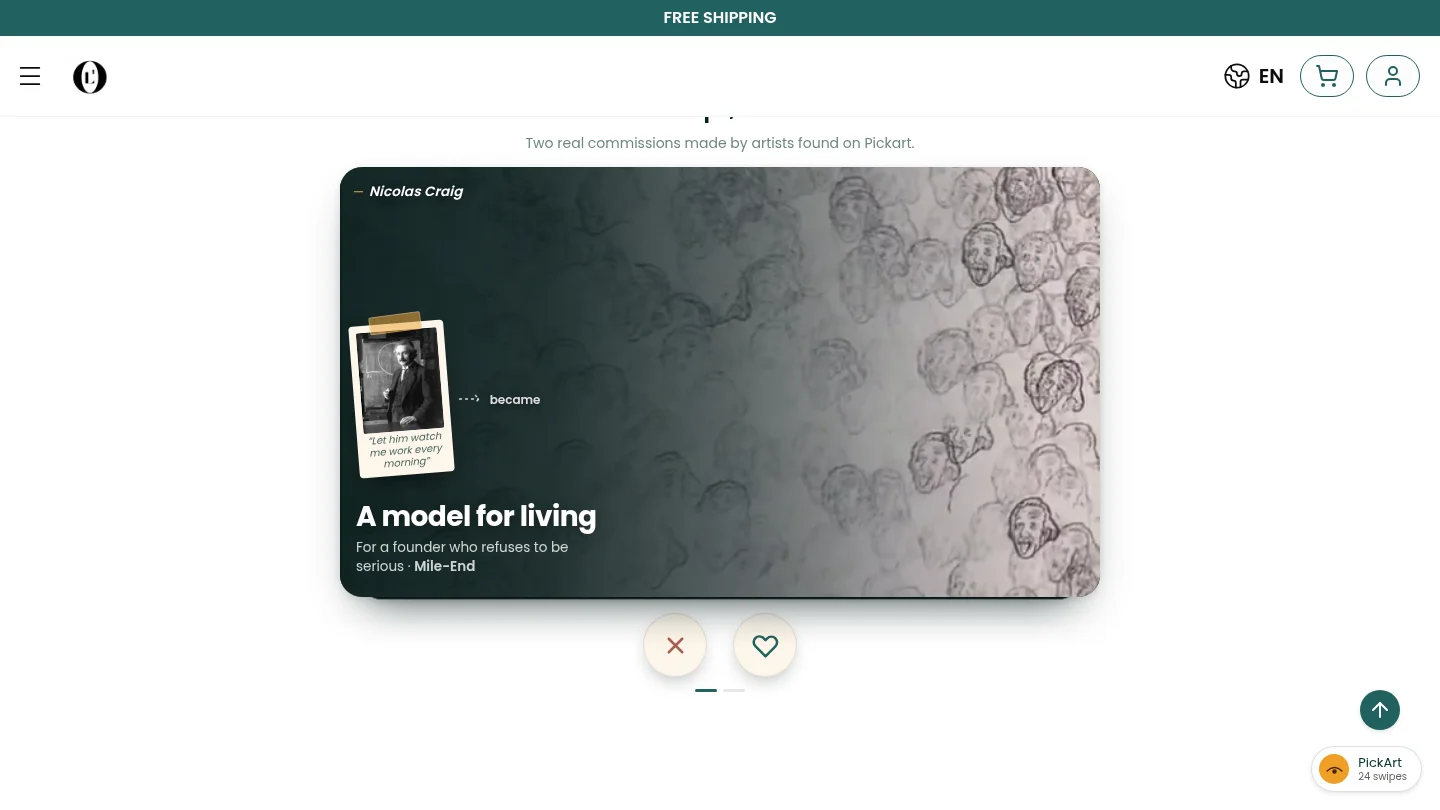
We work with you to describe the wall and desired effect, match the project with an artist, assess feasibility and preparation, and provide a quote before sketching starts. To see available work and mural projects, browse available mural artworks.
Frequently Asked Questions
Are all original murals painted directly onto a wall?
No. Some original mural artworks are painted on panels or other surfaces and then installed, while others are painted directly on site. Ask how the specific work was made and attached.
Can a printed mural still feature an original design?
Yes. An artist may create an original image that is later printed as a wallcovering. The design can be original while the installed image is a reproduction rather than a one-off hand-painted mural.
What should I ask a mural artist before commissioning?
Ask about relevant work, the process, surface preparation, materials, schedule, revisions, protective finish, and rights to use images of the artwork. With us, you can describe your space and review a quote before sketching begins.
Can I commission a mural for a home or business?
Yes. We work on residential and commercial mural projects, matching the artist and proposal to the space, surface, audience, and intended effect.
Can I return a made-to-order mural?
Made-to-order artworks are generally non-refundable and non-exchangeable except in exceptional circumstances. Review the approved scope and terms before you commit.