
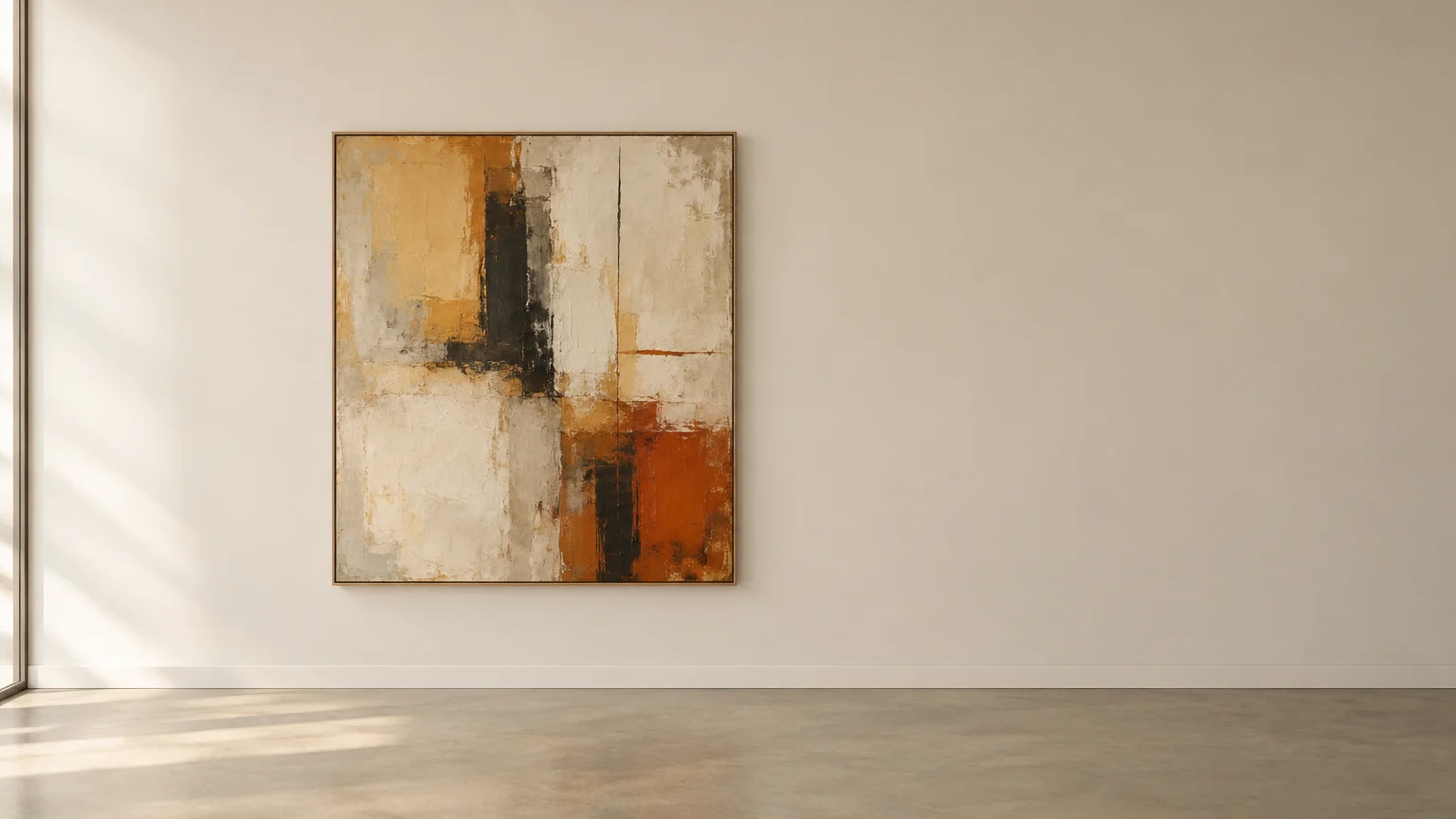

How can a work feel right and still be the wrong purchase? A compelling image can leave questions about authorship, size, condition, or delivery unanswered. If you are exploring original art worth collecting, assess the physical work and purchase terms as carefully as its visual appeal.
For original art for collectors, a thoughtful choice balances personal connection with verifiable details. You do not need specialist vocabulary to begin. Ask what the work is, who made it, how it is documented, how it fits your space, and what the purchase involves. A clear listing helps you compare, while direct questions reveal what a photograph cannot. The aim is to acquire a work you understand and want to live with, not to predict its resale value.
How do you confirm what the work actually is?
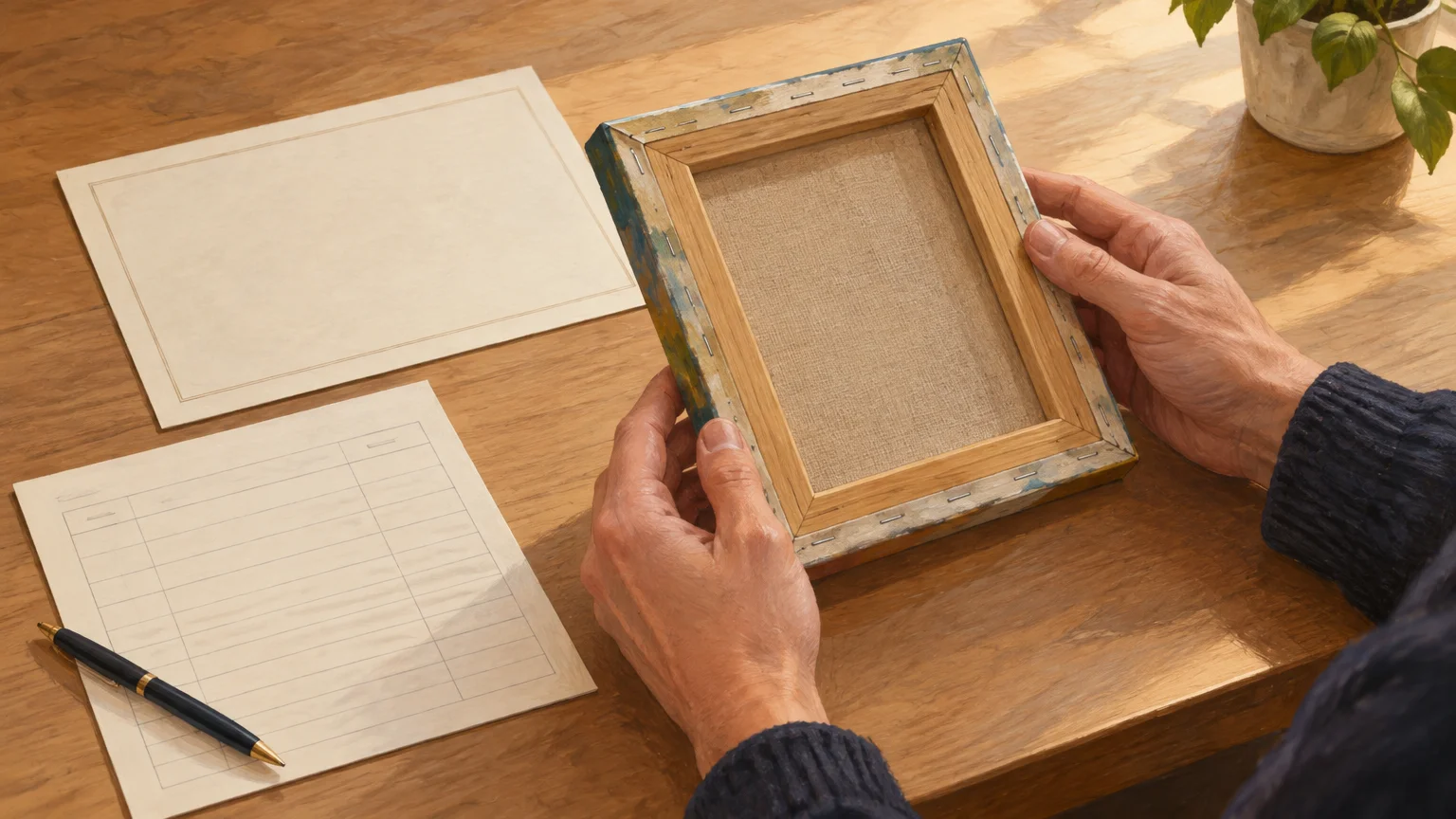
Start by identifying the category: a one-off painting or sculpture, an original printmaking edition, or a reproduction. These are not interchangeable, and the word “print” does not automatically mean a mass-produced copy. Check the listing for medium, format, dimensions, edition details, and whether the work is described as unique.
Ask who created it and what records accompany it. A signed certificate, invoice, or artist or gallery record can support your purchase file, but one document alone does not settle every question of authorship. For a resale work, ask for available ownership records and compare dates and descriptions across documents. A signature can support identification, but it does not establish authorship by itself.
In our collection, an original painting or sculpture is a one-off physical work made and signed by a living artist we represent. Prints are clearly identified in their listings and name the artist behind the original. Details vary by work, so review the individual record and its authenticity information. Our explanation of museum-quality art also outlines considerations that matter when assessing a work for a collection.
Which work fits your taste and your space?
Think about how you want to live with the work before narrowing your choices by color alone. Compare the artist’s style, medium, subject, and scale with the role you want the piece to play. A painting meant to anchor a room has different practical needs from a smaller work for a focused display or a sculpture that needs floor space.
Measure the wall or display area, including nearby furniture and the space needed to view the work comfortably. Check whether the listed dimensions include the frame. For sculpture, ask about footprint, weight, and any installation requirements. Screen color can differ from the physical work, so request current detail images and review the stated medium and condition.
Online research is part of how some collectors discover work. In the 2026 survey of 3,100 high-net-worth collectors across 10 markets, 58% used digital resources for advice and recommendations, according to the 2026 collecting survey. That figure describes high-net-worth respondents, not every buyer. Use online discovery to narrow your options, then confirm the details of the particular work. If you are exploring paintings, browse original paintings in our catalogue and compare their prices, dimensions, and listing details.
How do you judge a price without treating art like a promise?
First decide what the purchase needs to do for you: mark an artist’s practice, anchor a room, or add a particular perspective to your collection. Compare works by the same artist, medium, scale, career stage, and sales channel. Asking prices from unrelated works are weak benchmarks, even when the images look similar.
Ask what the quoted price includes, such as a frame or delivery, and request a written breakdown of additional costs. For an international purchase, check whether taxes, customs charges, or other import costs are separate. A market report can offer context, but it does not establish the value of an individual artwork.
The 2026 Bank of America report prepared with ArtTactic focuses on the U.S. art market. Treat its findings as national context, not as a worldwide price guide; the report is available as a U.S. art market report. For work sold across borders, consider the seller’s and buyer’s market contexts alongside comparable works. Do not rely on a forecast of appreciation to justify a purchase; buy only at a price you can comfortably carry.
What should you check before paying online or across borders?
Online discovery can widen your options, but the images and paperwork still need to match the actual object. The 2026 Art Basel and UBS survey found that 69% of its high-net-worth respondents bought directly from artists, including through studios and commissions, in 2025 and the first half of 2026. Direct purchase is one route among several, not a substitute for clear written terms.
Before paying, get the exact work description, total price, delivery plan, and any return or exchange conditions in writing. Confirm who packs the artwork, whether transit insurance applies, who handles customs charges, and how to report damage. For our catalogue works, we ship worldwide in packaging built around each piece. Delivery times are estimates and may vary, and listing details for authenticity and shipping can differ by work.
Check whether the seller provides clear contact information, detailed images, and specific answers about condition and documentation. If you want more practical checks for an online purchase, read our guide to original art for sale online.
When is a commission better than a listed work?
A commission makes sense when available work cannot meet a specific size, setting, subject, or intention. Describe the space, the effect you want, your budget, and any references that matter to you. A gallery can then match you with an artist and develop a proposal before you commit.
Our custom artwork process includes a free 20-minute Zoom consultation. We match you with an artist and arrange a proposal or quote before work proceeds, so you can review the concept and terms first. Made-to-order artworks are generally non-refundable and non-exchangeable except in exceptional circumstances. Confirm the scope, dimensions, delivery plan, and other terms before approving the order.
Choose with both feeling and evidence
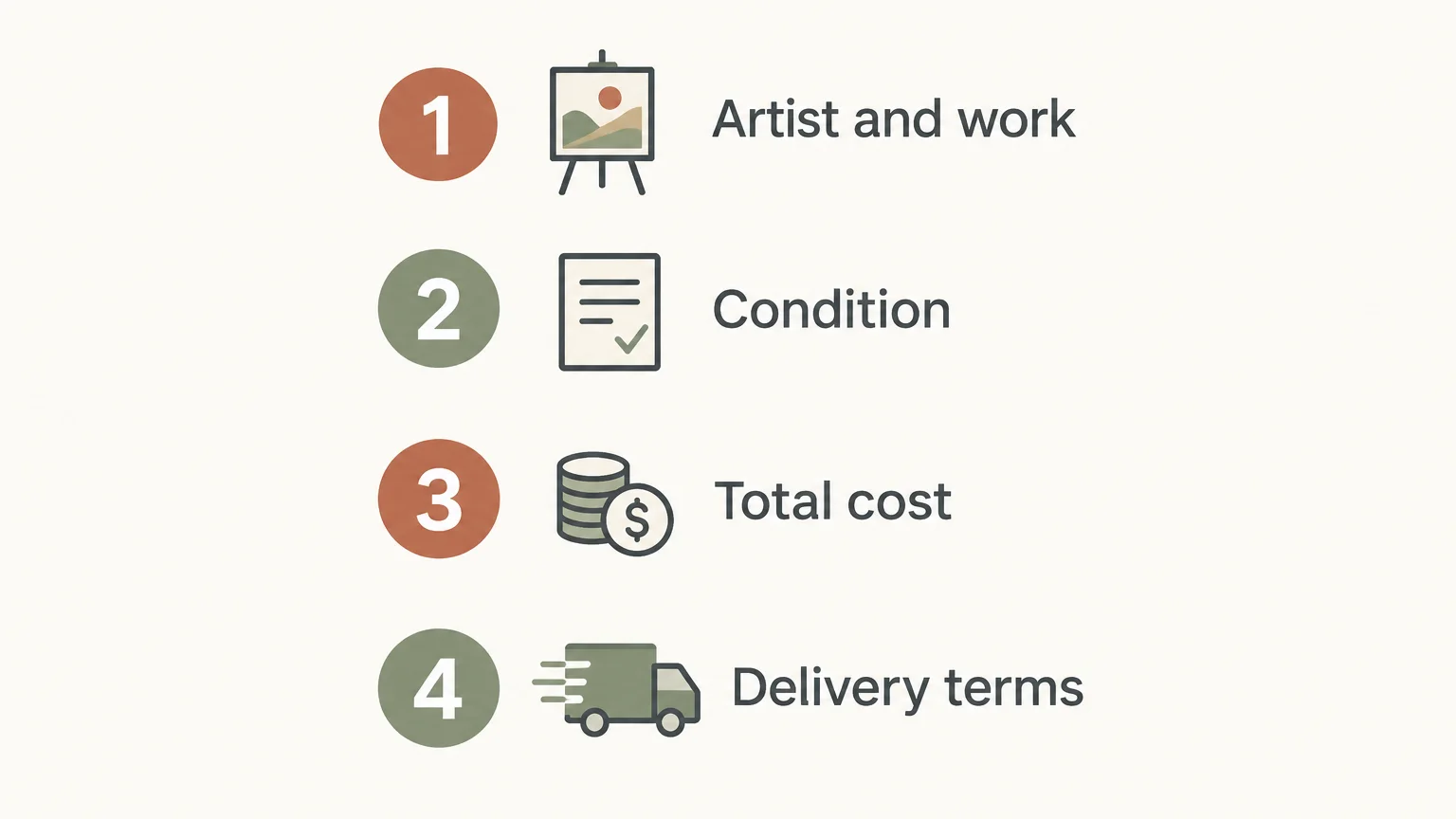
A considered purchase brings together personal connection and clear documentation. Identify what you are buying, check that the work suits your collection and display space, and understand the total cost and delivery terms before paying. When the available options do not meet your needs, treat a commission as a separate decision with its own proposal and conditions.
Find a Work That Speaks to You
A strong collecting decision starts with a work that holds your attention, then checks whether its records, dimensions, and delivery details stand up. If you are narrowing a shortlist, explore original paintings and sculptures by living artists and compare each available work on its own terms.
We connect collectors with one-off original paintings and sculptures by represented living artists through our online catalogue and two Montreal galleries. Catalogue works ship worldwide in packaging built around each piece, though delivery times are estimates and may vary. Listings show prices and dimensions, while authenticity and shipping details can vary by work. When you are ready, buy original art through our catalogue.
Frequently Asked Questions
What counts as original art?
It depends on the medium and how the work was made. A one-off painting or sculpture is different from a reproduction, while an original printmaking edition should be identified as an edition.
What documentation should accompany an artwork?
Ask for the work’s description, artist details, invoice, and any certificate or ownership records available. Check that the information matches the artwork and its listing.
How do I assess art when buying online?
Review the medium, dimensions, condition, documentation, and full purchase terms, and request detailed images if anything is unclear. Our catalogue includes original works by represented living artists, with listing details varying by piece.
Should I buy art as an investment?
Do not assume a work will appreciate or resell quickly. Consider your personal connection and whether you can comfortably hold the work if a future sale takes time.
When should I commission art instead of buying an existing work?
Consider a commission when a specific space, scale, or idea is not met by available work. Review the proposal, quote, delivery plan, and made-to-order terms before committing.