

When you search for an online art gallery for artists, you may be looking for visibility, sales, representation, or simply a professional place to present your work. These goals overlap, but they don't require the same platform. A portfolio tool can display your work, while a gallery partnership can add curation, collector access, administration, and shipping support. To turn visibility into a structured offer, start with our sell your art online guide.
The opportunity is meaningful, but online selling isn't a substitute for trust. In 2023, online sales represented 23% of dealers' total sales, while dealers' own websites accounted for 20% of sales made online. The Art Basel and UBS report also shows why artists need more than attractive images. Buyers still evaluate authenticity, context, service, and the relationship behind the artwork.
What is an online art gallery for artists?
An online art gallery is a digital space where artists can present, promote, and sometimes sell their work to collectors. Unlike a basic social media profile, it usually organizes artworks into collections, artist pages, exhibitions, or searchable catalogues. Some platforms focus on discovery, while others handle transactions, shipping, certificates, or representation.
The phrase can describe several different models. A marketplace lets many artists upload work and reach visitors through shared traffic. A virtual exhibition platform emphasizes presentation and storytelling. A gallery website represents selected artists and may manage sales, pricing, delivery, and collector communication. An independent artist website gives you more control, but also leaves marketing and administration largely in your hands.
A 2025 study on developing an online art gallery described digital platforms as a way to reduce geographic barriers around art display and sales. You can read the 2025 design study for its technical and functional overview. Its central point is practical: a digital gallery should connect presentation, discovery, and user access rather than simply reproduce a static portfolio.
For artists, that distinction matters. A gallery should help a visitor understand what you make, why it matters, and how to take the next step. That step might be an enquiry, a purchase, a commission request, or a conversation with a curator.
Which online gallery model fits your goals?
Imagine two artists with the same level of talent. One wants to sell original paintings internationally. The other wants to build a controlled exhibition space for curators and collectors. They may need completely different digital environments.
Marketplace platforms
Marketplaces provide shared traffic and a ready-made buying environment. They may offer search filters, payment processing, promotional collections, and shipping assistance. Their limitation is competition. Your work appears beside many other artists, so strong photography, consistent pricing, and a clear profile become essential.
Virtual exhibition platforms
Virtual exhibition tools focus on how visitors experience your work. They can help you create a themed presentation, share a permanent exhibition link, or build a digital portfolio with more atmosphere than a product grid. They may be useful when your practice depends on sequencing, installation, or a strong curatorial narrative.
Gallery representation platforms
A represented artist usually receives more than upload access. The gallery may review your portfolio, select suitable works, publish your catalogue, communicate with buyers, and manage paperwork or delivery. This model can reduce administrative work, but it may involve commissions, subscriptions, pricing requirements, or an application process.
Independent artist websites
Your own website gives you control over design, customer data, pricing, and communication. However, you must generate most of the traffic yourself. You also need to manage enquiries, payment systems, shipping, returns, certificates, and follow-up.

What should you check before joining an online art gallery?
Before uploading your work, examine the platform as carefully as a collector would. A polished homepage isn't enough. You need to understand how the gallery creates value for artists and buyers.
- Audience quality: Does the platform attract collectors, interior designers, businesses, curators, or mainly casual browsers?
- Curation standards: Is every submission accepted, or does a team review artistic quality, coherence, photography, and pricing?
- Original artwork policy: Does the platform sell one-off paintings and sculptures, prints, digital files, or all three?
- Commission structure: Check listing fees, subscriptions, sales commissions, payment processing, and any marketing charges.
- Ownership and rights: Read the rules covering image use, reproduction, licensing, copyright, and removal of your work.
- Sales administration: Find out who handles invoices, certificates, packaging, shipping, returns, and customer communication.
- Artist control: Confirm whether you set prices, choose listed works, edit your biography, and decide where else your work may appear.
- Reporting: Look for useful information about views, enquiries, sales, traffic sources, and collector interest.
Pay particular attention to the difference between exposure and representation. Exposure may mean that your work appears in a searchable profile. Representation may include selection, promotion, collector matching, sales support, and logistics. Both can be valuable, but they create different expectations.
For example, our artist partnership model combines online presentation with curation, Artsy access for accepted artists, potential gallery visibility, and support with sold-work logistics. The important question is whether the service matches the type of help you actually need.
How can you make your work easier to discover?
A gallery can bring visitors, but your profile still needs to answer their questions quickly. Collectors often begin with an image, then look for evidence that the work is authentic, available, and suitable for their space.
Start with accurate artwork information. Include the title, year, medium, dimensions, orientation, availability, price, and framing or hanging details. If the work is signed or accompanied by a certificate of authenticity, state that clearly. Avoid vague descriptions such as “beautiful abstract painting.” Explain the visual structure, materials, process, and intention instead.
Photography deserves the same care as the artwork itself. Use a straight-on image with balanced lighting and realistic color. Add detail shots when texture matters. If scale is important, include an installation view or a carefully measured reference. Never edit an image so heavily that the online presentation creates a misleading impression.
Your artist biography should be concise and specific. Mention your location, medium, recurring themes, relevant exhibitions, and the question or experience that drives your practice. You don't need to write a long life story. You need to help a collector remember what makes your work coherent.
Organize related works into series whenever possible. A series helps visitors understand development across several pieces. It also gives curators and buyers a clearer path through your practice. If you want to compare different platform types, our best websites guide for artists can help you assess presentation and selling options.
International reach adds another layer of preparation. The 2018 Hiscox online art report found that 70% of surveyed galleries sold online to international clients. That historical figure doesn't describe the 2026 market, but it illustrates why dimensions, currencies, delivery expectations, and artwork documentation matter beyond your local audience.
Should you sell through a gallery, directly, or both?
A hybrid approach often makes sense when you want both control and reach. Your own website can support your identity and direct relationships, while a gallery can introduce your work to collectors who would not otherwise find you.
Direct selling gives you control over communication and margins. It also makes you responsible for every operational detail. You need a reliable payment process, professional packaging, shipping insurance, clear policies, and a method for answering questions about authenticity and care.
Gallery selling can reduce that workload. A professional gallery may provide curation, catalogue management, sales administration, delivery coordination, and collector support. In exchange, you may accept a commission, follow pricing rules, or participate in a subscription plan. Read the agreement before assuming that visibility automatically leads to sales.
In 2023, the Art Basel and UBS data showed that collectors continued to use dealers and galleries as important purchasing channels, even as online buying became more established. That suggests a useful principle for 2026: digital access works best when it preserves the trust and guidance associated with a gallery.
Our advice on how to sell art through a gallery or online can help you compare these routes according to your goals, workload, and desired relationship with collectors.
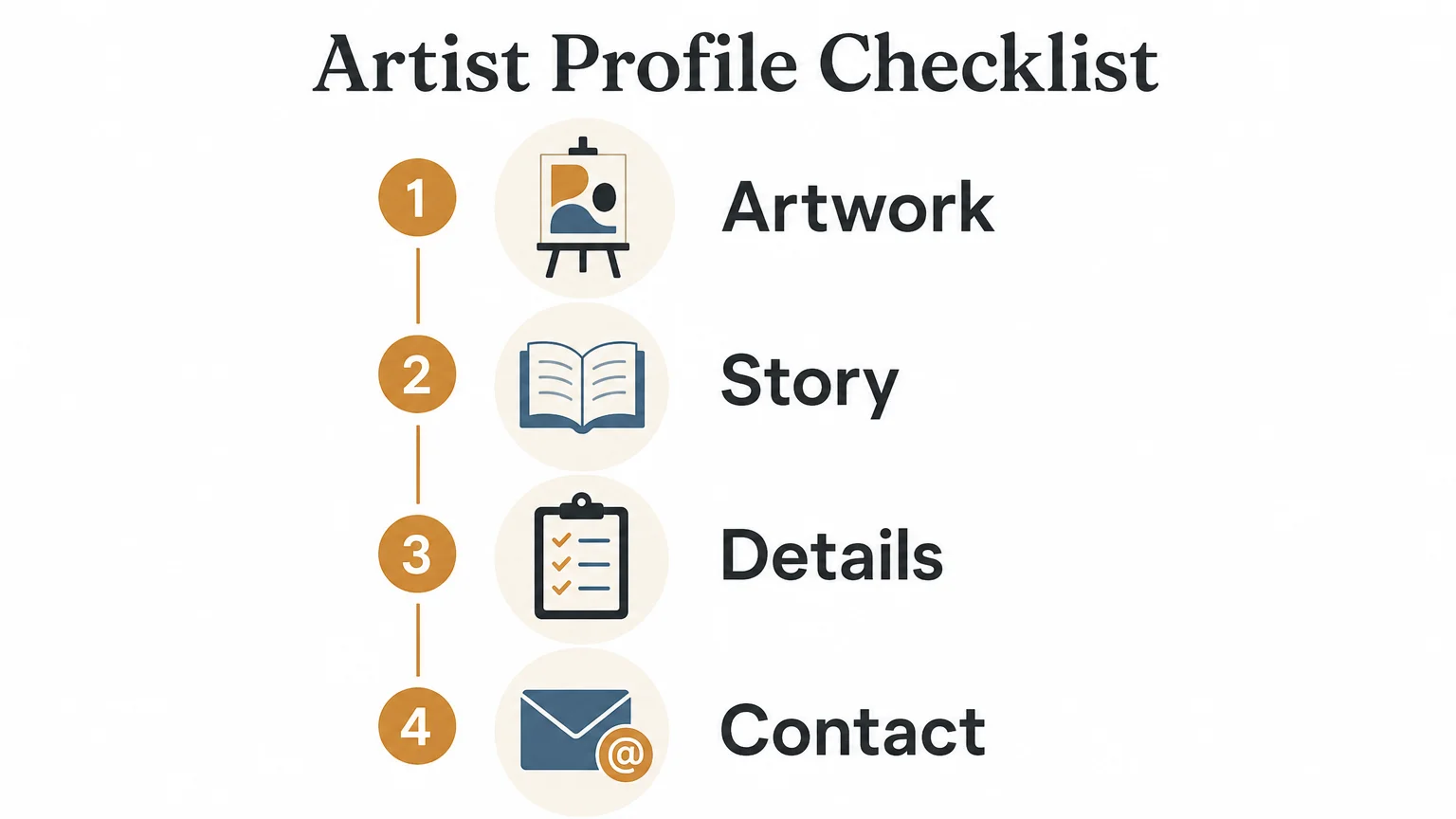
What should a serious artist profile include?
Think of your profile as a small exhibition with a clear commercial path. It should create confidence without turning your practice into a sales pitch.
- A strong opening image: Lead with a representative work that communicates your style immediately.
- A focused biography: Explain your practice in plain language, with enough context to create connection.
- A coherent selection: Show enough work to establish consistency, but remove weaker or unrelated pieces.
- Complete artwork details: Include medium, dimensions, year, price, availability, and presentation information.
- Collector reassurance: Explain certificates, signatures, packaging, shipping, and care instructions.
- A clear next step: Give visitors a simple way to enquire, purchase, request a commission, or contact the gallery.
Consistency matters across every channel. If your work appears on a gallery website, your own website, and another marketplace, keep titles, prices, dimensions, and availability aligned. Conflicting information can create hesitation and make buyers question whether a work is still available.
Is an online art gallery right for you in 2026?
An online gallery is a strong option if you want your work to remain discoverable beyond exhibitions, studio visits, and social media posts. It can support collectors in different time zones and give your practice a more permanent structure.
It may not be the right fit if you want complete control without commissions, subscriptions, or curation. In that case, an independent website may suit you better. You will need to replace the gallery's discovery, sales, and administrative functions yourself.
Ask yourself four practical questions:
- Do I want to sell originals, prints, commissions, or a combination?
- Do I need collector access, portfolio presentation, or operational support?
- Am I prepared to meet the platform's pricing, image, and submission standards?
- Can I maintain accurate information and respond professionally to enquiries?
If your goal is to build a sustainable art practice, choose the platform that supports your next stage, not only your current visibility. A useful online art gallery should make your work easier to understand, easier to trust, and easier to buy.
Choose the platform that supports your practice
The right online gallery for artists combines presentation, discoverability, trust, and practical sales support. Compare its audience, curation, fees, rights policy, logistics, and artist control before you apply. A professional profile matters, but the surrounding service matters just as much. Choose a platform that helps collectors connect with the work and helps you spend more time creating.
Take action with L'Original
If you're looking for more than a place to upload images, consider a gallery relationship that connects presentation with curation and collector access. The right support can make it easier to show your work professionally while reducing the administrative load around sales.
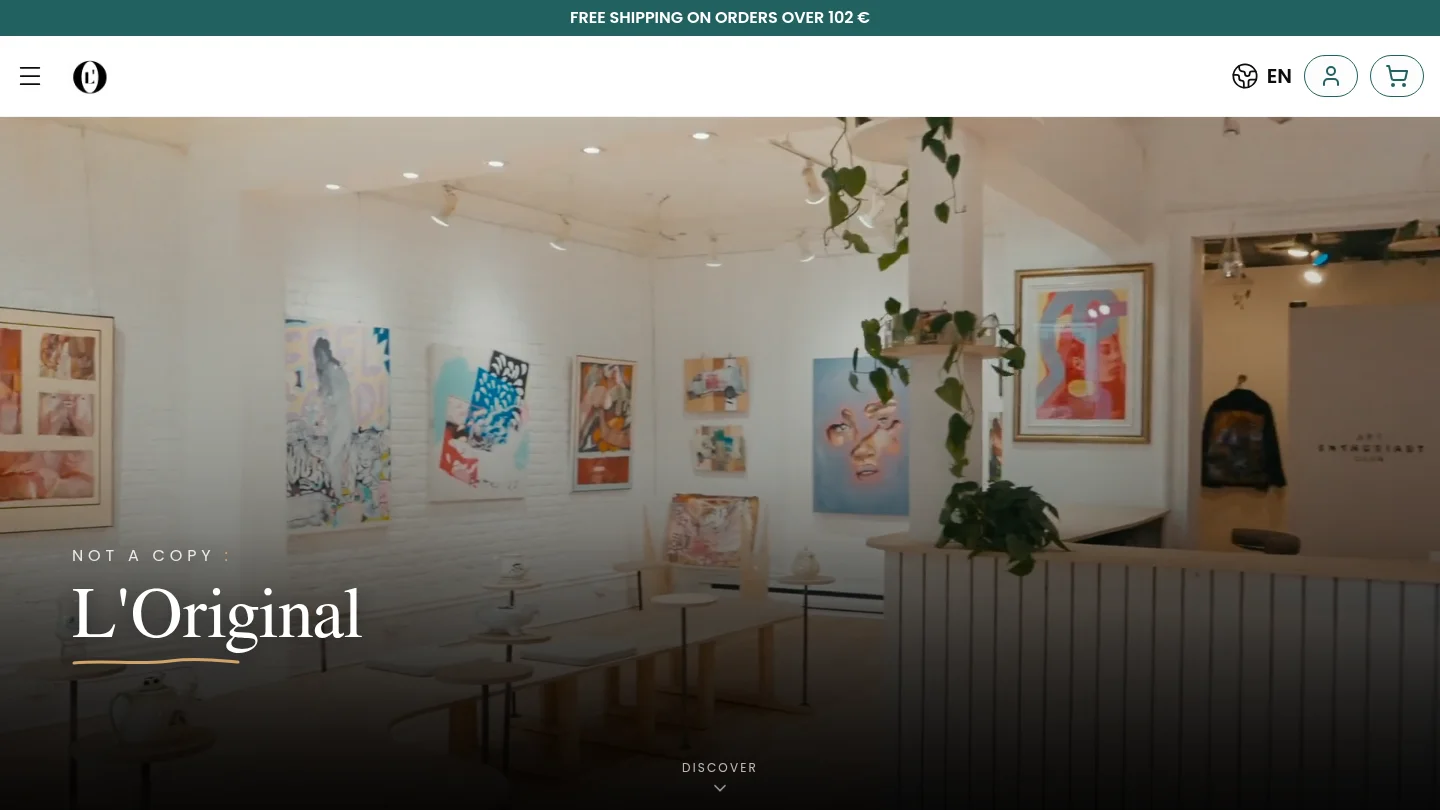
At L'Original, accepted living artists can receive an online catalogue presence, possible physical gallery exposure, Artsy access, and logistics support for sold works. Our team reviews applications and helps artists present original physical artwork to an international audience. Join our online art gallery as an artist and explore whether the partnership fits your practice.
Frequently Asked Questions
What is the difference between an online art gallery and an artist website?
An artist website gives you direct control over presentation, communication, and customer relationships. An online art gallery may add shared discovery, curation, collector access, payment support, or sales logistics.
Can emerging artists join an online art gallery?
Yes, some galleries accept emerging artists through portfolio applications or committee review. Requirements may include original physical work, consistent pricing, strong photography, and a coherent artistic practice.
Should I sell originals or prints online?
That depends on your goals, audience, and production model. Original paintings and sculptures support one-off sales, while prints can offer more accessible price points and repeatable production.
What information should I include with each artwork?
Include the title, year, medium, dimensions, price, availability, and presentation details. You can also add information about signatures, certificates of authenticity, shipping, framing, and care.
Does joining an online gallery guarantee sales?
No, gallery participation usually provides exposure and access rather than guaranteed sales. Your results depend on the quality and consistency of your work, pricing, presentation, audience fit, and ongoing engagement.