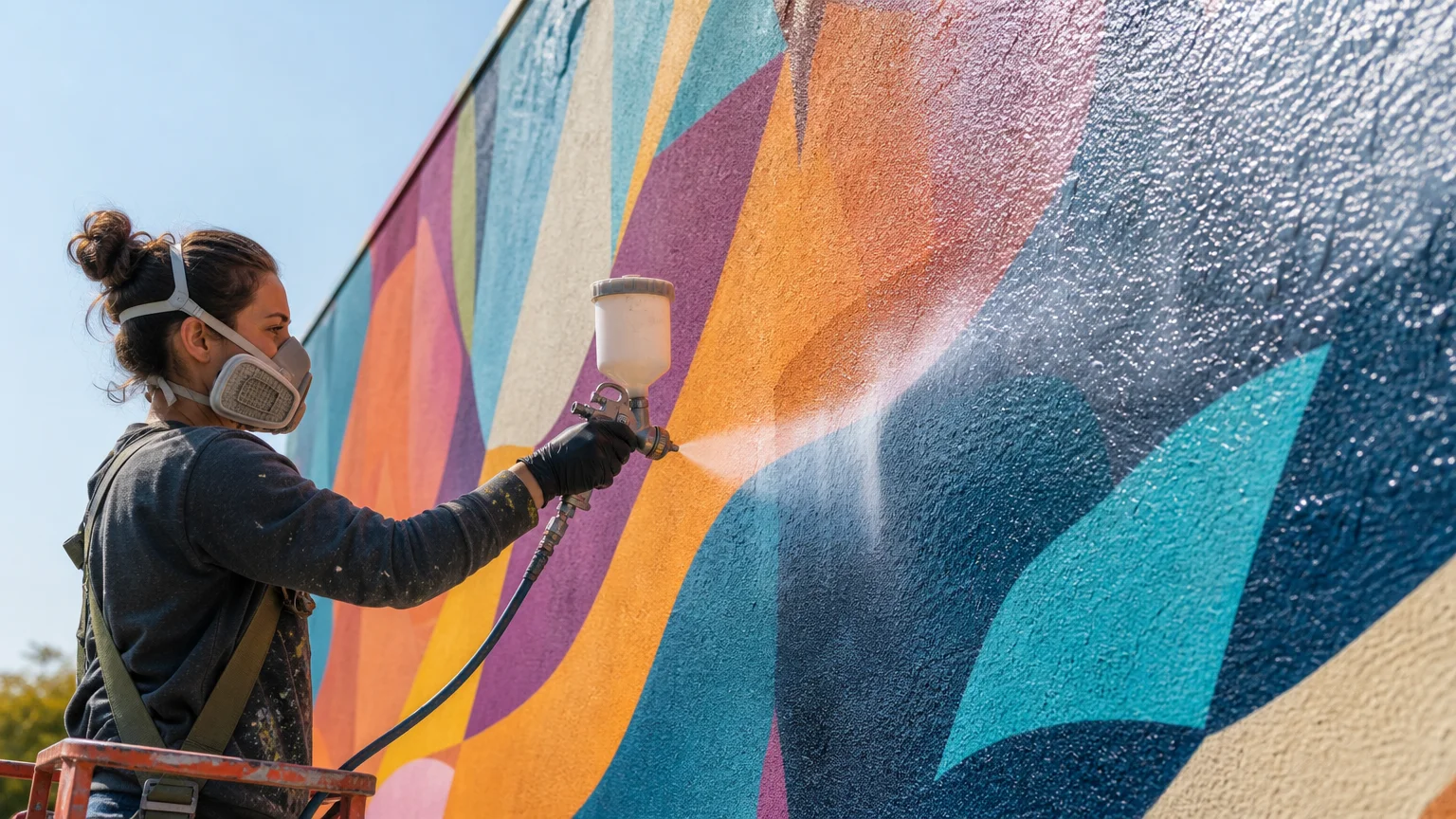

What makes a mural last: the paint, the wall, or the final protective layer? Before choosing, start with our mural care and protection FAQ to clarify the surface, exposure, maintenance expectations, and finish you need.
A mural protective finish is not simply a clear coat. It may consolidate fragile paint, limit UV damage, resist moisture and grime, create a removable graffiti barrier, or preserve the appearance of an indoor artwork. The right choice depends on whether you are protecting a new acrylic mural, restoring an aged aerosol piece, or planning long-term maintenance on brick, concrete, wood, or another painted surface.
Which mural protective finish fits your project?
For conservation-focused outdoor work, the MuralColors Preservation System offers the most complete maintenance path in this selection. MuralShield is a strong alternative when weakened acrylic or aerosol paint needs consolidation. MuralGuard fits projects that prioritize a water-based, zero-VOC application and several finish options. World's Best Graffiti Coating is best understood as a graffiti-focused companion product, while the Sample Pack suits testing and smaller murals.
| Rank | Product | Best for | Key differentiator |
|---|---|---|---|
| 1 | MuralColors Preservation System | Conservation and planned maintenance | Breathable, semi-sacrificial protection with a removable maintenance layer |
| 2 | MuralShield | Acrylic and aerosol mural consolidation | Combines pigment consolidation with UV and weather protection |
| 3 | RainguardPro MuralGuard | Interior or exterior murals on varied substrates | Two-part, water-based formulation with matte, satin, and gloss options |
| 4 | World's Best Graffiti Coating | Graffiti-prone walls | Flexible, breathable barrier designed for easier vandalism removal |
| 5 | Mural Protection Sample Pack | Small murals and product trials | Combines protective products and application accessories in one kit |
1. MuralColors Preservation System
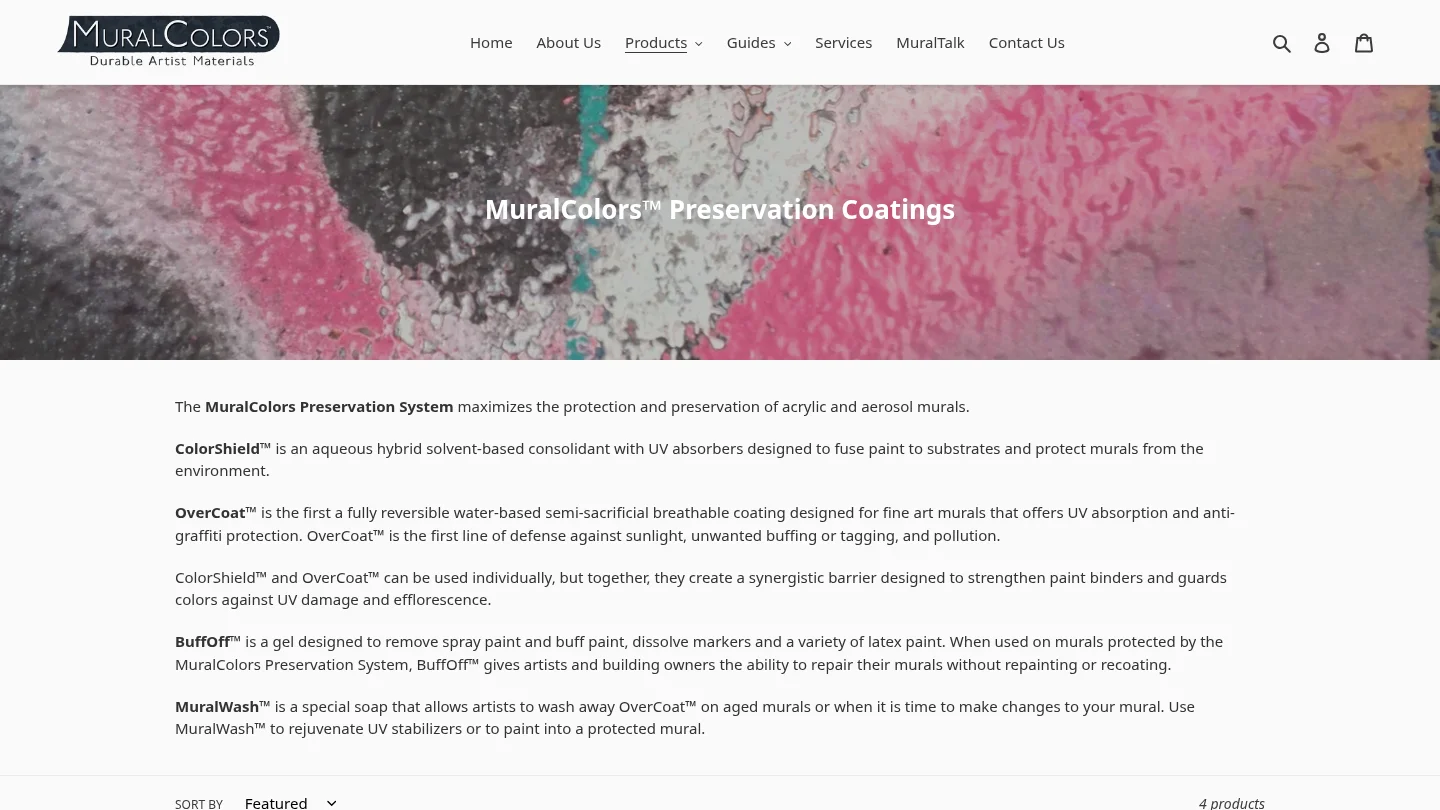
Best for: You want a conservation-oriented system for an indoor or outdoor mural, especially when future maintenance and selective removal matter.
The MuralColors system separates preservation from sacrificial protection. ColorShield acts as a consolidant for acrylic and aerosol paint, while OverCoat adds a breathable, semi-sacrificial layer designed to absorb UV exposure and help resist tagging, buffing, and pollution. The two products can be used together or separately, depending on the mural and its risks.
This approach is useful when you want a documented maintenance path rather than a permanent film that may complicate future restoration. OverCoat can be washed away with MuralWash, allowing the protective layer to be renewed without treating the mural as a disposable surface. Published component listings show ColorShield from $29.50 USD and OverCoat from $22.50 USD, although availability and final pricing should be confirmed before ordering.
Pros:
- Designed specifically for fine-art mural preservation.
- Supports acrylic and aerosol mural applications.
- Offers a breathable and semi-sacrificial maintenance layer.
- Provides a defined path for future cleaning, repair, and reapplication.
- Can be used indoors, outdoors, or as a combined system.
Cons:
- It requires more planning than a single-container clear coat.
- You need to choose the correct product sequence for the mural's condition.
- Testing remains important because mural paint mixtures and substrates vary.
2. MuralShield
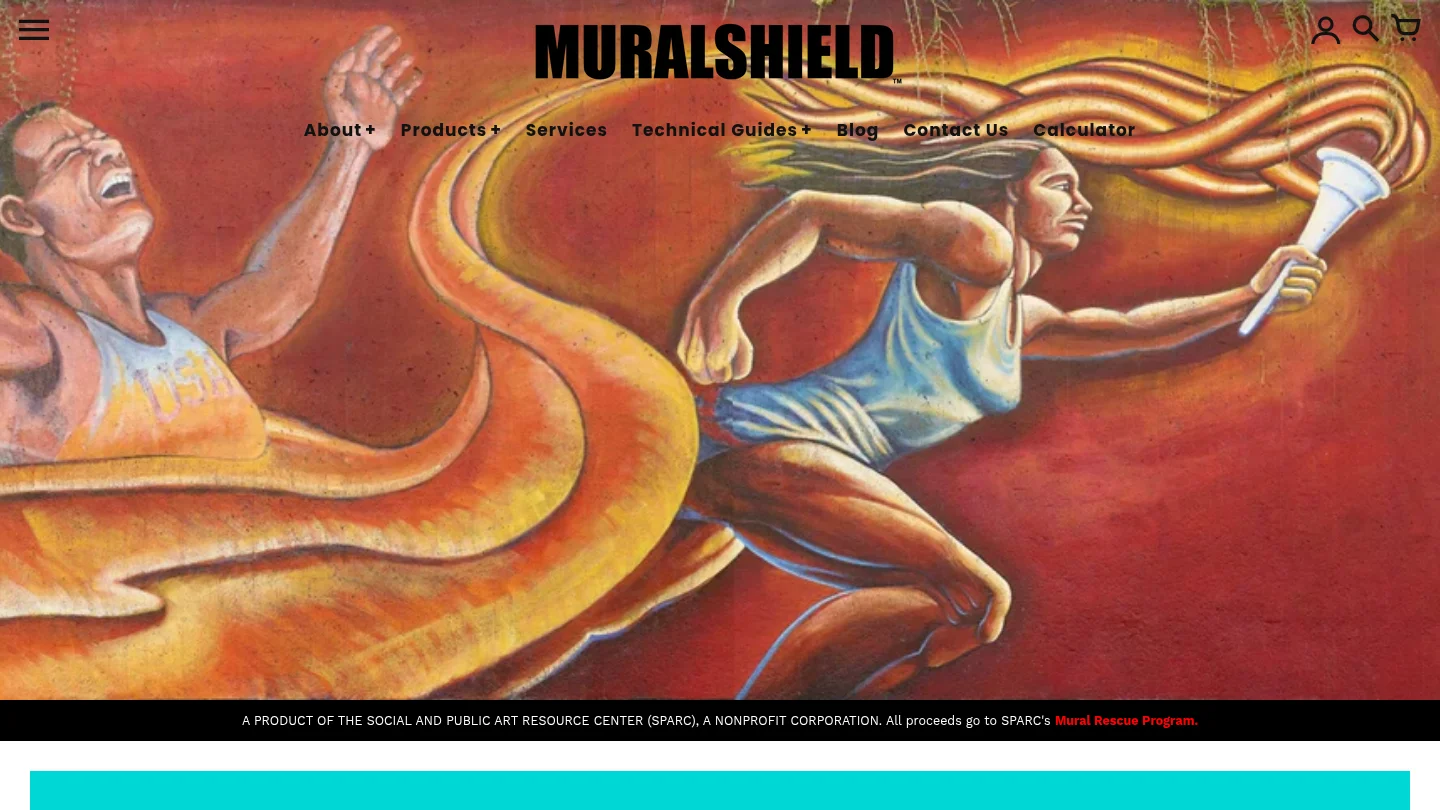
Best for: You need consolidation and broad environmental protection for acrylic, aerosol, or street-art murals.
MuralShield is positioned as a consolidant rather than an ordinary varnish. Its purpose is to help fuse weakened paint layers, protect against UV exposure and weathering, and support the preservation of existing or newly completed murals. It is particularly relevant when pigments have become chalky or fragile and cannot tolerate aggressive washing.
MuralShield can be paired with World's Best Graffiti Coating when vandalism protection is a major concern. That combination creates a more complete maintenance system, but it also means you are not choosing one standalone finish. The supplied listings show MuralShield system products from around $99, with a Utility Box kit listed at $110 for smaller mural projects or utility-box programs.
Application requires careful preparation. The wall should be clean and dry, and some application guidance calls for solvent-rated gloves, respiratory protection, protective clothing, and attention to flammability. Follow the current technical and safety documentation for the exact formulation you purchase.
Pros:
- Suitable for acrylic and aerosol mural preservation.
- Useful for consolidating fragile or weathered paint layers.
- Offers clear protection against UV exposure, grime, and weathering.
- Can be painted over for future touch-ups without stripping the entire layer.
- Available in system kits for smaller mural projects.
Cons:
- Full graffiti protection generally requires a second product.
- Application demands careful surface preparation and safety planning.
- Solvent-related handling requirements may be unsuitable for casual indoor DIY use.
3. RainguardPro MuralGuard
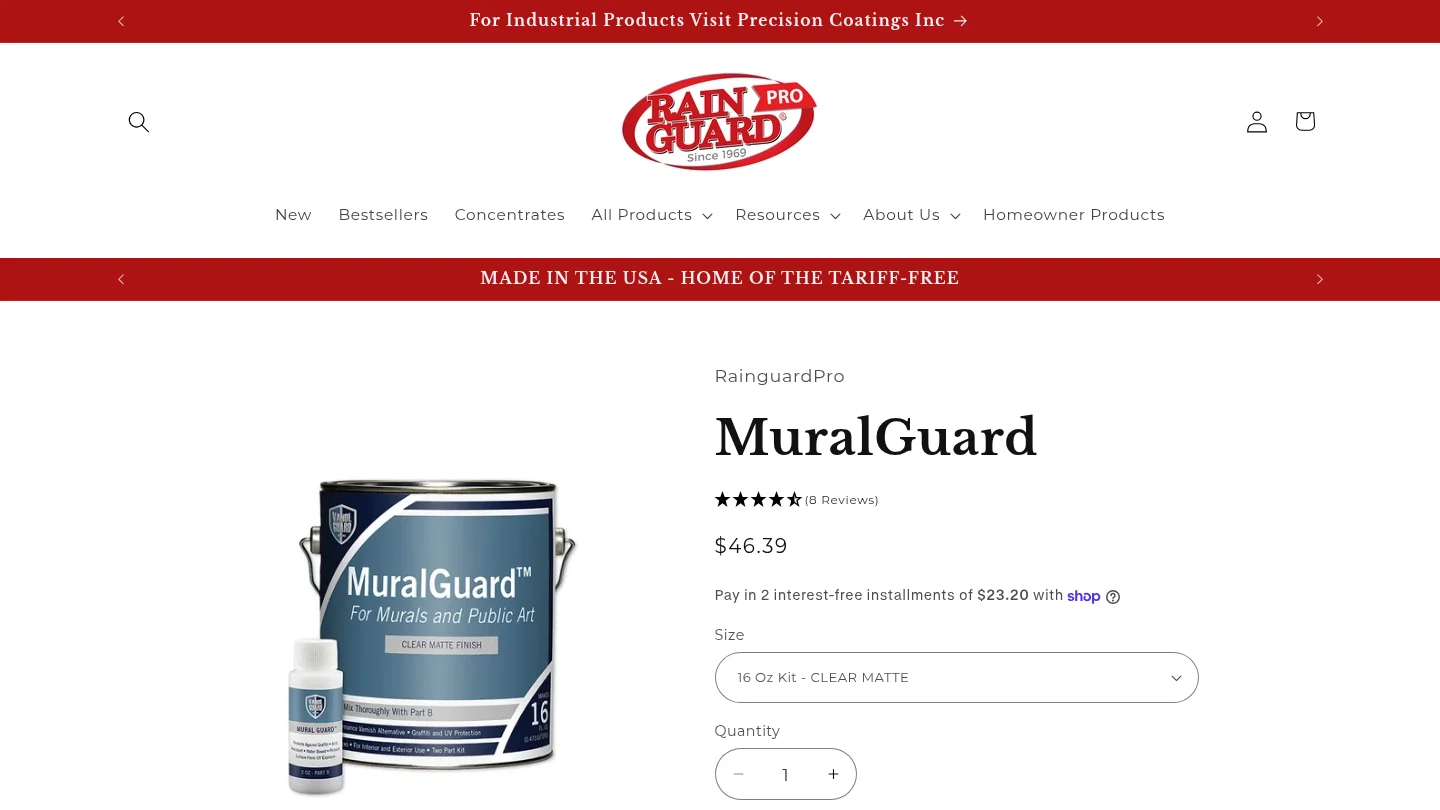
Best for: You need a protective varnish for painted concrete, brick, wood, or metal, with a choice of matte, satin, or glossy appearance.
MuralGuard is a two-part, water-based aliphatic polyurethane marketed for murals and public art. It is designed to resist UV exposure, harsh weather, corrosion, water, abrasion, and graffiti. The product is available in small kits and larger formats, with stated coverage of approximately 250 to 400 square feet per gallon, depending on the surface.
The main practical advantage is flexibility in application and appearance. You can spray, brush, or roll it, then choose a clear glossy, satin, or natural-looking matte finish. The manufacturer also describes the formulation as zero-VOC, odorless, and free from isocyanates after the two components are mixed.
Its main trade-off is the chemistry and maintenance approach. MuralGuard is a two-component product, so mixing and curing must be handled correctly. Graffiti removal guidance references strong cleaning solvents after curing, which makes a test patch and a clear maintenance procedure essential before treating a valuable mural.
Pros:
- Supports several common mural substrates.
- Provides matte, satin, and glossy finish choices.
- Can be sprayed, brushed, or rolled.
- Combines UV, water, abrasion, and graffiti protection.
- Marketed as water-based, zero-VOC, and odorless after mixing.
Cons:
- Two components add preparation and mixing requirements.
- Its maintenance process is less clearly reversible than a semi-sacrificial system.
- Graffiti removal may require solvent compatibility testing after curing.
4. World's Best Graffiti Coating
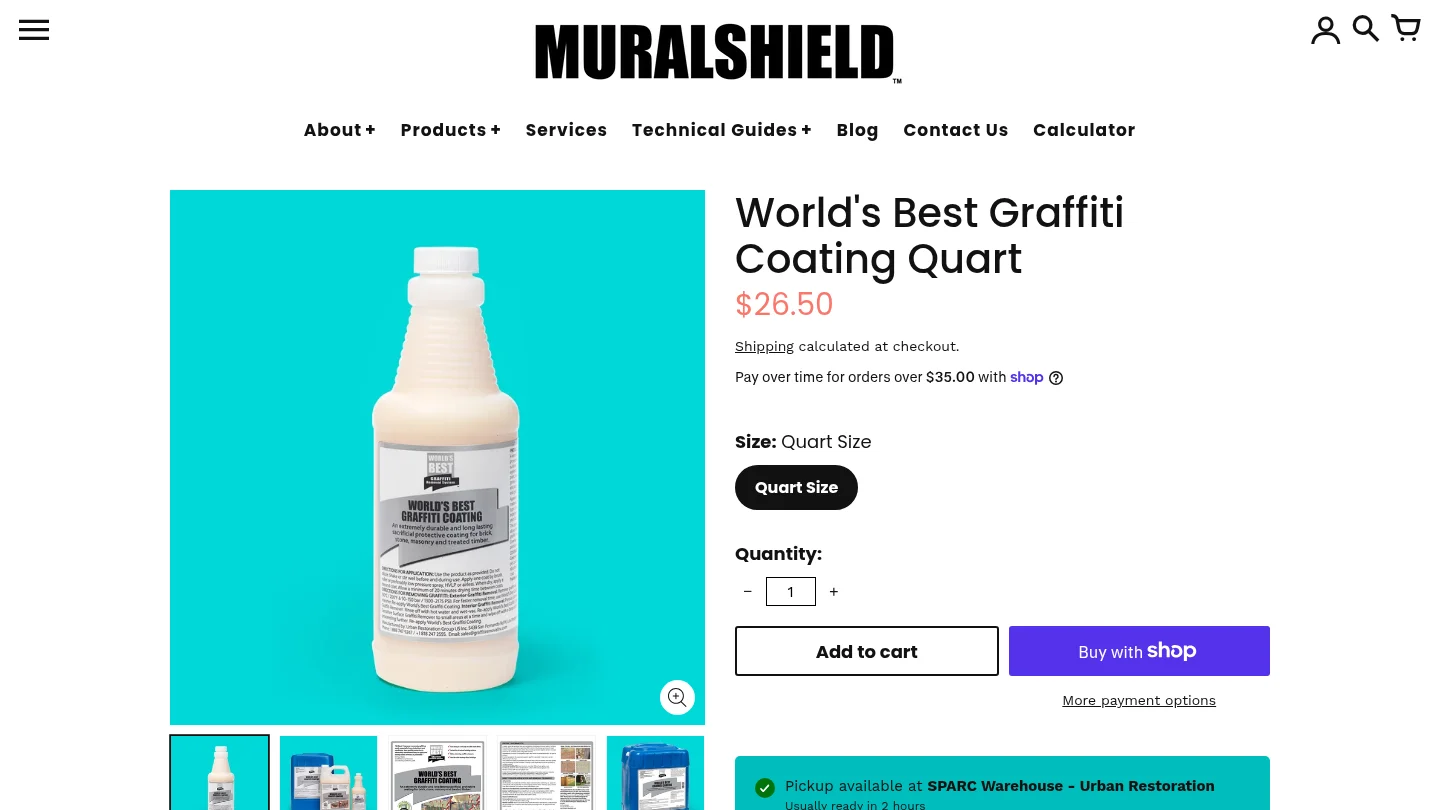
Best for: Your main concern is graffiti removal, repeated cleaning, and a flexible barrier over a prepared mural.
World's Best Graffiti Coating is primarily a vandalism-control layer. It is designed to work with MuralShield, creating a protective barrier that allows unwanted spray paint, marker, and other materials to be removed without immediately damaging the artwork beneath. The coating is described as flexible, UV stable, breathable, and suitable for delicate historic surfaces.
This is not the strongest choice when you need one product to consolidate weak paint and provide complete preservation. Its role is closer to a removable or renewable maintenance shield. Once graffiti is removed, the affected area should be recoated, so the real benefit appears on walls where cleaning access and future labor are part of the plan.
Published product information lists a quart at $26.50 and estimates coverage at roughly 200 to 300 square feet per gallon, depending on the substrate and number of coats. Porous brick, stucco, and other absorbent surfaces may require more material than smooth concrete.
Pros:
- Focused on graffiti and vandalism maintenance.
- Works as part of a broader MuralShield protection system.
- Designed to flex with temperature changes.
- Allows walls to breathe rather than trapping water vapor.
- Can be reapplied after graffiti removal.
Cons:
- It is not a complete substitute for a consolidant.
- Best results depend on using the right underlying preservation layer.
- Repeated vandalism creates recurring cleaning and reapplication work.
5. Mural Protection Sample Pack
Best for: You are protecting a small mural, testing a system before a larger project, or want basic application accessories included.
The Mural Protection Sample Pack combines small quantities of MuralShield and World's Best Graffiti Coating with wipes, buckets, brushes, a towel, and gloves. It is designed for murals up to approximately 75 square feet and includes supplies for removing a limited number of small tags.
This format is useful when you are uncertain about compatibility or want to test the appearance and cleaning behavior on a discreet area. It also reduces the need to source every accessory separately. However, it is a trial-sized solution rather than an economical choice for a large wall, a public-art program, or a mural exposed to frequent vandalism.
Pros:
- Convenient entry point for small murals.
- Includes both protective products and basic accessories.
- Useful for test applications before buying larger quantities.
- Supports initial UV, weather, and graffiti protection.
Cons:
- Limited coverage makes it unsuitable for most large murals.
- It does not replace a full conservation or maintenance plan.
- The kit does not remove the need for surface testing and safety precautions.
What should you check before choosing a mural finish?
Start with paint compatibility. Acrylic paint, aerosol paint, house paint, paint markers, and mixed-media surfaces do not respond identically to a clear layer. A product that works well on painted concrete may behave differently over a delicate aerosol passage, a glossy wall, or a porous brick surface. Always test a small, representative area before full application.
Next, separate UV protection from graffiti resistance. A consolidant may strengthen paint binders and help reduce fading, while a sacrificial or semi-sacrificial coating may make unwanted paint easier to remove. If your mural faces strong sunlight but little vandalism, preservation may be the priority. If it sits in a busy public area, cleaning and reapplication may matter more.
Pay attention to surface breathability and moisture movement. Exterior walls can contain or receive moisture, especially masonry surfaces. A finish that traps moisture may contribute to blistering, whitening, or adhesion problems. Flexible and removable systems can be preferable when future restoration, repainting, or selective maintenance is important.
Then choose the visual effect. A clear finish may be glossy, satin, matte, or luster-like. Gloss can intensify color but create reflections, while matte finishes preserve a flatter appearance. Satin often provides a middle ground. Your choice should match the mural's viewing distance, lighting, texture, and intended atmosphere.
Finally, review the application method, coverage, drying time, curing requirements, and protective PPE. Spray application may create a more even surface, but it also demands better ventilation and overspray control. Brush or roller application can be practical for smaller areas, although texture and lap marks may become more visible. Our guidance on painting techniques for durable finishes can also help you think through preparation and long-term surface performance.
When should you use a consolidant, varnish, or graffiti coating?
Use a consolidant when the paint itself is fragile, chalky, or poorly bonded. Use a varnish when you mainly need a protective film with a chosen sheen and broad environmental resistance. Use a graffiti coating when the mural needs a maintenance barrier that can be cleaned or renewed after vandalism.
These categories can overlap, but they are not interchangeable. A mural may need a consolidant first, followed by a protective top layer. Another mural may only need an indoor coating with light UV protection. The most reliable choice comes from matching the finish to the paint condition, wall material, exposure, and future repair plan.
How do you apply a protective finish safely?
Begin with a clean, dry, stable surface. Remove dust and grime without saturating a vulnerable mural, repair adhesion or wall problems first, and confirm that the paint has cured according to the paint manufacturer's guidance. Mask nearby areas and protect floors, fixtures, plants, and adjacent artwork from spray or liquid contact.
Carry out a test patch in an inconspicuous area. Check clarity, sheen, color shift, adhesion, drying behavior, and whether the finish softens or lifts any paint layer. For two-part or solvent-based products, follow the current technical and safety documents rather than relying on general coating advice.
Record the product name, batch information, application date, number of coats, dilution, weather conditions, and photographs. This documentation supports future touch-ups and helps you identify the correct process if the mural needs cleaning, recoating, or restoration.
Final recommendation
The right mural protective finish is the one that supports the mural's entire life cycle, not just its appearance on application day. Choose MuralColors when reversibility and planned conservation lead the brief, MuralShield when fragile acrylic or aerosol paint needs consolidation, MuralGuard when substrate range and finish choice matter, and World's Best Graffiti Coating when vandalism maintenance is the central concern. For any option, test first, prepare the wall carefully, and document the system so future repairs remain manageable.
Take action with L'Original
If you are still deciding between a finished artwork and a custom mural, we can help you connect the visual idea, wall, materials, and protective requirements before work begins. Our process supports artist matching, project discussions, wall preparation planning, production, and protective finishing for residential and commercial spaces.
You can describe the atmosphere, story, surface, and practical constraints you have in mind. We will help identify a suitable artistic direction or an existing work, with guidance from the first conversation through the finished installation. If you are ready to explore original art for your space, shop mural art in our catalogue.
Frequently Asked Questions
What is the best mural protective finish?
There is no universal best option. The right finish depends on the mural's paint, wall material, exposure, desired sheen, graffiti risk, and future maintenance plan.
Should you use both a consolidant and a topcoat?
You may need both when the paint needs strengthening and the wall also faces weather or vandalism. A consolidant supports the paint layer, while a topcoat provides an additional protective or maintainable barrier.
Can one finish protect indoor and outdoor murals?
Some products are marketed for both environments, but indoor and outdoor murals face different levels of UV exposure, moisture, abrasion, and cleaning. Confirm the supported surface and location before applying any product.
How do you choose between matte, satin, and gloss?
Choose gloss when you want stronger visual saturation and can accept reflections. Satin offers a balanced appearance, while matte is often better when you want to reduce glare and preserve a flatter artistic effect.
What should you do before applying a mural finish?
Confirm that the wall is clean, dry, stable, and compatible with the product. Complete a small test patch, follow the current technical and safety instructions, and document the application for future maintenance.