
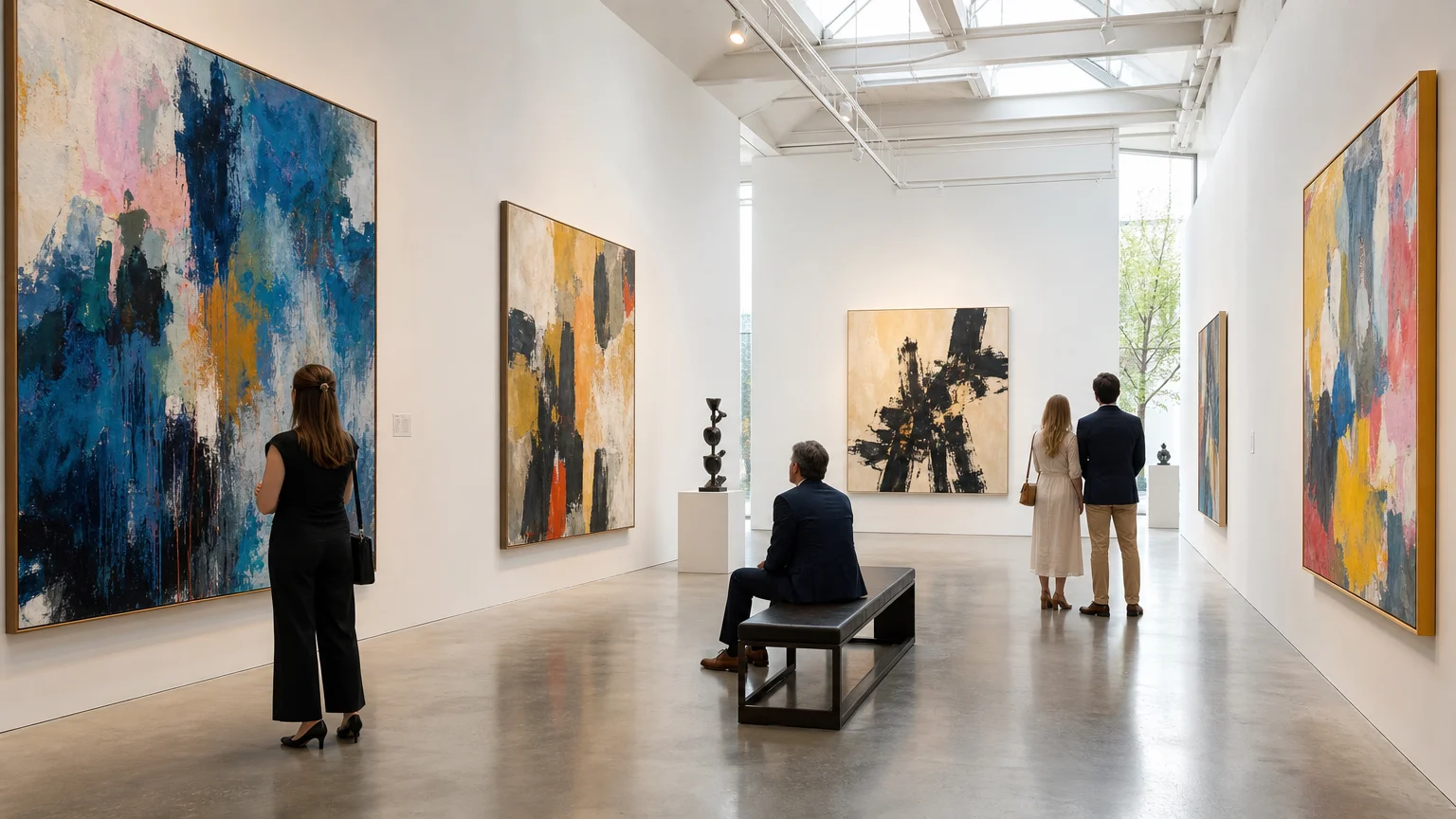

Nearly $59.6 billion changed hands across the global art trade in 2025, and much of it moved through galleries rather than online marketplaces. If you've ever stepped into a modern art gallery and felt unsure how any of it actually works, you're not alone. The white walls, the quiet staff, the missing price tags: it can feel like a members-only club. It isn't. Our guide on how a contemporary art gallery works and how to buy art breaks down the mechanics, and this article goes further into what to look for and how to buy.
Galleries do more than hang pretty things. They vet artists, set prices, build careers, and guide collectors. According to the Art Basel and UBS report, the market returned to growth in 2025 after two down years, with dealer sales rising to $34.8 billion. That recovery tells you something simple: the gallery model still matters, both to artists and to the people who buy their work.
What actually makes a modern art gallery different
Let's clear up a common mix-up first. A modern art gallery and a museum aren't the same thing. A gallery sells; a museum preserves and displays. Walk into a commercial space and nearly everything on the wall is available to buy, even if no price is showing.
The word "modern" also trips people up. In art history, modern art usually means roughly 1860s to 1970s, while contemporary art covers living artists working today. In everyday speech, though, most people use "modern art gallery" to mean any space showing fresh, current, non-traditional work. That's the sense we'll use here, because it matches how you actually search and shop.
What ties real galleries together is representation. They pick a roster of artists, promote them, and take a commission on sales, typically splitting revenue with the artist. That vetting is the value: someone with expertise has already decided the work is worth showing.
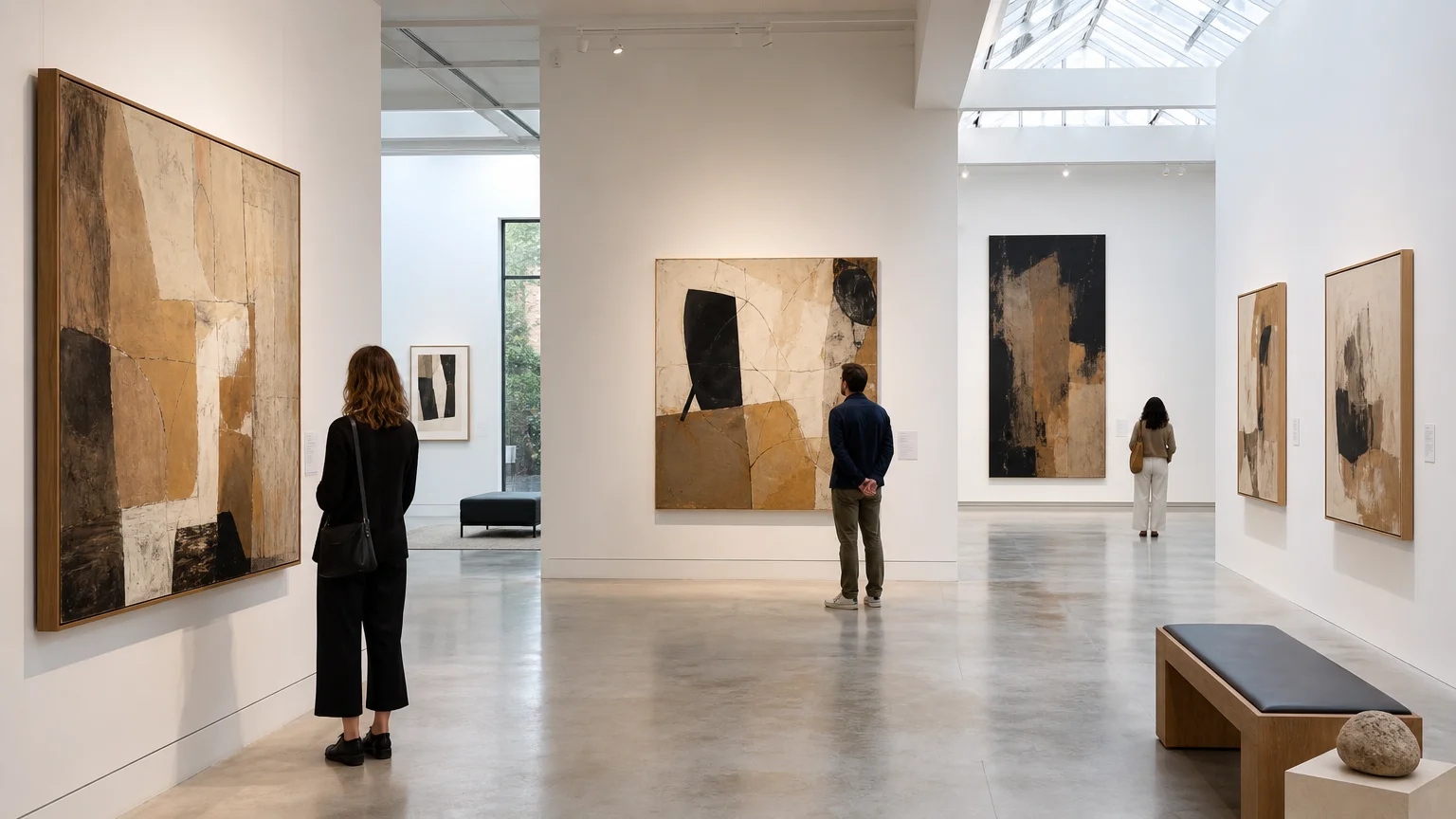
How the art market looks in 2026
Numbers help you read the room before you buy. The wider art trade is large and still expanding. Market research from Straits values the global art market at roughly $622 billion in 2026, projecting steady growth at a compound rate above 6% through 2034, with the gallery segment among the faster-moving categories.
Within fine art, categories move at different speeds. Bank of America's analysts noted that in early 2026, modern art strengthened by 35%, with strong bidding for established names as buyers leaned toward proven quality. Contemporary and young contemporary work, meanwhile, made up a big share of lots but sat at lower price points.
The takeaway for you: established names hold value, while emerging artists offer accessible entry prices. Neither is "better." They just serve different goals, whether you're decorating a home or building a collection.
What to look for when you visit
Picture yourself walking in. What should you actually pay attention to? Start with the wall text and the front desk. A serious gallery will happily share a price list, artist background, and provenance without pressure.
Here's a quick checklist to keep in your head:
- Original versus print: ask directly. Hand-made originals hold value differently than reproductions.
- Artist track record: exhibitions, collections, and press coverage all signal momentum.
- Condition and materials: ask what the work is made of and how to care for it.
- Documentation: a certificate of authenticity and an invoice protect your purchase.
Quality is the thread running through all of it. If you want to understand what separates a lasting piece from a decorative one, our breakdown of what makes museum-quality art worth collecting is a useful next read before you commit real money.
How to actually buy art from a gallery
Buying art is less mysterious than it looks. The process usually runs like this: you express interest, the gallery shares details and price, you negotiate politely if appropriate, and you complete the sale with proper paperwork. Payment plans are common, especially for higher-value pieces.
Don't be shy about questions. Galleries expect them, and asking marks you as a thoughtful buyer rather than a tire-kicker. A few worth using:
- Is the price firm, or is there flexibility?
- Can you tell me about the artist's recent shows?
- What's included: framing, delivery, documentation?
- Do you offer installment payments?
One more shift worth knowing: fairs matter more than ever. The Art Basel and UBS data showed art fair sales climbing to 35% of dealer turnover in 2025, their highest level in years. So if a gallery invites you to a fair, that's often where the best inventory appears.
Commissioning custom work, not just buying off the wall
Here's the part most first-time buyers miss entirely. You don't have to choose from what's already hanging. Many galleries connect you directly with artists to create something made for your space, whether that's a painting, a sculpture, or a large-scale mural.
This is exactly where we focus. Through our PickArt matching flow and custom commissions, you can be paired with the right artist in a couple of minutes, then either buy an existing original or brief a made-to-measure piece. Custom timelines typically run two to six weeks, with follow-up from the first sketch to final delivery. No prints, no guesswork: every artwork is made by hand.
Commissioning works best when you have a specific space, palette, or story in mind. You bring the concept; the artist brings the craft. It's also a smart route when you can't find the exact scale or subject on a gallery wall, which happens more often than you'd think.

Gallery, museum, or online: where should you look?
Each channel serves a different purpose, and mixing them is normal. Here's how the main options compare for a buyer today.
| Option | Best for | Buy directly? | Custom pieces |
|---|---|---|---|
| L'Original | Original art plus artist matching and commissions | Yes | Yes, made by hand in 2 to 6 weeks |
| Physical galleries | Seeing work in person, building relationships | Yes | Sometimes |
| Museums | Learning and inspiration | No | No |
| Online marketplaces | Fast browsing and price comparison | Yes | Rarely |
Confidence is high on the seller side too. According to the Art Basel and UBS survey reported by Art Basel, 43% of dealers expected sales to improve heading into 2026, a ten-point jump year on year. If you're curious where the landmark spaces are, our overview of famous art galleries and the world's best spaces is a good starting map for planning visits.
Putting it all together
Understanding how a modern art gallery works turns an intimidating space into an open door. Ask questions, check for originals and documentation, and match the channel to your goal, whether that's a first purchase or a custom commission. The 2026 market is growing and stable, which makes it a sensible moment to start. Buy what you genuinely love, verify the details, and treat each piece as both a pleasure and, potentially, a lasting asset.
Take action with L'Original
Ready to move from browsing to owning something you'll actually love? Whether you want an original painting for your living room or a mural that tells your brand's story, the hard part is usually finding the right artist. That's the gap we close.
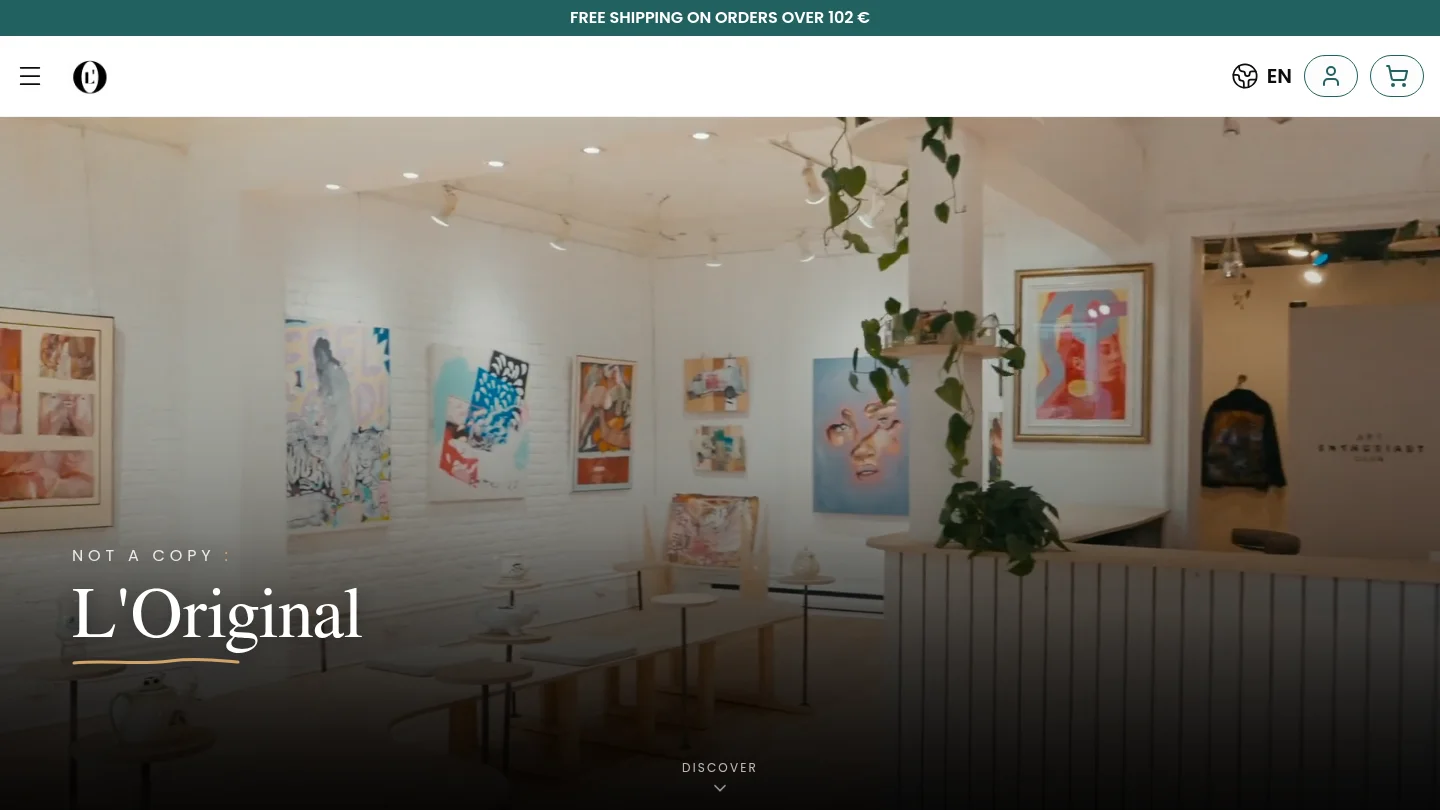
With our PickArt artist-matching and custom commission service, you can match with a professional painter in about two minutes, free and with no sign-up. From there, buy an original made by hand or commission a made-to-measure piece with end-to-end follow-up, from brief to delivery in roughly two to six weeks. Two Montréal galleries, 230 professional painters, and 1,200 murals worldwide back the work.
Frequently Asked Questions
What's the difference between a modern art gallery and a museum?
A gallery is a commercial space that sells work and represents living artists, while a museum preserves and displays art for the public. Almost everything in a gallery is for sale, even without visible price tags. Museums, by contrast, focus on education and long-term stewardship.
Why don't galleries always show prices?
It's partly tradition and partly strategy, since galleries prefer to discuss context and value in person. Don't let it deter you: simply ask for the price list at the front desk. Any reputable gallery will share it without pressure.
Can I really commission a custom piece instead of buying off the wall?
Yes, and it's more common than most people assume. Through our PickArt flow, you can be matched with an artist and brief a made-to-measure painting or mural, usually delivered in two to six weeks. It's ideal when you need a specific size, palette, or subject.
Is buying original art a good investment in 2026?
The market is growing and returned to growth in 2025, with modern works showing particular strength early in 2026. That said, buy first for enjoyment, since value appreciation is never guaranteed. Verified originals with documentation tend to hold value best.
How do I know an artwork is a genuine original?
Ask directly whether it's a hand-made original or a print, and request a certificate of authenticity and a proper invoice. Provenance, the artist's exhibition history, and the gallery's reputation all add reassurance. Reputable sellers provide this information willingly.