
Some paintings reveal their subject immediately. Others ask you to stay with them. Mazarine Memon belongs to the second group, creating works that seem abstract at first, then gradually disclose faces, figures, animals, or stories. If you enjoy discovering artists through different movements and approaches, our famous painters collection offers useful context for placing her practice within a wider art history.
Her signature approach, known as “Mysteries in Colour,” is built around pareidolia, the tendency to find familiar forms in ambiguous images. A 2026 study examined this phenomenon in 81 participants and found that the type of visual stimulus influenced the kinds of forms people perceived. That connection between perception and interpretation helps explain why Memon’s paintings can feel personal, playful, and different for every viewer.
Who is Mazarine Memon?
Mazarine Memon is a Canadian artist of Indian and Iranian Zoroastrian heritage who was born in Mumbai and lives and works in Toronto. Her background crosses several cultures, and that range of experience informs the way she thinks about identity, memory, symbolism, and visual interpretation.
Before becoming a full-time artist, Memon studied applied art at Sophia College in Mumbai and worked in advertising. That training gave her a foundation in drawing, composition, colour, and visual communication. It also helped her understand how an image can guide attention while leaving room for interpretation.
Her career has developed across painting, education, publishing, and creative workshops. A 2025 podcast description presents her as a globally exhibited artist with more than three decades of experience. It also connects her painting practice with “Mysteries in Colour,” the creative process she developed around pareidolia.
Memon works from The Art Brewery, a studio created from a repurposed garage in Toronto. The setting reflects the exploratory quality of her work. Rather than treating painting as a rigid sequence of steps, she uses the studio as a place for experimentation, reflection, and visual discovery.
Why is pareidolia central to her paintings?
Imagine looking at an abstract canvas and noticing a face hidden inside a field of colour. You may see it instantly, or you may need to move closer, change your angle, or let your attention settle. That moment of recognition is the core experience behind Memon’s work.
Pareidolia describes the perception of meaningful forms in unclear or random stimuli. You might see an animal in a cloud, a face in a textured wall, or a landscape in a stain. The brain is not simply receiving information. It is actively organizing visual signals and comparing them with memories, expectations, and familiar shapes.
Memon turns that natural process into a deliberate artistic method. She begins with fluid marks, splashes, and colour relationships. The emerging forms provide clues, but they don't necessarily provide a complete answer. She then adds paint to guide the viewer toward a subject without removing every layer of ambiguity.
This is why her paintings can produce a delayed reaction. The first impression may be decorative or abstract. The second impression becomes more specific. You may notice a face, a body, an animal, or a symbolic gesture. The painting changes because your attention changes.
How does Mazarine Memon create a painting?
The process begins before the brush touches the canvas. Memon first considers the subject, idea, or narrative she wants to explore. This conceptual stage gives the painting direction, even though the final image remains open to unexpected discoveries.
She then introduces ink or other fluid materials to the surface. The movement of the liquid creates irregular edges, transparent overlaps, and unpredictable shapes. These marks become a kind of visual starting point. Memon looks for a form inside them, then responds to what she sees.
From there, she uses paint to clarify selected areas. She may accentuate a contour, strengthen a shadow, or make a face more recognizable. The aim isn't to explain everything. It is to provide enough information for the viewer to participate in the act of seeing.
This approach gives her paintings an organic quality. The fluid underpainting remains present beneath the more defined passages. Inks, acrylics, oils, charcoal, and other media can work together, producing surfaces that feel layered rather than mechanically constructed.
The result is a balance between control and chance. Memon controls the overall idea and develops the forms she wants to reveal. At the same time, she allows the material to contribute unexpected shapes, textures, and transitions.
What themes and influences appear in her work?
Look closely at Memon’s work and you may find more than hidden forms. Her paintings often connect visual perception with broader subjects, including social concerns, global events, memory, identity, and emotional experience.
Narrative is important to her practice because a story can make an image more memorable. A painting may begin with an article, a social cause, a personal observation, or a question about how people interpret the world. The subject is then filtered through colour, abstraction, and suggestion.
Her influences also move across continents and periods. She has expressed admiration for classical portraiture, contemporary abstraction, and artists who use simple forms to carry complex ideas. The work of Zarina Hashmi, Mahmoud Saïd, and Jean-Paul Riopelle has been identified among her artistic interests, reflecting her connection to minimalism, cultural memory, expressive colour, and painterly gesture.
These influences don't make her work easy to categorize. It can include elements associated with neo-impressionism, abstraction, figurative painting, and mixed-media experimentation. The unifying idea is not a fixed visual formula. It is the invitation to look beyond the first impression.
How should you look at a Mazarine Memon painting?
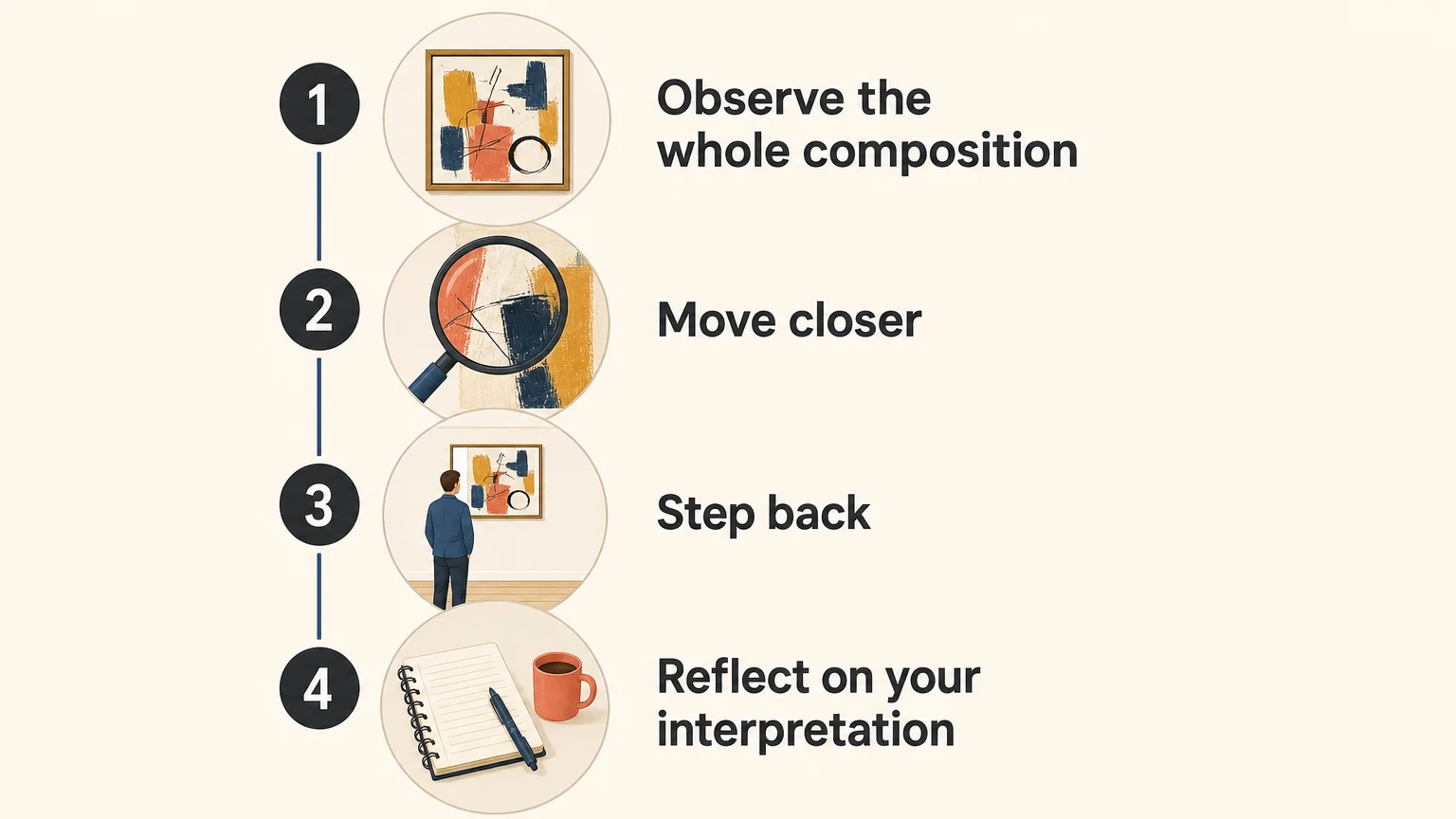
Start with the whole composition rather than searching immediately for the hidden subject. Notice the colour temperature, movement, density, and empty space. Ask yourself where your eye goes first and what makes it stay there.
Next, step closer. Look for repeated shapes, lines that almost connect, and areas where the paint becomes more deliberate. You may find that a face or figure appears gradually, especially when you stop trying to force a specific interpretation.
Then step back again. Distance can change the balance between abstraction and recognition. A form that seems obvious up close may dissolve into the larger composition from across the room.
There is no single correct answer. One viewer may see a portrait, while another notices an animal, landscape, or emotional gesture. The difference isn't a problem to solve. It is part of the work’s structure.
If you’re comparing original works for a home, office, or collection, pay attention to more than the subject. Consider the painting’s dimensions, surface texture, dominant colours, lighting conditions, and relationship to nearby furniture or architecture. Our original paintings catalogue can also help you compare one-off works by living artists through a broader range of styles.
Why does her art extend beyond the canvas?
Memon’s interest in perception naturally leads to teaching. If people can learn to notice different forms in the same image, they can also become more aware of how perspective shapes conversations, decisions, and relationships.
Her “Mysteries in Colour” workbook and related workshops use creative prompts to encourage observation, interpretation, and self-expression. The approach doesn't require advanced artistic skills. Instead, it gives participants an open visual starting point and asks them to explain what they see.
The Art Brewery’s school program describes Memon as a creative innovation coach and connects her method with perspective-taking, collaboration, inclusion, and mindfulness. This educational direction builds on the same principle as her paintings: ambiguity can create space for dialogue rather than confusion.
That makes her practice relevant beyond the art market. A painting can become a prompt for discussion. An abstract shape can reveal differences in interpretation. A creative exercise can help a group recognize that people don't always respond to the same image in the same way.
In this sense, Memon’s work has two connected dimensions. It creates paintings that invite private reflection, and it develops activities that make perception a shared experience.
What makes her approach distinctive?
The distinctive feature of Mazarine Memon’s work is not simply the use of bright colour or hidden figures. Many artists work with abstraction, symbolism, or layered surfaces. Her particular contribution is the way she combines those elements with a structured invitation to decode the image.
You are not only looking at a finished composition. You are also observing your own mind as it organizes the composition. The painting becomes a meeting point between the artist’s intention, the material’s unpredictability, and your personal visual memory.
That creates a different kind of relationship between artwork and viewer. A highly explicit painting can communicate its subject immediately. Memon’s work asks you to spend more time with uncertainty. The reward is the moment when an unclear form begins to make sense.
Her practice also shows how an artist can build a wider creative ecosystem without abandoning painting. Exhibitions, collectors, workshops, publishing, and education all grow from the same central idea. The common thread is curiosity, especially curiosity about how people see and interpret the world.
A lasting invitation to look again
Mazarine Memon’s art turns visual uncertainty into an active experience. Her paintings begin with colour, movement, and suggestion, then invite you to search for figures and stories that may not be visible at first glance. That process makes each work feel both carefully guided and personally open. Whether you encounter her paintings in a gallery, online, or through a creative workshop, the most useful response is simple: slow down, look twice, and notice what your own perception adds to the image.
Take action with L'Original
If Memon’s approach has made you think differently about how art speaks to you, the next step is to compare more original work through a curated environment. Looking at different artists, materials, and visual languages can help you identify what truly fits your space and your personal response.
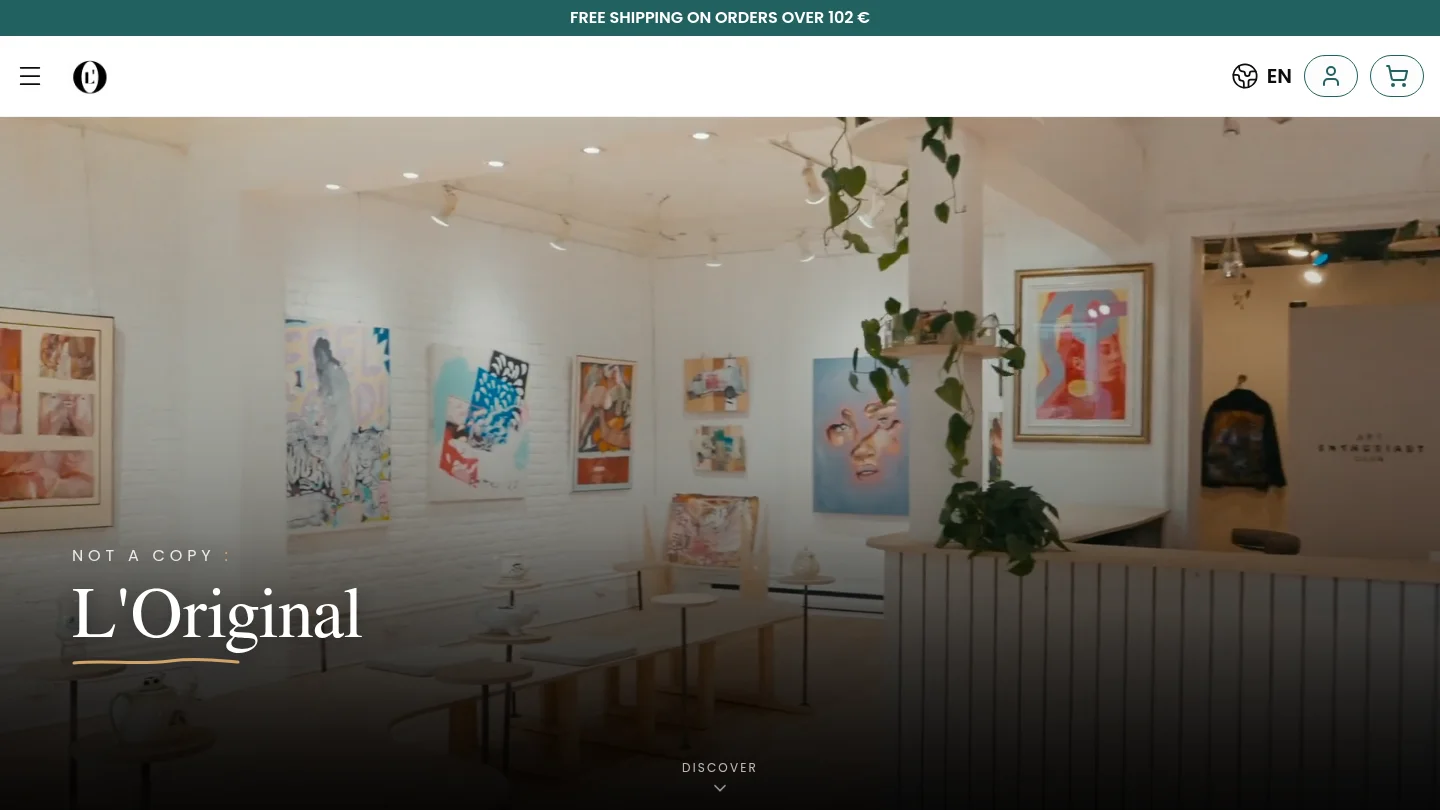
At L'Original, we connect you with living artists and one-off paintings and sculptures through an online catalogue and physical galleries. You can browse by style, explore artist profiles, or speak with our team when you need help narrowing your choices. Browse artists and find work that reflects your taste, your space, and the way you want to experience art every day.
Frequently Asked Questions
What is Mazarine Memon known for?
Mazarine Memon is known for “Mysteries in Colour,” a painting approach based on pareidolia. Her works combine abstract marks and more recognizable forms, encouraging viewers to discover hidden subjects within the composition.
Where does Mazarine Memon live and work?
Mazarine Memon lives and works in Toronto, Canada. Her studio, known as The Art Brewery, supports both her painting practice and her creative education projects.
What does pareidolia mean in her art?
Pareidolia is the tendency to perceive familiar shapes in unclear or random visual patterns. In Memon’s paintings, colour and fluid marks create an ambiguous starting point, while later brushwork offers clues that help viewers recognize a figure or story.
What materials does Mazarine Memon use?
Her practice includes inks, acrylics, oils, charcoal, and mixed-media techniques. She often begins with fluid materials before adding more controlled painted passages to develop the forms she discovers.
Where can you find original art with a similar sense of discovery?
We can help you explore original paintings and sculptures by living artists through L’Original’s online catalogue and galleries. You can compare styles and contact our team if you want guidance choosing work for a home, office, or collection.