
When you search for Jason Pocklington, you’ll find a creative profile that moves between visual art, furniture and acting. If you’re looking for an original piece with a strong sense of identity, our original paintings offer another way to connect with living artists and their personal approaches to place, memory and emotion.
Public profiles present Pocklington as an artist shaped by travel and cultural observation. He was born in France, spent part of his youth in New Zealand, studied cabinetmaking and design in Paris, and later developed work combining objects and images. His Auckland collection, documented by Home of Architecture, shows how closely his creative work links architecture with personal experience.
Who is Jason Pocklington?
Jason Pocklington is best understood as a multidisciplinary artist, rather than someone working within one fixed medium. His practice includes sculptural furniture, photography, drawing and painting. Acting has become another part of his public career, but his visual work remains central to how he interprets the world around him.
His biography suggests that travel isn’t simply a lifestyle detail. It’s a creative method. Moving between countries exposed him to different architectural traditions, materials, light conditions and cultural references. These experiences became sources for objects and photographs that translate a location without reducing it to a postcard image.
That approach also explains why his work may appear in several categories online. A gallery may list a photograph, while another profile describes a furniture collection or a film role. These aren’t necessarily separate identities. Together, they form an artist profile built around observation, movement and transformation.
His catalogue on Artsper describes an artist who photographs, draws, paints and creates sculptural furniture. The available listings also show that his photographic work can be collected as physical editions, with different formats and prices depending on the piece.
How place shapes his artistic practice
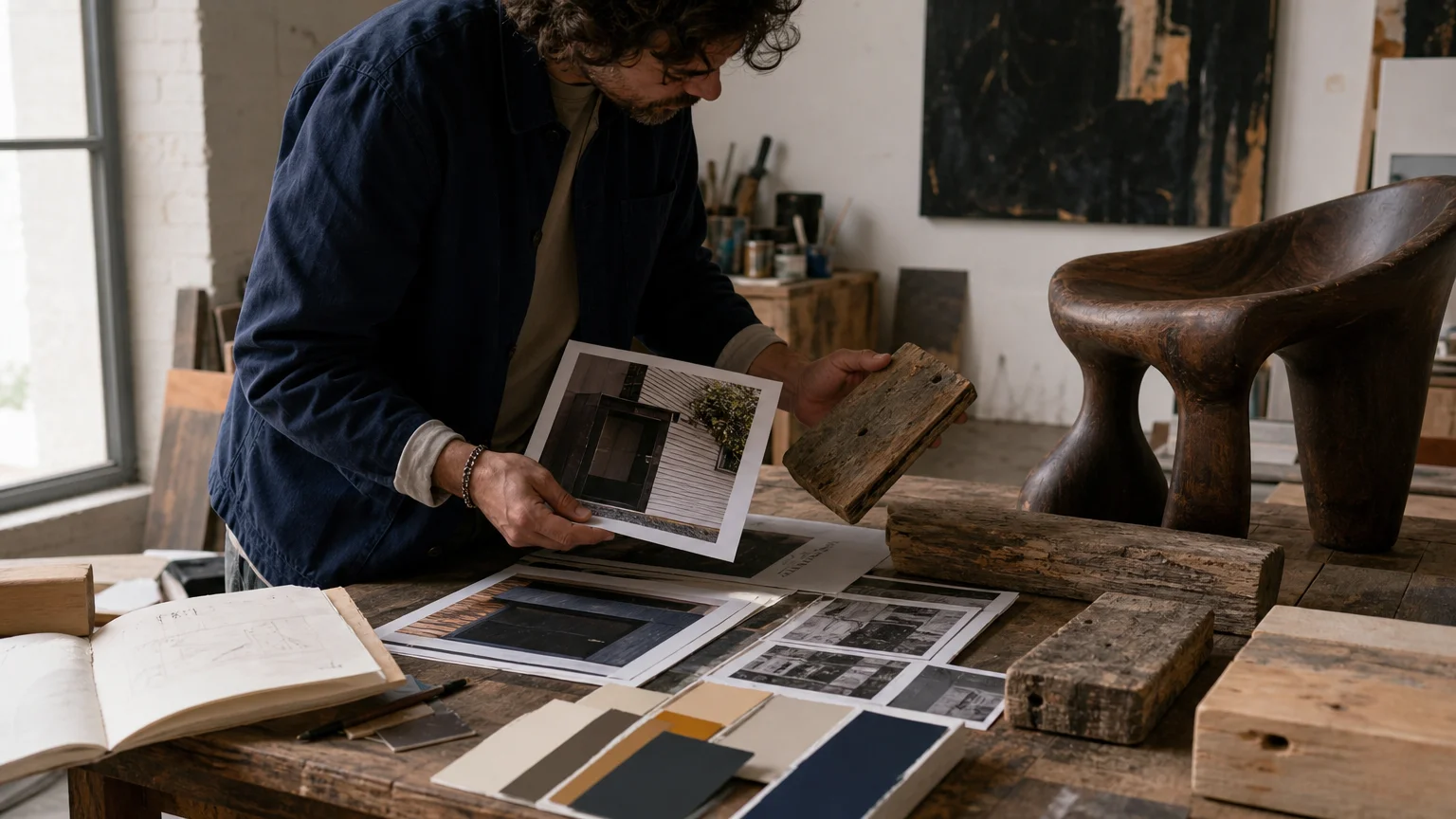
What makes Pocklington’s work distinctive is the way he treats places as layered experiences. A city isn’t only a collection of buildings. It also includes movement, weather, memory, construction methods, cultural histories and the way people encounter streets over time.
This is visible in his interest in repeated architectural forms. Horizontal weatherboards, painted surfaces and house façades can become visual rhythms. Instead of documenting every detail, he isolates a particular feature and stretches or simplifies it until the viewer notices its structure.
The result is a place-based practice that leaves room for interpretation. You may recognise a city through its materials or proportions, even when no landmark is shown. That restraint gives the work a reflective quality, because it asks you to remember how a place feels rather than simply identify where it is.
This method also creates a bridge between furniture and photography. A chair can express a cultural reference through its proportions, while a photograph can make an ordinary building feel abstract. The two forms speak to each other without becoming identical.
What is the Tāmaki Makaurau Collection?
The Tāmaki Makaurau Collection developed from a six-month return to Auckland in 2021, after Pocklington had spent nearly a decade away. The project combines furniture, photographs and architectural references connected with the city where he lived during his teenage years.
At its centre is Auckland’s familiar use of horizontal weatherboards. Pocklington observed the lines as a moving sequence, similar to the blurred rhythm of houses seen from a car. He then translated that impression into photographs, furniture and wall-based objects.
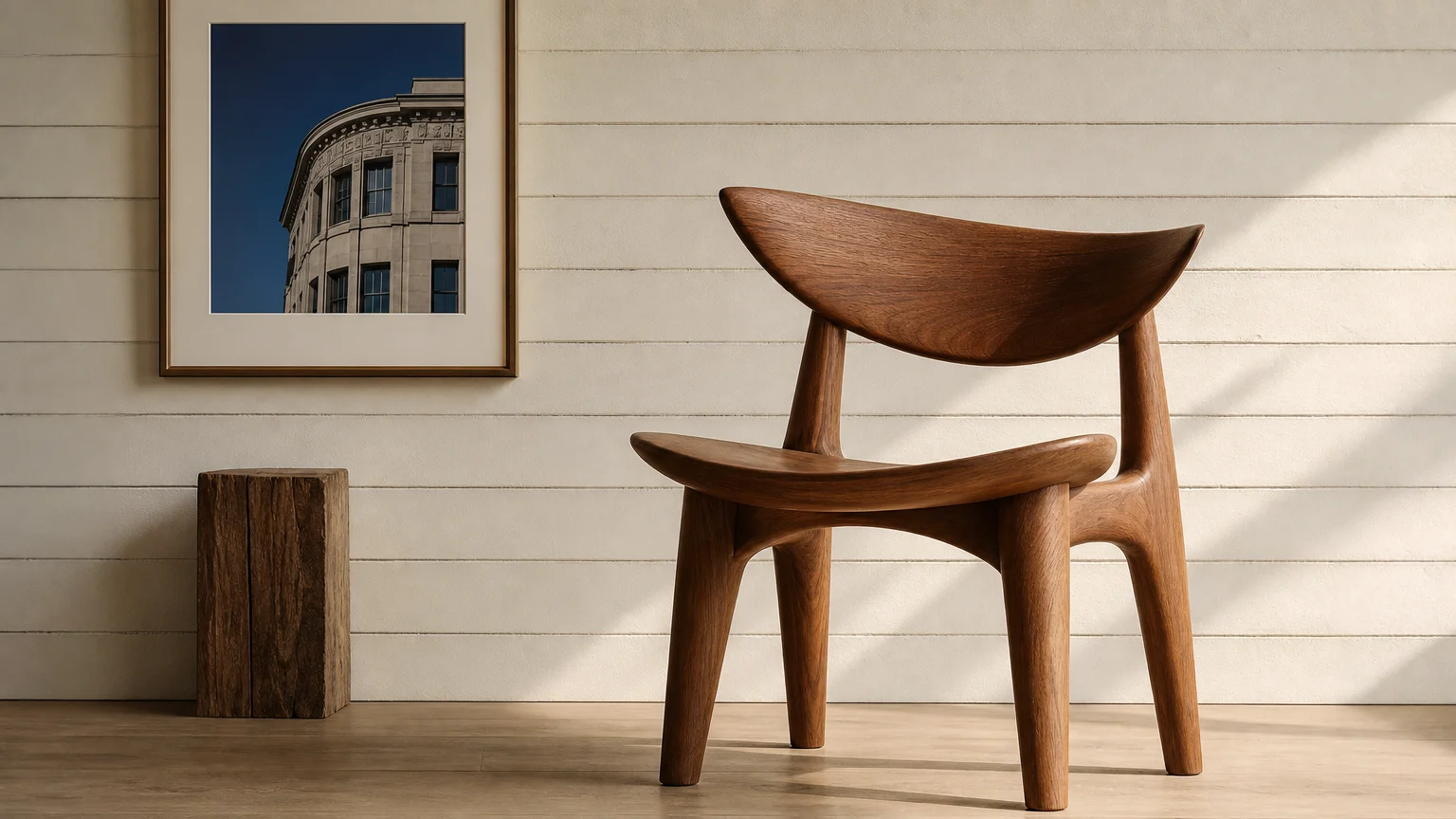
The collection includes a chair, a table, a mirror, a wall piece using weatherboards and corrugated iron, and photographs of Auckland houses. It was photographed at La Bastide des Chardons in southern France, creating a conversation between New Zealand references and a French setting.
The project also recognises Auckland’s Polynesian and Māori roots. Its forms don’t attempt to provide a complete cultural history. Instead, they acknowledge the city as a meeting point between different traditions, migrations and architectural influences.
That balance is important when reading the collection. It isn’t simply a set of decorative objects inspired by a city. It explores how a person’s memory changes when they return to a familiar place with greater distance and experience.
Why his work crosses photography, furniture and design
At first glance, photography and furniture may seem like separate careers. In Pocklington’s work, however, both disciplines examine how people occupy environments. One uses an image, while the other uses scale, material and physical presence.
A photograph can flatten a building into a graphic pattern. Furniture can bring an architectural idea into the room around you. Both methods ask similar questions: What details define a place? Which forms are repeated? How do materials carry cultural meaning?
His education at École Boulle in Paris, where he graduated in 2015, helps explain this connection. Cabinetmaking requires attention to proportion, construction and material behaviour. Photography requires decisions about framing, light and sequence. Moving between them can produce work that feels designed as carefully as it is observed.
For collectors, this cross-disciplinary background matters because a Pocklington work may not fit a single visual category. A photograph can have the presence of a design object. A piece of furniture can function as sculpture. A wall work can sit between architecture and contemporary art.
If you’re comparing formats, our Art Gallery Guide can help you think through the difference between collecting a photograph, choosing a painting and selecting a sculptural work. The most useful starting point is your space, your preferred mood and the kind of relationship you want with the artwork.
What does Jason Pocklington do as an actor?
Acting adds a current screen and stage dimension to Pocklington’s creative activity. Agency profiles list theatre, short films, television work and commercial projects alongside his visual-art background.
In 2026, his listed credits include a leading role in A Ghost in Paris. His recent television credits include Simon Coleman, Résistantes and Les Disparus de la Gare. The profile published by Séquence Sud also lists theatre work in Psy, Sex and Fun between 2024 and 2026.
This acting work shouldn’t be treated as a replacement for his artistic practice. It shows how Pocklington continues to work through different forms of expression. In visual art, he interprets places through objects and images. In acting, he interprets character, dialogue and situation through performance.
For anyone researching him in 2026, checking the context of each result is essential. A search page may show an actor profile, a photographic catalogue or an architecture interview. Looking at the medium, date and project title will help you understand which part of his career you’re viewing.
How to evaluate a Jason Pocklington artwork
Suppose you’re considering one of his photographs or a furniture-based work. Start by identifying the medium, edition information, dimensions and presentation method. These details affect how the piece will function in your space.
Next, consider the relationship between the work and your room. Architectural photography often benefits from breathing space around it. Sculptural furniture needs enough clearance to be viewed from different angles. A strong piece can lose its impact if it’s crowded by nearby objects.
Provenance is also important. Ask whether the work is an original object, a limited edition photograph or another documented format. You should also confirm what is included with the purchase, such as framing, hanging hardware, certificates or shipping protection.
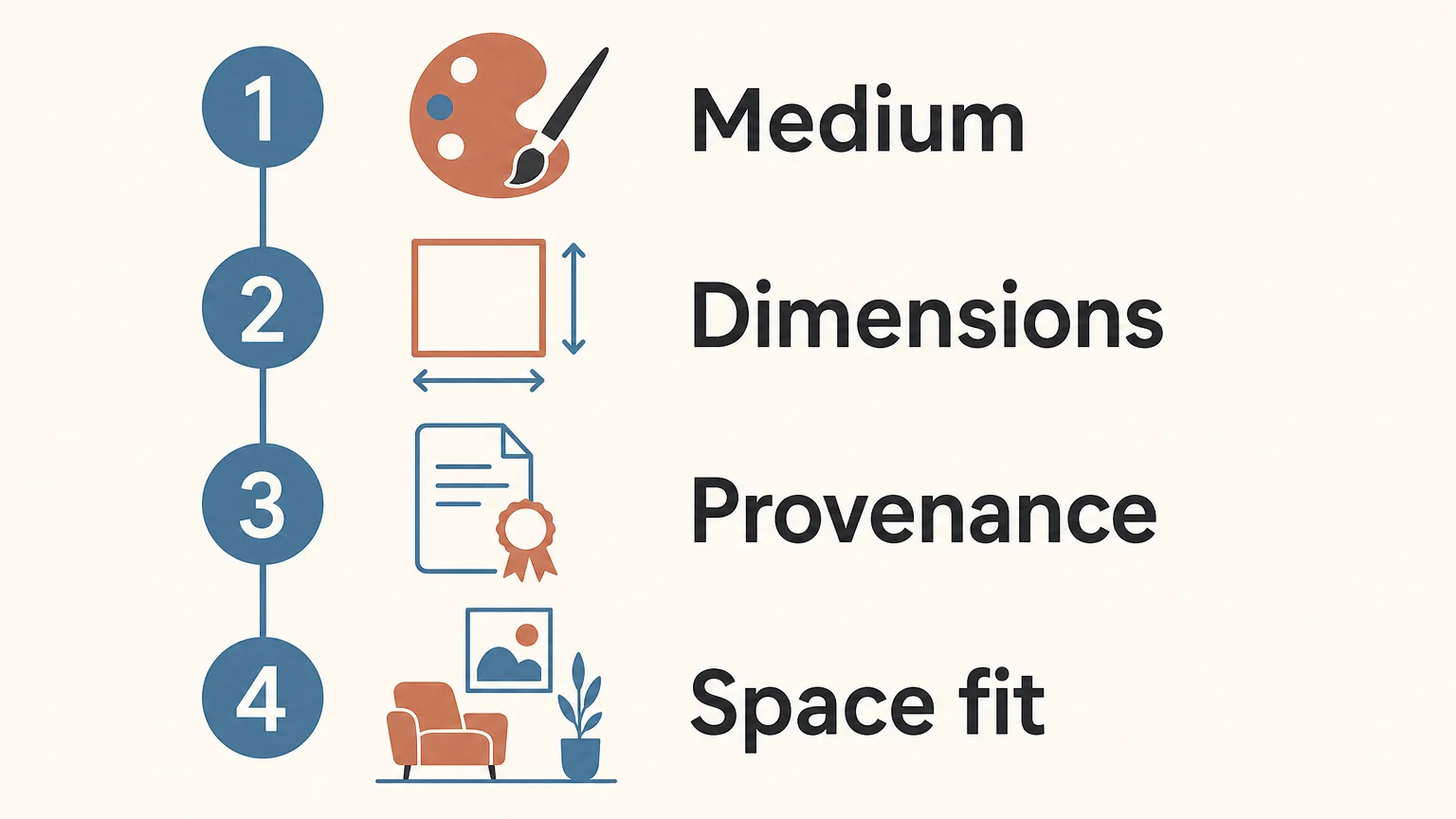
A practical collector checklist should therefore include:
- Medium: Confirm whether you’re viewing photography, furniture, painting, drawing or sculpture.
- Dimensions: Compare the listed size with your wall, floor area or display furniture.
- Provenance: Request clear information about authenticity, edition details and documentation.
- Presentation: Check whether framing, mounting or installation is included.
- Delivery: Ask how the work will be packed, insured and transported.
If you need help comparing an existing work with a commissioned piece, our guide to how a contemporary art gallery works explains the difference between browsing available art and starting a custom project. That distinction can save you time when you already know the mood you want, but haven’t found the right format.
What makes his creative profile worth following?
Pocklington’s work is worth following because it resists a narrow definition of artistic identity. He doesn’t treat photography, furniture, design and acting as isolated compartments. Each discipline gives him another way to examine people, places and the details that make environments memorable.
His Auckland collection is a clear example of this approach. It turns familiar building materials into a visual language, then carries that language across photographs, furniture and wall pieces. The work becomes personal without losing its architectural foundation.
His current acting credits add a different kind of visibility, particularly in 2026. They also reinforce the broader impression of a creative career built around curiosity, movement and the willingness to work across forms.
A creative career built around place and perception
Jason Pocklington’s multidisciplinary practice connects photography, furniture, design and acting through a shared interest in how people experience places. His work rewards close attention to materials, repeated forms and cultural references. Whether you encounter him through the Tāmaki Makaurau Collection, a photographic edition or a screen credit, the most useful question is the same: what does this work reveal about the environment it interprets?
Take action with L'Original
If Pocklington’s approach has made you think more carefully about atmosphere, material and personal connection, you may be ready to explore art beyond familiar categories. The right artwork doesn’t need to match a trend. It needs to create a meaningful relationship with your space and your way of seeing.
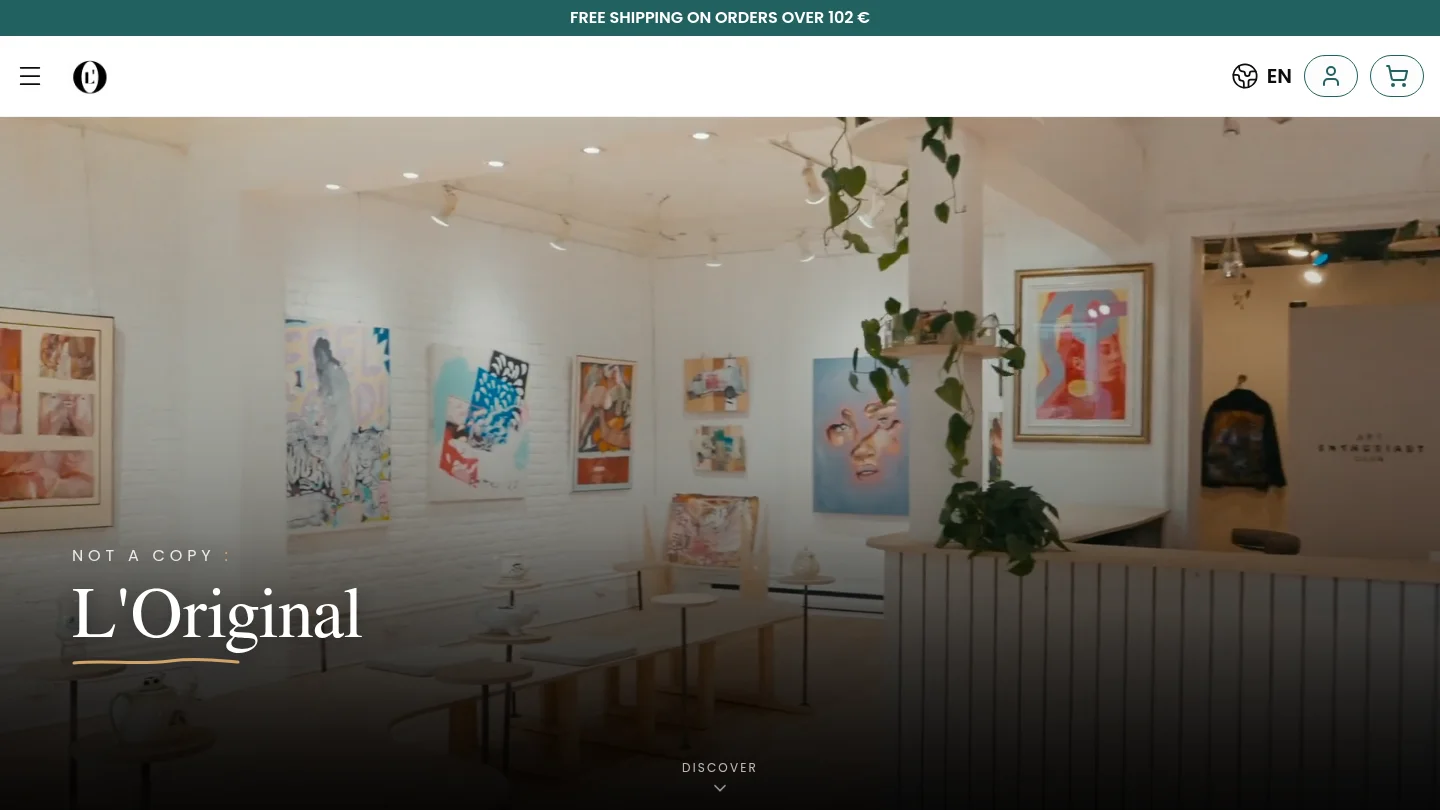
At L’Original, we connect you with living artists through an online catalogue and two Montreal galleries. You can browse original paintings and sculptures, use PickArt to discover works that fit your visual preferences, or discuss a custom artwork for your home or business. When you’re ready to compare styles and approaches, explore our represented artists and find a creative voice that feels right for you.
Frequently Asked Questions
Is Jason Pocklington an artist or an actor?
He works in both fields. His visual practice includes photography, furniture, drawing and painting, while his acting profile includes theatre, television, short films and commercial work.
What is Jason Pocklington known for in visual art?
He’s known for combining photography and sculptural furniture with ideas about travel, architecture and cultural identity. His Tāmaki Makaurau Collection focuses especially on Auckland’s built environment and layered heritage.
What is the Tāmaki Makaurau Collection?
It’s a body of work developed after Pocklington returned to Auckland in 2021. The collection brings together photographs, furniture and wall pieces inspired by weatherboards, local architecture and the experience of seeing a familiar city again.
Can you collect a Jason Pocklington photograph?
Public art listings show photographic works available in physical formats and editions. Before buying, confirm the work’s dimensions, edition details, presentation, documentation and delivery conditions.
How can you discover similar living artists?
You can browse curated artist catalogues, visit galleries or use visual discovery tools. L’Original’s PickArt experience can help you identify original works based on visual preferences, even if you don’t know the right art terminology.