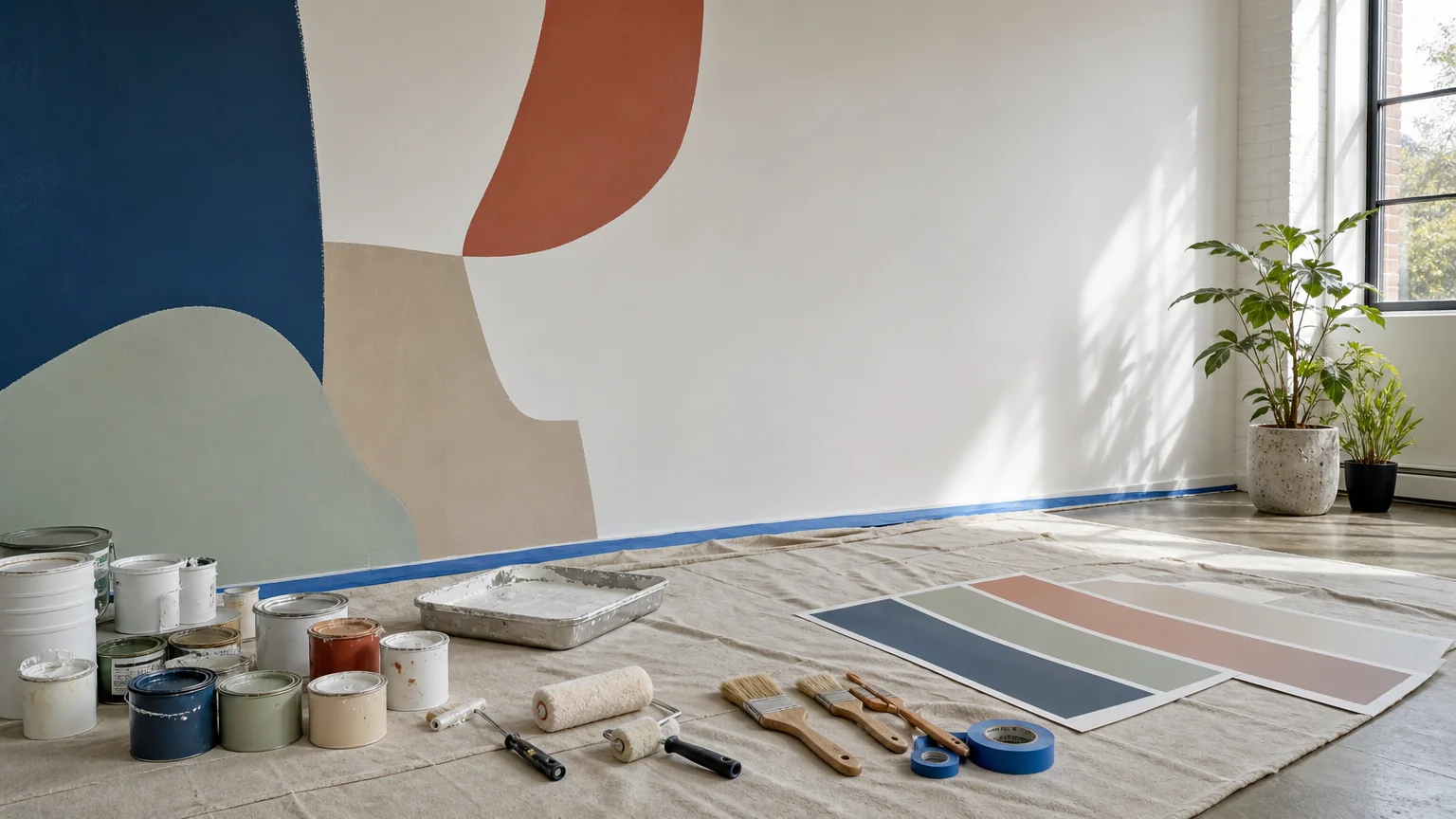

A mural can transform a blank wall, but the wrong paint can turn an exciting project into peeling edges, uneven coverage, or faded color. Before choosing a color, think about where the mural will live, what the wall is made of, and how much contact, moisture, sunlight, or cleaning it will face. If you also need help planning protection, explore our mural protective finishes.
The practical answer to how to choose mural paint is to treat paint, primer, surface preparation, and finish as one system. Canada’s mural guidance emphasizes clean, sound, properly primed surfaces, compatible materials, and light-stable pigments for durable outdoor work.
Start with the mural’s location and exposure
Is the mural going inside a bedroom, restaurant, office, school, lobby, or bathroom? Or will it face direct sunlight, rain, snow, humidity, and temperature changes outdoors? This first decision narrows your paint options more effectively than choosing by color alone.
For a typical interior wall, water-based latex or acrylic wall paint can work well when the surface is clean, stable, and already coated with compatible paint. Interior projects usually place more emphasis on coverage, touch-ups, low odor, cleaning, and the time available for painting.
Outdoor murals need a more demanding system. The paint should tolerate ultraviolet exposure, moisture, movement in the substrate, and repeated changes in temperature. Exterior-rated acrylic or masonry paint may be suitable, while artist-quality acrylic can provide more control over pigment, opacity, and detail. Always confirm that the product is intended for the specific outdoor surface.
Indoor murals can also face difficult conditions. A commercial wall may experience frequent contact, cleaning chemicals, humidity, or abrasion. A mural in a quiet bedroom has a very different exposure profile from one in a busy corridor. Your paint choice should reflect the actual environment rather than the room label alone.
Match the paint to the wall material
Drywall, brick, concrete, plaster, wood, and metal each behave differently. Porous masonry can absorb paint unevenly. Smooth metal can resist adhesion. Wood can move with moisture. Previously painted walls may contain coatings that are peeling, glossy, unknown, or incompatible with the new paint.
For drywall, look for a compatible interior primer when the surface is new, patched, dusty, or unevenly absorbent. A sound matte or low-sheen painted wall may need only cleaning and light preparation, but you should still test a small area before committing to the full mural.
Brick and concrete usually need more attention. Remove dust, loose material, dirt, grease, efflorescence, and any unstable coating. A masonry-compatible primer or conditioner can help even out absorption and support adhesion. If the wall is damp, solve the moisture problem first. Paint cannot compensate for water entering from behind the surface.
Wood and metal require their own preparation. Wood may need sanding, sealing, and a suitable primer. Metal generally needs degreasing, abrasion, and a bonding primer. If the existing coating is glossy, flaking, or unidentified, do not assume that a new layer will stay attached simply because the old wall looks clean.
Compare the main mural paint options
There is no single universal mural paint. The right choice depends on the surface, scale, detail, exposure, and finish you want.
| Paint option | Best fit | Main strengths | Important limitations |
|---|---|---|---|
| Interior latex wall paint | Prepared indoor drywall and large color fields | Accessible, economical, easy to clean, and practical for broad coverage | Not intended for exterior weather and may offer less pigment control for fine detail |
| Artist acrylic | Interior details, mixed techniques, and selected exterior systems | Strong color control, flexible application, and useful consistency options | Cost can rise on large walls, and exterior durability depends on pigment, medium, surface, and finish |
| Exterior acrylic or masonry paint | Outdoor walls, brick, concrete, and exposed architectural surfaces | Designed for weather exposure and available in practical wall-paint quantities | Color range, sheen, and detail handling vary by product |
| Spray paint | Selected outdoor or street-art applications | Fast application, broad coverage, and distinctive effects | Requires ventilation, masking, safety controls, and careful overspray management |
| Oil or solvent-based paint | Specialized projects with a confirmed compatible support | Can provide particular finishes or working characteristics | Often unsuitable for masonry and may create moisture, odor, cleanup, or compatibility concerns |
For many indoor murals, a quality interior latex or acrylic wall paint is a practical foundation. For exterior murals, prioritize products with clear outdoor ratings, light-stable pigments, and compatibility with the substrate. Avoid choosing student-grade or craft paint for a permanent outdoor project unless the manufacturer specifically supports that use.
Surface preparation is part of choosing the paint
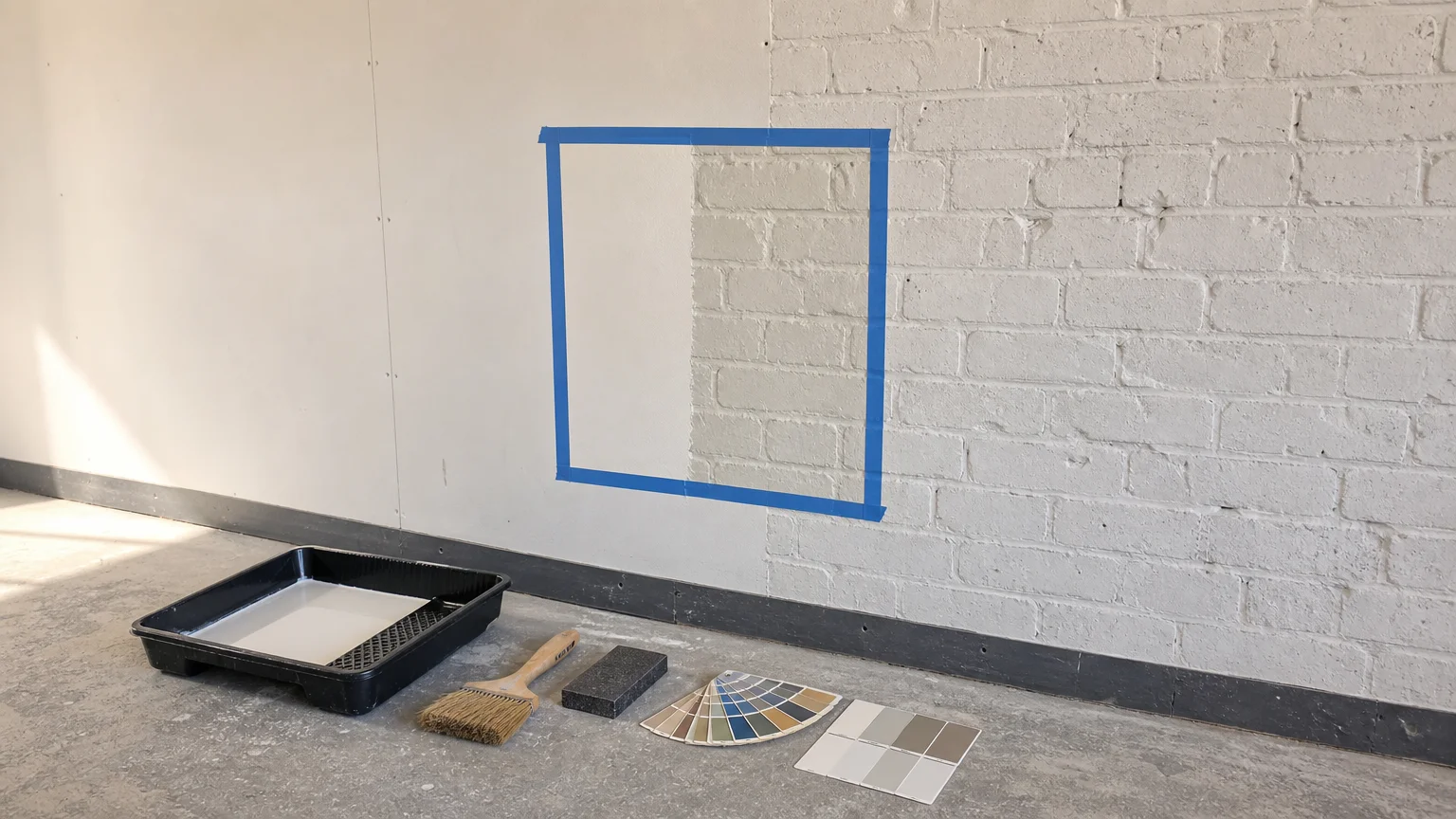
A paint can be well formulated and still fail if the wall is dirty, damp, chalky, or unstable. Preparation affects adhesion, color consistency, drying, and the final appearance. That is why surface preparation should be treated as part of the paint decision, not as an optional task before it.
Start by checking the wall for moisture, cracks, loose particles, peeling paint, mold, grease, and glossy areas. Clean the surface with a method appropriate to the material. Repair defects, allow the wall to dry fully, and remove dust before priming.
Use a primer that matches both the support and the paint. A drywall primer may not be suitable for exterior concrete. A general-purpose primer may not bond well to slick metal. On masonry, the primer or conditioner should support the wall’s porosity and moisture behavior rather than sealing it in a way that creates future peeling.
Before painting the full mural, test the complete system on a discreet area or a similar sample panel. Apply the primer, paint, and any planned finish. Let each layer dry and cure according to its instructions. Check adhesion, color, sheen, texture, and how easily the surface can be cleaned.
If you want a more detailed process for choosing tools and methods, our guide to painting techniques for murals can help you connect the paint choice to the way you plan to work.
Choose finish, opacity, and working time carefully
Paint performance is not only about durability. It also affects how easily you can create clean edges, smooth gradients, large flat areas, and fine details.
For large blocks of color, a wall paint with reliable coverage can save time and reduce material costs. For detailed work, an artist acrylic may offer more useful control over viscosity and color mixing. On textured brick, a thinner paint may flow into recesses more easily, while a thicker paint may help cover broad raised areas.
Think about opacity before you buy a full palette. Transparent colors may need several coats, especially over a dark or uneven base. Strongly opaque colors can reduce labor, but they may also change the character of blends and layered effects. Test the actual colors over the actual primer instead of relying only on a digital screen or a printed color card.
Finish affects both appearance and maintenance. Matte paint can reduce glare and may suit a soft, painted look. Satin or semi-gloss can be easier to wipe, but it may reflect light and reveal surface imperfections. If you plan to apply a clear protective finish, test how the sheen changes after the coating is added.
Drying time also changes how you work. Fast-drying paint can help you complete a large project quickly, but it may make blending harder. Slower-working products can support smoother transitions but may delay layering, masking, or protective finishing. ASTM’s 2026 application guide notes that brush and roller films can hide differently from laboratory-applied films because flow and film build vary in real use.
Plan for UV, moisture, cleaning, and graffiti
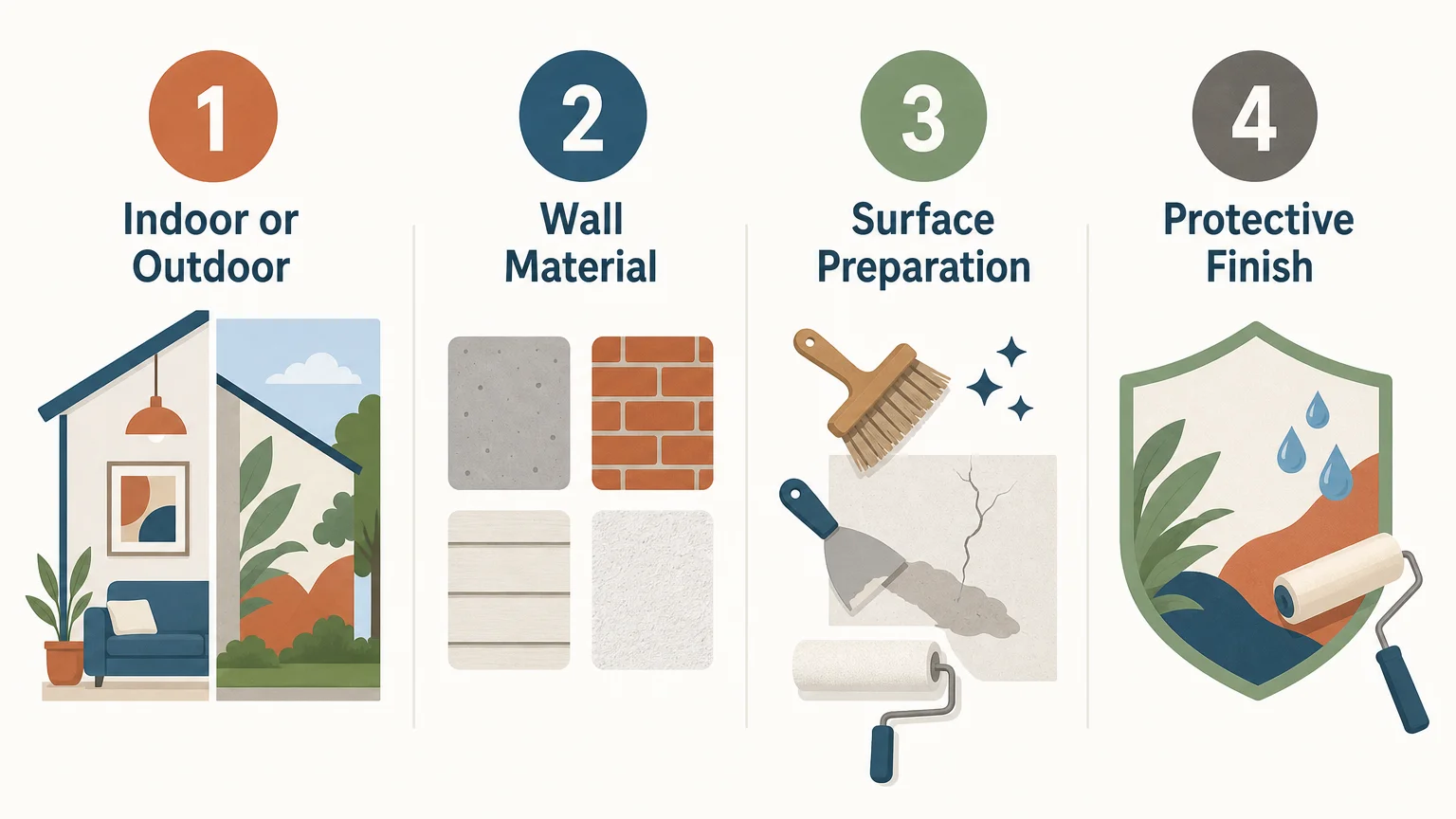
A mural’s maintenance needs should influence the paint system before you begin. An outdoor wall in strong sun may need light-stable pigments and a UV-resistant protective finish. A restaurant, school, hallway, or public space may need a surface that tolerates regular cleaning. A street-facing wall may also require protection against tagging or abrasion.
Protective coatings can help reduce dirt, weathering, and some surface damage, but they are not automatically beneficial. The coating must be compatible with the paint and support. It should not trap moisture in a masonry wall or soften the paint underneath. A coating can also alter the mural’s sheen and color perception.
A 2019 Canadian conservation study compared anti-graffiti coatings and acrylic varnishes on painted outdoor mural panels that were aged outdoors for two years. The 2019 study shows why protective products should be evaluated for the specific climate, paint system, and cleaning method rather than selected by label alone.
For an indoor mural, low-VOC options may be worth considering when ventilation is limited or occupants are sensitive to odors. The right choice still depends on performance, building use, occupants, and project scope. The EPA paint guidance recommends considering those factors together when evaluating safer and greener coatings.
Our custom mural service can adapt the paint and finishing plan to drywall, brick, or concrete. Depending on the site, we may assess primer, low-VOC odorless paint, industrial protective varnish, UV-resistant sealant, or anti-graffiti coating. The right combination remains dependent on the wall and its exposure.
Account for scale, access, and the way the mural will be painted
A small bedroom mural and a large commercial installation do not have the same material requirements. At larger scales, coverage, access equipment, color consistency, cleanup, and drying time become significant parts of the decision.
Rollers can make broad backgrounds more efficient. Brushes help with edges and details. Sprayers may suit selected outdoor techniques, but they require careful masking, ventilation, and overspray control. On textured surfaces, the application tool may matter almost as much as the paint viscosity.
Estimate the quantity before buying. Rough walls, multiple coats, transparent colors, and high-contrast corrections can use more paint than a smooth, primed wall with large opaque shapes. Keep a record of the paint colors, product names, primer, finish, and application method. This makes future touch-ups far easier.
Access also affects the schedule. Our mural projects are often scheduled for 2 to 5 working days, but design complexity, size, and access constraints can change the timing. Delivery times are estimates and may vary, so a precise schedule should be agreed before work begins.
For a commissioned mural, you also need a clean and accessible wall. Responsibility for preparation is determined after assessment, so confirm who will clean, repair, prime, and protect the work area before painting starts.
Know when a paint choice should become a mural plan
If you already have a simple design and a stable wall, choosing the paint may be a manageable DIY decision. If the project involves a large surface, a difficult substrate, commercial traffic, or a site-specific concept, the larger question is how the whole mural should be planned.
That plan can include the visual style, dimensions, wall preparation, paint system, application method, protective finish, schedule, workspace protection, and future maintenance. It can also clarify whether the artwork should be painted directly onto the wall or created on a panel that can be installed later.
If you are unsure whether a mural is the right format for your space, our guide can help you choose between a painting and a mural. A removable original artwork may suit one room, while a site-specific mural may better express the identity of a home, office, lobby, or shared space.
Make the paint choice part of the mural system
The best mural paint is the one that matches the location, wall material, exposure, finish, and application method. Start with a clean and stable surface, choose a compatible primer, test the complete system, and plan protection according to the way the mural will be used. For outdoor or high-contact projects, durability comes from the relationship between paint, preparation, and finishing, not from the paint label alone. When the wall, artwork, access, and maintenance needs are complex, a complete mural plan can prevent expensive corrections later.
Turn your wall into original artwork
Once you know the surface and exposure, you can focus on the artistic direction. A custom mural plan can connect your space, atmosphere, audience, dimensions, paint system, and finishing requirements before work begins.
We help individuals, businesses, and design stakeholders develop site-specific murals for homes, offices, lobbies, coworking spaces, terraces, brick walls, and other indoor or outdoor settings. Our process includes artist matching, feasibility assessment, proposal refinement, scheduling, on-site painting, protective finishes, and project follow-up. Browse mural artwork to find a direction for your space.
Frequently Asked Questions
What is the best paint for an indoor wall mural?
Quality interior latex or acrylic wall paint is often practical for a prepared indoor wall, especially for large color areas. Artist acrylic can be useful when you need more control over detail, transparency, or color mixing.
Can I use interior latex paint for an outdoor mural?
Interior latex is generally not designed for long-term exposure to rain, sunlight, and temperature changes. For an exterior mural, choose an exterior-rated acrylic or masonry system that matches the wall and use a compatible primer and protective finish.
Do I need to prime a wall before painting a mural?
Often, yes, especially when the wall is new, porous, patched, glossy, bare, or made of brick, concrete, wood, or metal. The primer should be compatible with both the substrate and the mural paint, and a small adhesion test is a sensible precaution.
Should I seal an acrylic mural?
A protective finish may help with moisture, dirt, cleaning, UV exposure, or graffiti risk, but it is not suitable in every situation. Test the coating for compatibility, sheen, moisture behavior, and removability before applying it across the mural.
Can L’Original help choose paint for a custom mural?
Yes. We can assess the project’s wall, location, access, intended use, and desired finish, then include suitable preparation and protection in the mural proposal. The client must provide a clean and accessible wall, and preparation responsibility is determined after assessment.