
A mural can photograph beautifully and still disappoint at room scale or when paint lifts from an unsuitable surface. How do I judge the quality of a custom mural? Compare the finished work with its approved concept, then assess the craft, wall preparation, materials, and finish. If you are still choosing a muralist, start with how to choose a trusted mural artist.
Quality is more than a first impression. The mural should suit its wall and setting, show controlled application, and come with practical guidance on care and protection. Before work begins, confirm the design, who prepares the surface, and how completion will be reviewed. These checks matter whether the wall is in a living room, office, lobby, or outdoor space.
Does the mural deliver the approved idea?
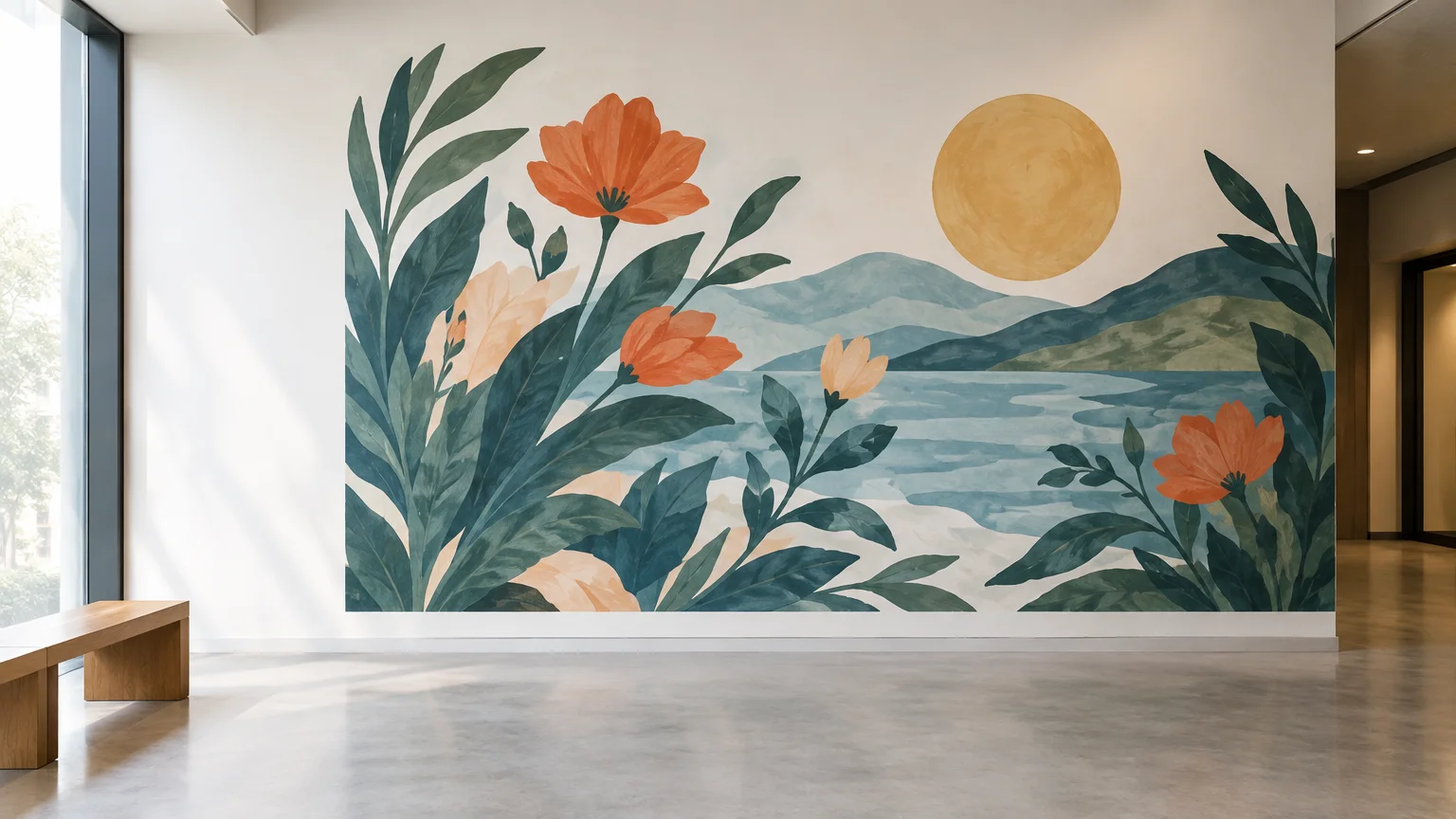
Start with the design you approved, not a vague memory of your first conversation. Compare the main shapes, focal point, palette, and overall mood with the finished wall. Small changes may be needed to work around a doorway or wall feature, but the mural should still reflect the agreed concept.
View it from the places where people will actually see it. In a hallway, step back to the usual viewing distance; in a small room, check how the composition feels from the doorway and seating area. Judge the colors in the room’s normal light rather than relying only on a screen image, which can display colors differently.
Ask the artist to clarify which parts of the approved design are essential and which allow interpretation. That discussion makes room for artistic choices without making it difficult to identify whether the result meets the brief.
What does careful execution look like up close?
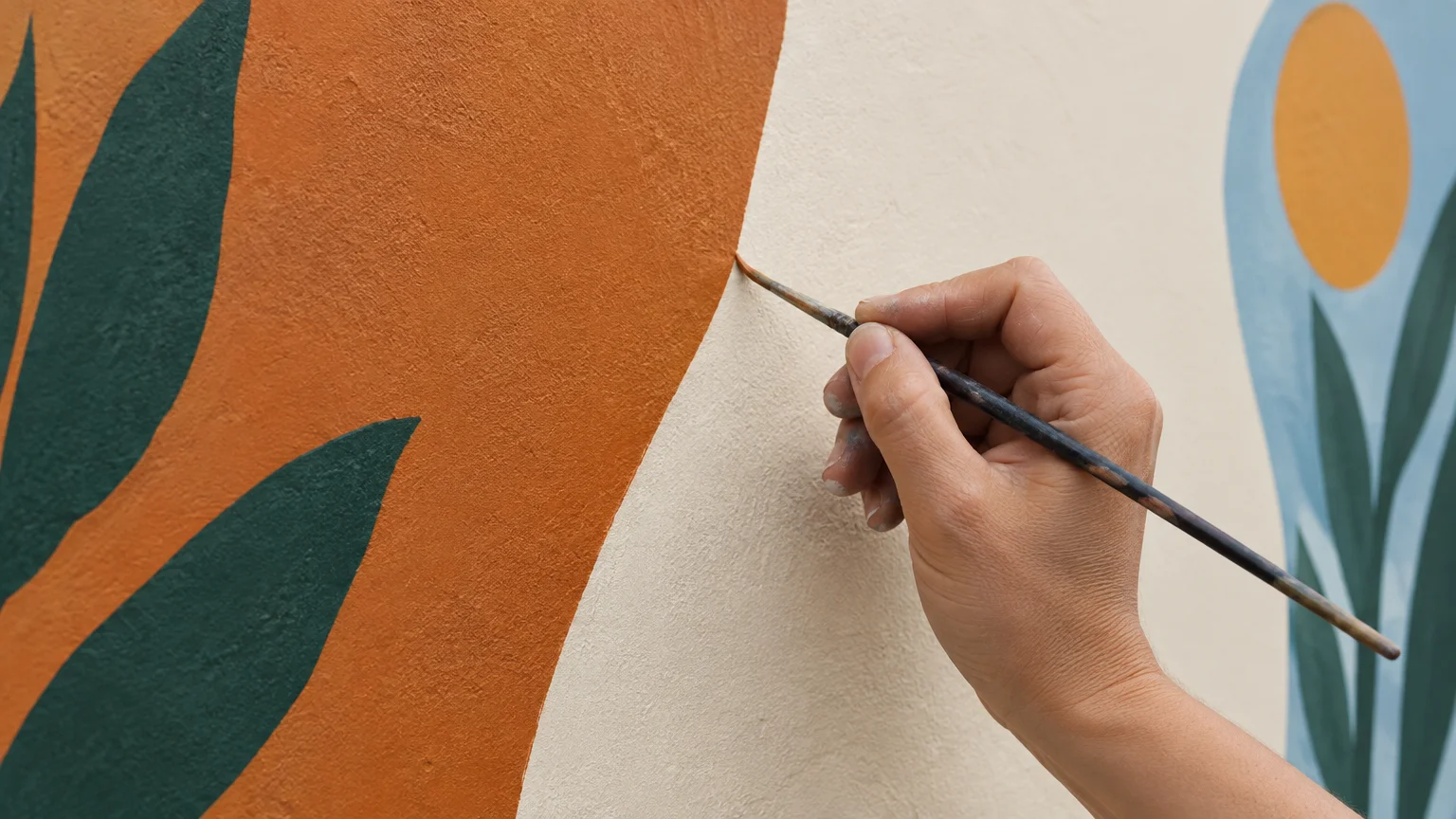
Look closely at edges, corners, and areas where the design meets trim or other wall features. Consistent coverage and deliberate lines usually indicate controlled work. Unintended drips, visible gaps, patchy areas, or paint outside the design deserve a closer look. A textured or expressive finish is not automatically a flaw; assess it against the agreed style.
Then step back. From the main viewing distance, check that the composition reads clearly and that details do not distract from the focal point. A painter evaluation guide recommends asking about preparation and reviewing examples of previous work. Use portfolio images to check consistency across projects, not just one striking detail.
Ask to see a finished project similar in scale or style to yours, if possible. For a large mural, a wide photograph helps you assess the whole composition; close-up images reveal how the artist handles detail and edges.
Is the wall and paint system suited to the location?
Before judging durability, ask what the artist knows about the wall itself. Dust, damage, glossy paint, and moisture can affect how a surface is prepared, so the approach should reflect its condition and material. A mural on brick may need a different assessment from one on drywall or concrete.
Traditional mural methods can involve prepared plaster layers. D’Source’s mural archive describes one such approach. Modern mural materials and methods vary, so treat this as context, not a universal specification. The practical test is whether the artist can explain how the chosen materials suit your wall.
Ask who is responsible for cleaning, repairs, primer, and other preparation, and when the wall needs to be ready. For our mural projects, we assess the surface and determine whether you or our team handles preparation. When preparation is needed, the agreed specifications include primer. For more guidance on matching materials to a setting, see choosing paint for a mural.
Before work starts, the wall should be clean and accessible. If you spot dampness, peeling paint, or damage, raise it during the assessment rather than assuming the mural will cover or resolve it.
Does the finish match the mural’s exposure and use?
Think about what the wall will face. Indoor walls may be exposed to hands, furniture, or regular cleaning; outdoor walls may face sun, rain, and changing weather. Ask the artist which protective finish, if any, suits that exposure and how it could affect the mural’s color or sheen.
A 2009 Archives of American Art interview includes muralist Valerie Jaudon’s account of a site-specific commission and its maintenance considerations. Her 2009 artist interview illustrates why care and site conditions belong in the project conversation. It is one artist’s account, not a universal material specification.
Before approving a coating, ask what it is intended to protect against and what cleaning it allows. The right finish depends on the wall and its environment; a clear coat is not automatically appropriate for every mural. Our article on durable protective finishes for murals explains options to discuss with your artist.
What should you agree before approving the finished work?
Before the artist starts, agree on the approved concept, the work included, surface preparation, materials, finish, schedule, and any care instructions. For an office or other commercial space, clarify how the mural will be used and which image rights are included. Our custom murals for offices article covers considerations for workplace projects.
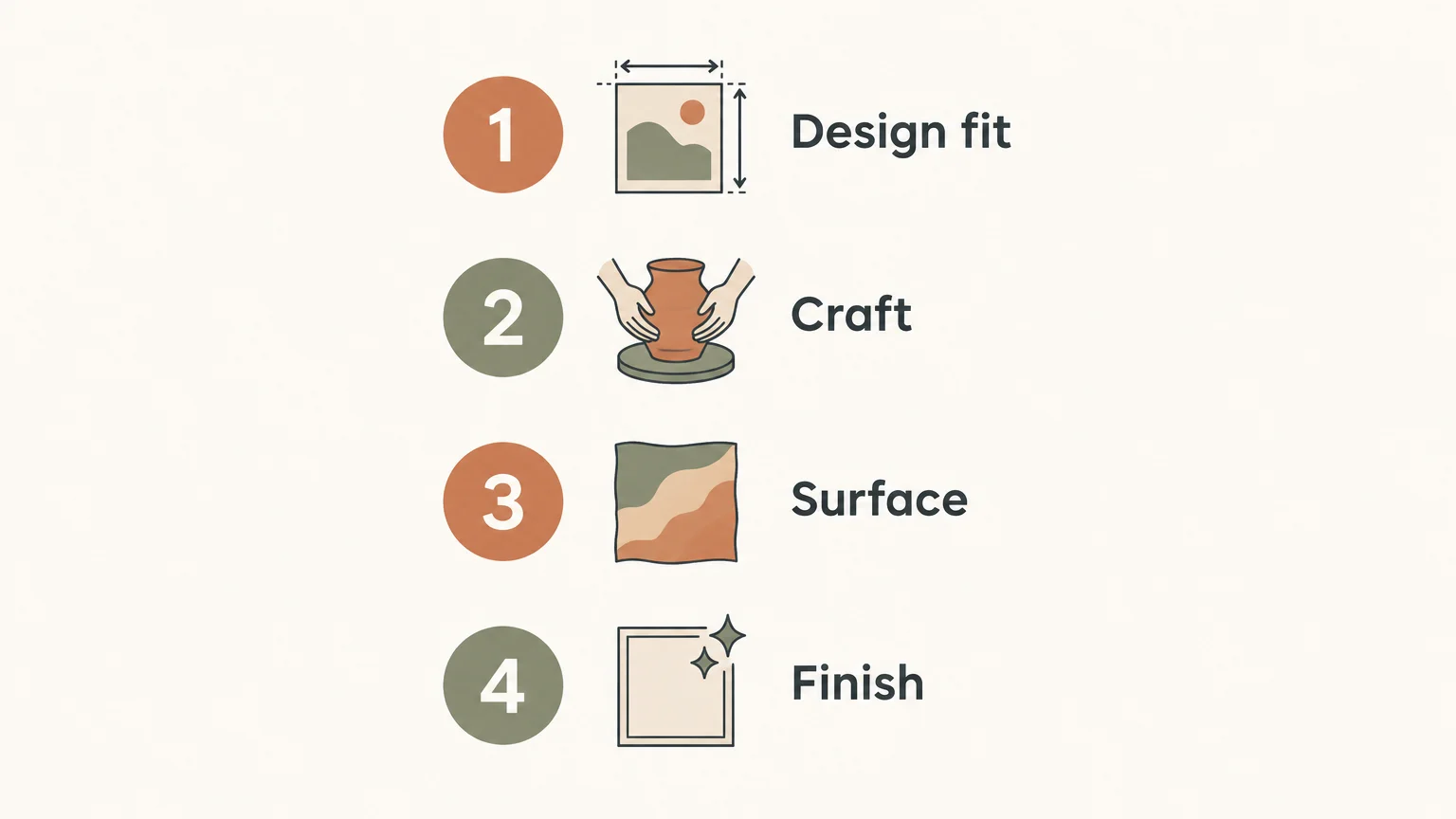
At handover, inspect the full wall in normal lighting, then look closely at edges, corners, and any hard-to-see areas. Compare the work with the signed-off brief and note any agreed corrections before treating the project as complete. A practical checklist is: design fit, execution, surface preparation, and finish.
Our mural projects use an initial payment of 50%, with the remaining 50% due after the finished mural matches the signed-off brief and you approve it. That gives both sides a clear reference for the final review. Keep the agreed design and material details, along with the artist’s maintenance guidance, for future care.
Judge the Whole Project, Not Just the Image
Judging mural quality means checking that the artwork fits the approved concept, the craft holds up at close range, and the materials and finish suit the wall’s use. Agree on preparation and completion criteria before work begins, then inspect the finished mural in its actual setting. A clear brief makes your final assessment fair and practical.
Commission a Mural That Fits Your Space
If you want a mural that works visually and technically, start with a clear account of the wall, its surface, and the effect you want. We match clients with artists, assess feasibility and preparation needs, and agree on the project scope before work begins.
Our Custom Wall Murals service includes artist matching, a proposal, surface assessment, workspace protection, on-site painting, and suitable protective finishes. We provide a precise schedule before work starts, with timing shaped by the project’s size, complexity, and access. Mural projects include full liability insurance and follow-up. Explore custom mural options and arrange a conversation before you commit.
Frequently Asked Questions
Can a mural look good but still have poor workmanship?
Yes. A strong overall composition can still have uneven coverage, careless edges, or visible surface problems. Check both the whole wall and close-up details.
Should I expect every line to match a digital mockup exactly?
Not always, because a design may need adjustments for the wall’s shape or features. Agree on which elements must remain consistent and where the artist has room to interpret.
What should I ask about wall preparation?
Ask how the wall will be assessed, who will clean or repair it, and whether primer is included if needed. Confirm that these responsibilities are written into the project scope.
How do I know whether a protective finish is suitable?
Ask what exposure the finish is intended to handle, how it affects appearance, and what cleaning it permits. The choice should reflect the mural’s location and use.
What should a custom mural handover include?
Review the finished work against the approved brief and agree on any corrections before completion. If you commission through our Custom Wall Murals service, the remaining payment follows your approval that the mural matches the signed-off brief.