
A mural becomes part of your space, so trust should involve more than liking an artist’s style. When asking How do I choose a trusted artist for a custom mural?, start by reviewing relevant work, then test how clearly the artist understands your wall, audience, budget, and expectations. If you want help describing your project, you can request a custom artwork consultation with our team.
A reliable muralist should be creative and organized. They should ask about the surface, dimensions, access, lighting, weather exposure, timing, and intended use. They should also explain what happens before, during, and after installation. A strong portfolio may attract your attention, but a clear process is what helps protect your investment.
What should you define before contacting a mural artist?
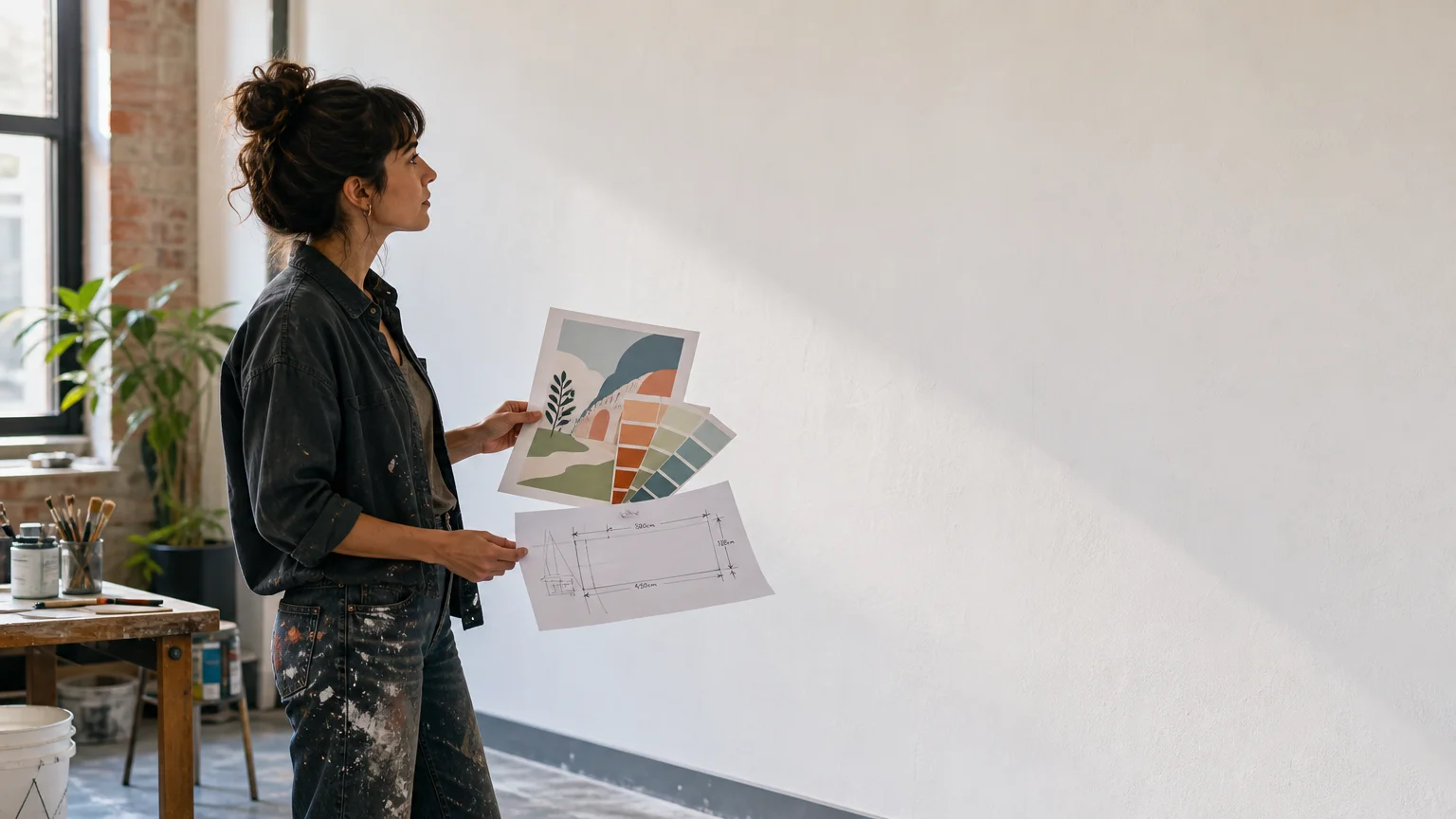
Begin with the wall rather than the artist. Measure its approximate width and height, identify whether it is drywall, brick, concrete, or another surface, and take photos from several angles. Note doors, windows, pipes, furniture, lighting, uneven areas, and anything that could interrupt the design.
Then clarify the purpose of the mural. A living room mural may need to feel personal and calm. A company lobby may need to reflect a brand story without becoming distracting. A public or commercial wall may also need to work for people viewing it from different distances and directions.
You do not need a finished concept before your first conversation. A mood, color palette, reference image, place, memory, or simple theme can be enough to start. The artist should help turn that direction into a workable concept without ignoring the realities of the wall.
For a commercial project, identify who will approve the design. Too many decision-makers can create conflicting feedback and repeated revisions. Choose one person to coordinate comments, confirm approvals, and keep the project moving.
How can you judge whether a portfolio really fits?
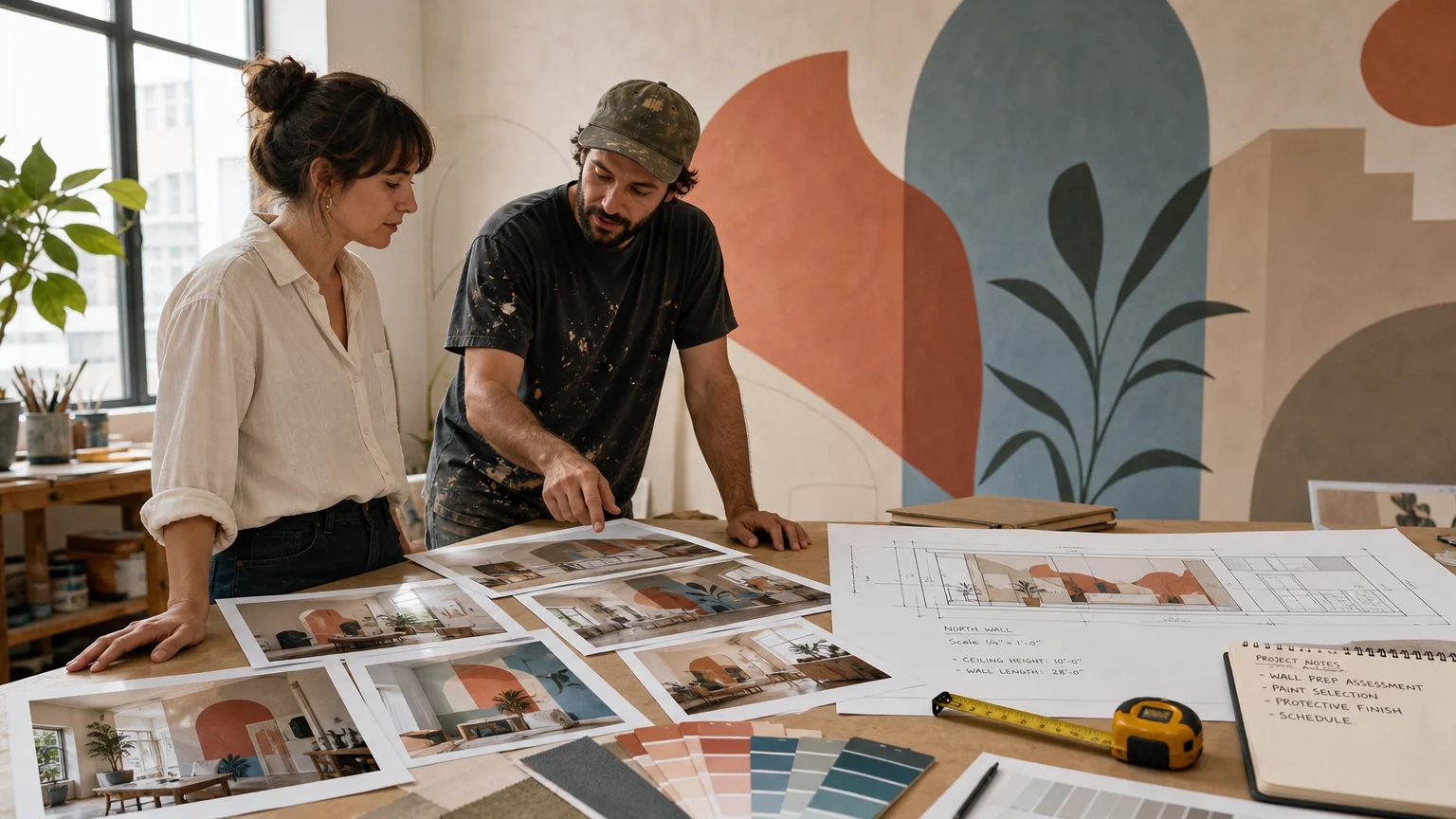
A portfolio can be beautiful and still be wrong for your project. Look for comparable mural experience, not just attractive images. Compare the scale, surface, level of detail, viewing distance, and environment of previous projects with your own requirements.
For example, an artist may have a strong studio painting portfolio but limited experience with large exterior walls. Another may create excellent abstract work but have little experience adapting designs around windows, staircases, or architectural features. Neither situation automatically disqualifies the artist, but you should understand the difference before signing.
Review several projects rather than choosing from one favorite image. A trustworthy portfolio should show a consistent artistic point of view while also demonstrating adaptation. Ask whether the artist created the work shown, whether assistants were involved, and which examples are closest to your project.
Pay attention to finished photographs, not only sketches or digital mockups. A strong mockup does not prove that the artist can scale the composition, manage paint application, or work cleanly on site. Ask for images taken after completion, preferably from more than one viewing distance.
Our artist profiles can help you understand how different approaches translate into mural work. For example, you can explore Kevin Ledo’s Montreal muralist profile to see how an artist’s background and visual language can inform a site-specific project.
What should a mural artist assess at the site?
A professional conversation should include more than colors and themes. The artist should ask about surface condition, adhesion, access, working height, ventilation, nearby furniture, public traffic, weather, and the time available for installation.
Site assessment is especially important for outdoor murals. Sun exposure, rain, humidity, temperature changes, and pollution can affect material choices and maintenance. Indoor walls also require practical planning when the mural is located in a high-traffic area, near food preparation, or beside equipment that cannot easily be moved.
Ask who is responsible for preparation. The wall may need cleaning, repairs, sanding, priming, or removal of loose paint before the artwork begins. If preparation is skipped, even a well-designed mural may have adhesion or durability problems.
Public art projects often add another layer of responsibility. The Minneapolis public art process, updated August 28, 2026, tells applicants to submit insurance documentation and have required permits before installation begins. Local rules differ, but the principle is widely useful: confirm the site requirements before scheduling paintwork.
Our Custom Wall Murals service includes feasibility and wall-preparation assessment. We determine whether the client or our team handles preparation, then establish the practical conditions before work starts. You must provide a clean and accessible wall, and the final schedule depends on design complexity, size, and access.
How should the concept, quote, and revisions work?
A trustworthy artist should explain what you receive before painting begins. This may include a written concept, sketch, color direction, dimensions, materials, timeline, revision limits, and a final approval point.
Do not assume that every discussion or sketch is included in the painting fee. Ask whether concept development is complimentary, included in the commission, or billed separately. You should also know what happens if the design changes substantially after approval.
A useful quote separates the main cost categories. Look for the artist fee, materials, surface preparation, equipment, travel, access equipment, protective finish, permits, taxes, and any third-party services. If a cost is not known yet, the quote should explain when it will be confirmed.
Price alone is not a reliable trust signal. A lower quote may exclude preparation, equipment, revisions, or protection. A higher quote may reflect greater complexity, more detailed planning, durable materials, or a larger team. Compare the scope of each proposal rather than comparing totals without context.
Communication matters at this stage. Notice whether the artist answers your questions directly, identifies unknowns, and explains trade-offs. We support video conversations, proposal refinement, quote approval, and project follow-up so you can make decisions before painting starts.
If you are still unsure about the commissioning process, our custom painting FAQ explains common questions about consultations, proposals, approvals, and made-to-order work.
Which insurance, permits, and safety questions should you ask?
For a private interior wall, licensing and permit requirements may be limited. For commercial, exterior, public, or elevated work, requirements can be more involved. Confirm the rules with the property owner, municipality, building manager, or a qualified local professional.
Ask whether the artist carries general liability insurance and whether assistants or subcontractors are covered. Also ask who is responsible for damage to the wall, surrounding property, furniture, equipment, or visitors. A certificate of insurance may be appropriate for larger or public projects.
Public mural programs show why these questions matter. NYC DOT Art places responsibility on partner organizations for project funding, artist selection, project management, insurance, legal agreements, and maintenance. Its requirements are specific to that program, but they illustrate the responsibilities that can arise around public installations. Read the NYC DOT Art requirements as a practical example.
Ask who handles permits and when they must be approved. Do not assume that the artist, property owner, or agency automatically takes responsibility. Write the answer into the agreement, especially if the project involves a sidewalk, public-facing exterior, historic building, traffic area, or shared property.
In 2026, Portland's guidance states that on-site work for an original art mural cannot begin until the permit is issued. It also gives an estimated 30 to 40 day permit timeline, which shows why approvals should be considered before promising an installation date. Check the Portland mural permit guidance for a local example, then verify the rules for your own jurisdiction.
Our mural projects include full liability insurance. Materials and protective finishes depend on the location and agreement, but may include primer, low-VOC paint, industrial varnish, UV-resistant sealant, or anti-graffiti coating when appropriate.
What must the written mural agreement cover?
A written agreement protects both sides by turning assumptions into responsibilities. It should identify the wall, design, dimensions, materials, preparation work, access arrangements, working hours, completion criteria, payment schedule, revision process, cancellation terms, and maintenance expectations.
Payment milestones should be easy to understand. Our mural payment arrangement is 50% initially and 50% after the finished mural matches the signed-off brief and you approve it. This is a project-specific arrangement, not a universal industry standard, so compare the proposed milestones with the work being delivered.
Copyright deserves particular attention. In the United States, the U.S. Copyright Office explains that original visual art is generally protected when it is fixed in a tangible form. Paying for a mural does not automatically answer who owns the copyright or who may reproduce the image.
Your agreement should clarify whether the artist retains copyright, whether you receive a display license, and whether you may use images of the mural in advertising, packaging, social media, merchandise, signage, or other commercial materials. It should also state whether the artist may photograph the finished work for a portfolio.
Do not copy a reference image, logo, character, photograph, or existing mural without checking rights. If your concept relies on someone else’s protected material, determine who obtains permission and who pays for any required license.
Maintenance should be equally clear. Specify how touch-ups are requested, who pays for them, which cleaning methods are appropriate, and whether the artist has the first opportunity to restore or modify the work. A mural can remain visually strong for years, but its care depends on the surface, environment, materials, and protection used.
How do you complete a final trust check before signing?
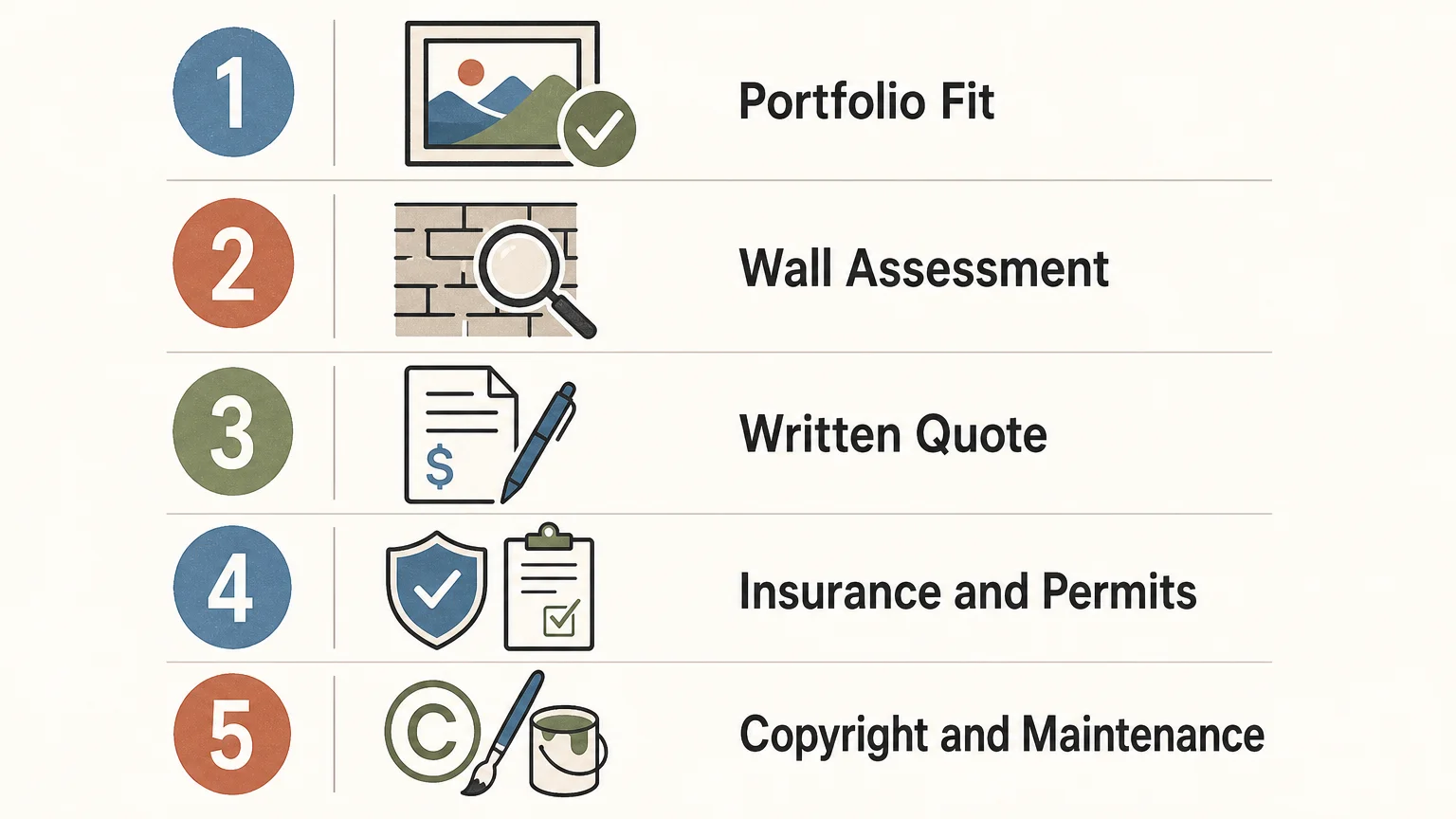
Before you sign, ask yourself whether the artist has earned trust through behavior rather than promises. You should have clear answers to the following questions:
- Does the portfolio include work similar in scale, surface, style, and setting?
- Has the artist explained how your wall will be assessed and prepared?
- Does the proposal identify scope, materials, revisions, timing, and total costs?
- Have insurance, permits, access, safety, and responsibility for damage been discussed?
- Does the agreement define payment milestones, approval, copyright, commercial use, and maintenance?
Ask for references or reviews when the project is substantial. A reference is most useful when it comes from a client with a similar wall, budget, timeline, or audience. Ask what went well, what changed, how communication worked, and whether the final result matched the approved concept.
Watch for warning signs. Be cautious if the artist avoids written terms, refuses to discuss insurance, cannot explain preparation, promises an unrealistically short schedule, or asks for unlimited changes without defining the process.
Trust should also include artistic respect. The artist should listen to your priorities, but you should allow room for professional judgment. The strongest collaborations establish clear boundaries while leaving enough creative space for the mural to feel intentional rather than over-directed.
Choose evidence over promises
The safest choice is an artist who can connect creative quality with practical responsibility. Compare relevant portfolio work, request a site assessment, review the proposal carefully, and put payment, rights, safety, and maintenance in writing. When the artist communicates clearly before painting begins, you have a stronger foundation for a mural that fits the wall and remains manageable after installation. In short, choosing a trusted mural artist means evaluating the entire process, not just the finished images.
Find a mural artist who fits your space
Once you understand your wall, audience, budget, and project requirements, the next step is finding an artist whose style and experience match the setting. A guided conversation can help you turn an early idea into a practical brief without committing before the scope is clear.
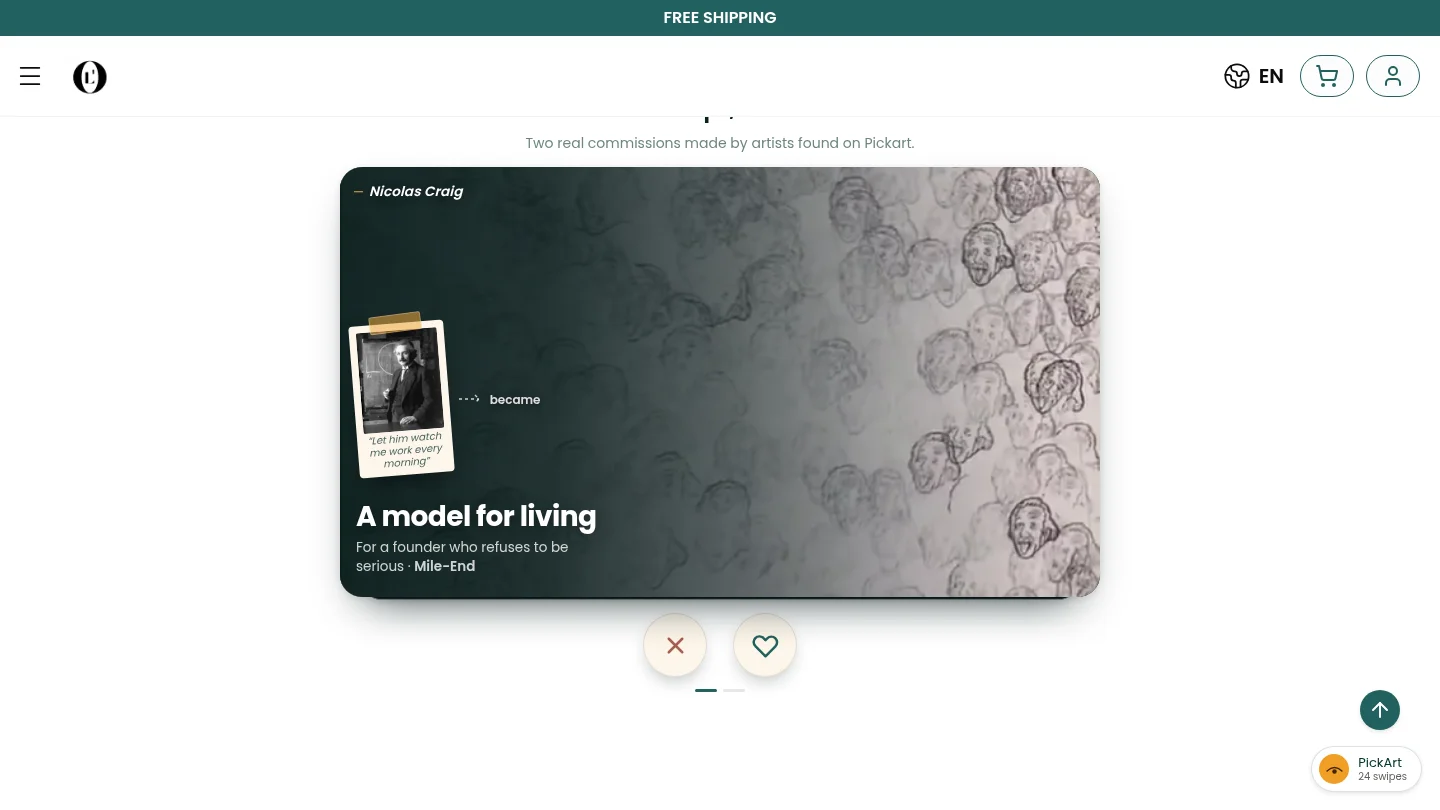
We connect clients with professional mural artists for residential and commercial projects, support artist matching, coordinate proposals and video conversations, assess feasibility, and follow the project through installation. Explore our professional mural artists and begin comparing approaches for your wall.
Frequently Asked Questions
How many mural artists should I compare?
Comparing two to four suitable artists is usually enough to identify differences in style, experience, communication, and scope. Focus on artists with relevant project examples rather than collecting the largest possible list.
Should I choose the artist with the lowest quote?
Not necessarily, because quotes may include different levels of preparation, design work, materials, equipment, and maintenance. Compare the complete scope and ask what is excluded before making a decision.
Do I need a sketch before approving a mural?
A sketch or concept is useful because it gives you a shared reference for composition, colors, scale, and revisions. The agreement should explain what the concept includes and when the design becomes approved.
Who owns the copyright to a custom mural?
Copyright ownership depends on the agreement and applicable law, so do not assume that paying for the mural transfers every reproduction right. Clarify display, photography, advertising, merchandise, licensing, and portfolio use in writing.
Can L'Original help me choose a mural artist?
Yes, our Custom Wall Murals service includes artist matching, proposal preparation, video refinement, feasibility assessment, project scheduling, protective finishes, and follow-up. You can begin with a consultation so we can understand your wall, desired effect, and practical requirements.