
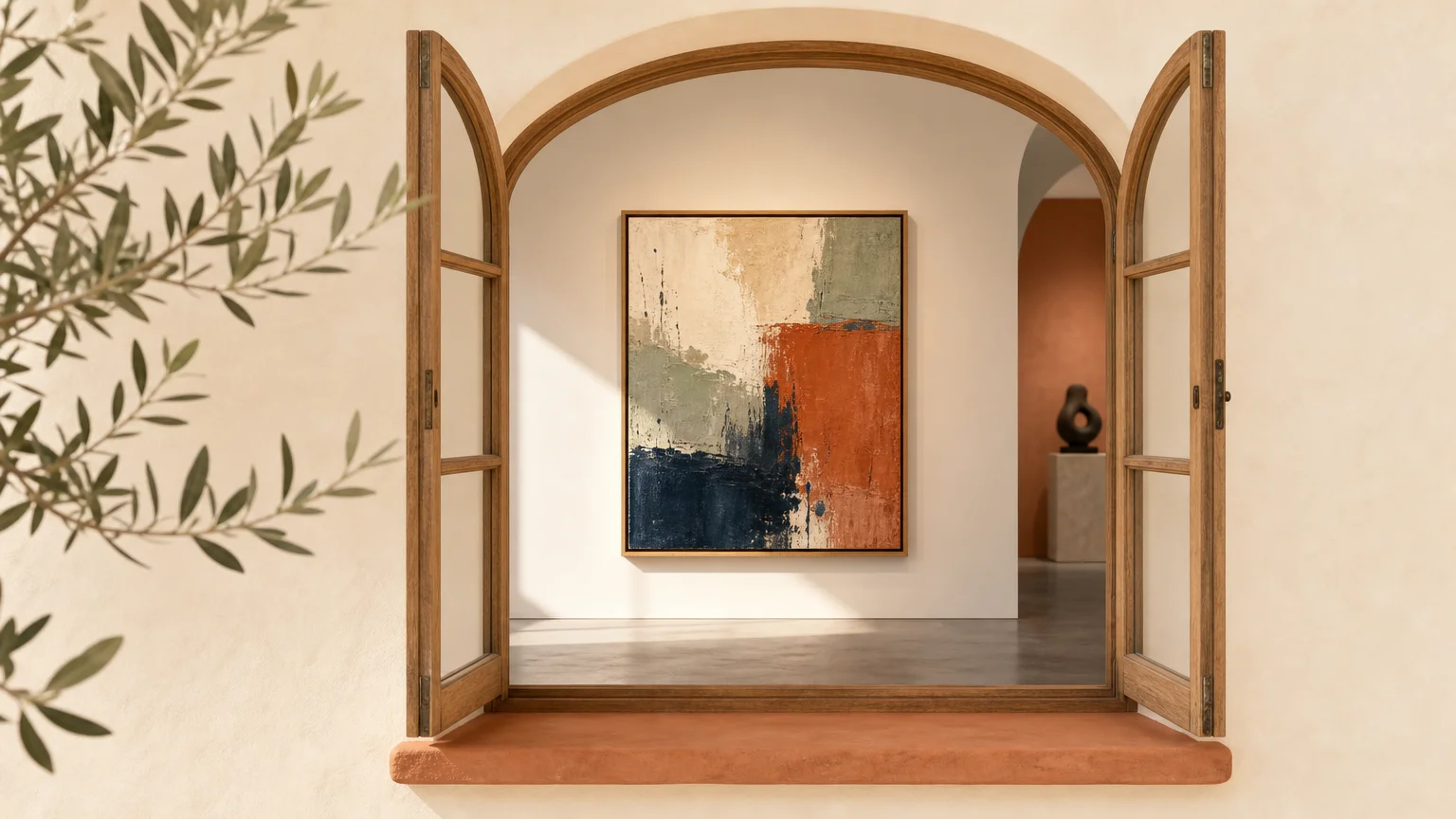

Can you really buy original art from a screen? Yes, but the quality of your experience depends on more than attractive images. If you're comparing an online art gallery, start with our guide on where to buy art online, then look for clear information, human guidance, and a credible path from discovery to delivery.
If you typed “gallery online art” into a search box, you're probably looking for more than wall decoration. You want a work with character, a story, and the right presence for your space. A reliable digital gallery should help you make that decision with the same care you'd expect from an in-person conversation.
What an online art gallery should actually provide
An online art gallery is not simply a website filled with images. It is a digital environment where you can discover artists, understand individual works, compare options, and begin a purchase or commission. The strongest experiences connect visual browsing with useful details and access to people who can answer practical questions.
If you typed the exact phrase “gallery online art” into a search engine, you may find several different models. Some platforms focus on original paintings and sculptures. Others mainly sell prints, posters, or framed reproductions. Some represent artists directly, while others operate as marketplaces with many independent sellers.
That difference matters because the purchase involves more than appearance. You should be able to identify the artist, technique, dimensions, format, price, and availability. You should also understand whether the work is an original object, a limited edition, or a reproduction.
The online gallery model has existed for decades. A 1996 academic study examined 77 galleries with websites and identified features such as artwork images, artist biographies, exhibition records, descriptions, and order forms. Those fundamentals still matter today, although modern buyers also expect better discovery tools, shipping information, and responsive support.
At L'Original, we combine an online catalogue with two physical galleries in Montreal. We represent living artists and present original paintings and sculptures, while also supporting custom artwork and mural projects. That combination gives you digital convenience without removing the human and physical side of collecting.
Why buying art online still matters in 2026
Online art buying is no longer limited to emergency shopping or temporary viewing rooms. It has become one part of a broader collecting journey that can include websites, social media, galleries, fairs, video calls, and studio conversations.
According to a 2026 market report, gallery-online sales represented 14% of dealer sales in 2025. In-person gallery sales represented 46% that year, which shows that digital channels complement physical viewing rather than replacing it.
The same report recorded a larger online share during the pandemic period. Gallery-online sales represented 25% of dealer sales in 2020, then moved through 16% in 2021, 12% in 2022, 20% in 2023, and 17% in 2024. The 2025 figure suggests a more balanced market, not the disappearance of online discovery.
For buyers, the practical benefit is reach. You can explore artists from different cities, compare works when galleries are closed, and ask questions without arranging international travel. You can also revisit a work several times before deciding, which is useful when you're considering scale, color, and placement.
For artists, an online gallery can create visibility beyond a local neighborhood. For collectors, it can make emerging and living artists easier to find. For businesses, it can simplify the early stages of commissioning a painting, sculpture, or mural for an office, lobby, or shared workspace.
How to assess an online gallery before you buy
Before you focus on a specific canvas, assess the gallery itself. A polished website can present an impressive surface, but trust comes from the information and processes behind the images.
First, examine the artist information. Does the gallery explain who created the work? Can you view a catalogue or profile showing the artist's broader practice? A single attractive image tells you very little about the relationship between the work and its creator.
Next, check the artwork details. Dimensions should be easy to find, and the technique should be clearly stated. Look for information about the support, such as canvas, panel, paper, or sculpture material. If the work is framed, the listing should make that clear.
Pricing should also be straightforward. A buyer needs to know whether the displayed amount includes gallery fees, taxes, delivery, framing, or other costs. When a work is custom made, the process should normally include a brief, a quote, and a clear approval point before production begins.
Authenticity deserves special attention. For an original work, ask whether you'll receive a certificate of authenticity or signed documentation. You should also understand how the piece is packaged, whether it is ready to hang, and how international delivery is handled.
Screen images have limits, especially with texture and color. A responsible gallery should acknowledge that colors can vary by display and lighting conditions. It should also help you ask for additional images, close views, videos, or a consultation when those details affect your decision.
To organize your research, explore our art gallery guide and compare each gallery against the same questions. Who represents the artist? What exactly are you buying? How is authenticity documented? What happens after payment? Those answers are often more useful than a large product count.
Why digital viewing works best with physical context

Digital browsing is convenient, but art is physical. Scale, surface, weight, gloss, and edge details can change your response once you see the work in person.
An online presence can still prepare you for that physical experience. An Art Basel market summary reported that online sales represented 23% of dealers' total sales in 2023. Dealers' own websites and online channels accounted for 20% that year, which reinforces the role of a gallery website as a core point of contact.
The best approach is not to choose between online and physical viewing. Use digital tools for discovery, filtering, comparison, and communication. Use physical viewing when you need to evaluate texture, scale, color depth, or the emotional effect of standing close to the work.
That hybrid approach is especially helpful for international buyers. You may not be able to visit a gallery before purchasing, but you can request more photographs, discuss the work by video, and confirm delivery details. When you can visit, an online catalogue can help you arrive with a focused shortlist.
Accessibility matters too. A 2021 accessibility study proposed an online gallery experience that used verbal descriptions to help people with visual impairments explore artworks. Even when you're not using assistive technology, the principle is valuable: galleries should provide more than an image, with descriptions and context that make browsing easier.
At L'Original, you can browse online and visit our two Montreal locations when you're nearby. You can also browse our gallery collection remotely, then contact us if you want help understanding a work before purchasing.
A practical five step method for choosing artwork

When several works appeal to you, a simple process can prevent impulse buying. Use these five checks before you place an order or request a custom quote.
- Start with the artist. Read the profile and look at several works, not only the piece that first caught your attention. You may discover a consistent technique, subject, or emotional quality that helps you decide.
- Confirm originality. Check whether the piece is a one-off original, a print, or another edition. If originality is important to you, ask how the gallery documents it and whether a certificate is included.
- Test the fit. Measure your wall and compare it with the artwork dimensions. Consider viewing distance, surrounding furniture, natural light, and the mood you want the room to create.
- Review the practical details. Confirm price, technique, weight, framing, hanging readiness, packaging, insurance, and estimated delivery. These details can affect the total experience as much as the image itself.
- Ask before committing. A short conversation can clarify color, scale, availability, and installation questions. It can also reveal whether the gallery understands your needs or is simply processing a transaction.
This method also helps you decide between catalogue art and a commission. If you find a work that already matches your space, buying an available piece is usually the simpler route. If your wall, story, dimensions, or color requirements are highly specific, a custom artwork commission may be more suitable.
At L'Original, we can match your preferences with a living artist and prepare a quote before sketching begins. Our process can cover paintings, sculptures, and murals, with the project shaped around your space and intended effect.
When a custom commission is the better route
Some buyers search for a particular size, palette, subject, or atmosphere and find that existing catalogue works do not quite fit. In that situation, commissioning art can give you more control without forcing you to design the work yourself.
A strong commission begins with a useful brief. Describe the room, wall, surface, dimensions, lighting, preferred colors, references, and emotional effect. You don't need to use specialist art vocabulary. Images and examples can communicate your taste more clearly than technical terms.
The gallery should then help identify an artist whose style suits the project. Before production, you should receive a quote and understand what happens during the concept stage. For murals, the process may also involve wall preparation, access, scheduling, workspace protection, protective finishes, and commercial image-use rights.
Custom work requires more patience than selecting an available piece. Made-to-order artworks may also be non-refundable or non-exchangeable except in exceptional circumstances. Ask questions about revisions, approvals, timing, delivery, and installation before you commit.
If you want to understand the difference between representation, curation, and commissioning, read our contemporary art galleries guide. The right choice depends on whether your priority is immediate availability, a specific visual result, or a deeper collaboration with an artist.
Choose the gallery experience, not just the image
The right online art gallery helps you move from attraction to informed confidence. Look beyond the thumbnail and evaluate the artist, originality, documentation, dimensions, price, delivery process, and support available before and after purchase. If a listed work fits, choose it with confidence. If your needs are more specific, a custom commission may create a more personal result. The goal is not to find the largest catalogue. It is to find the original art experience that fits your taste, space, and expectations.
Take action with L'Original
When you want help moving from browsing to a meaningful purchase, we can make the process more personal. Our team connects collectors with living artists, answers practical questions, and supports both online discovery and gallery visits.
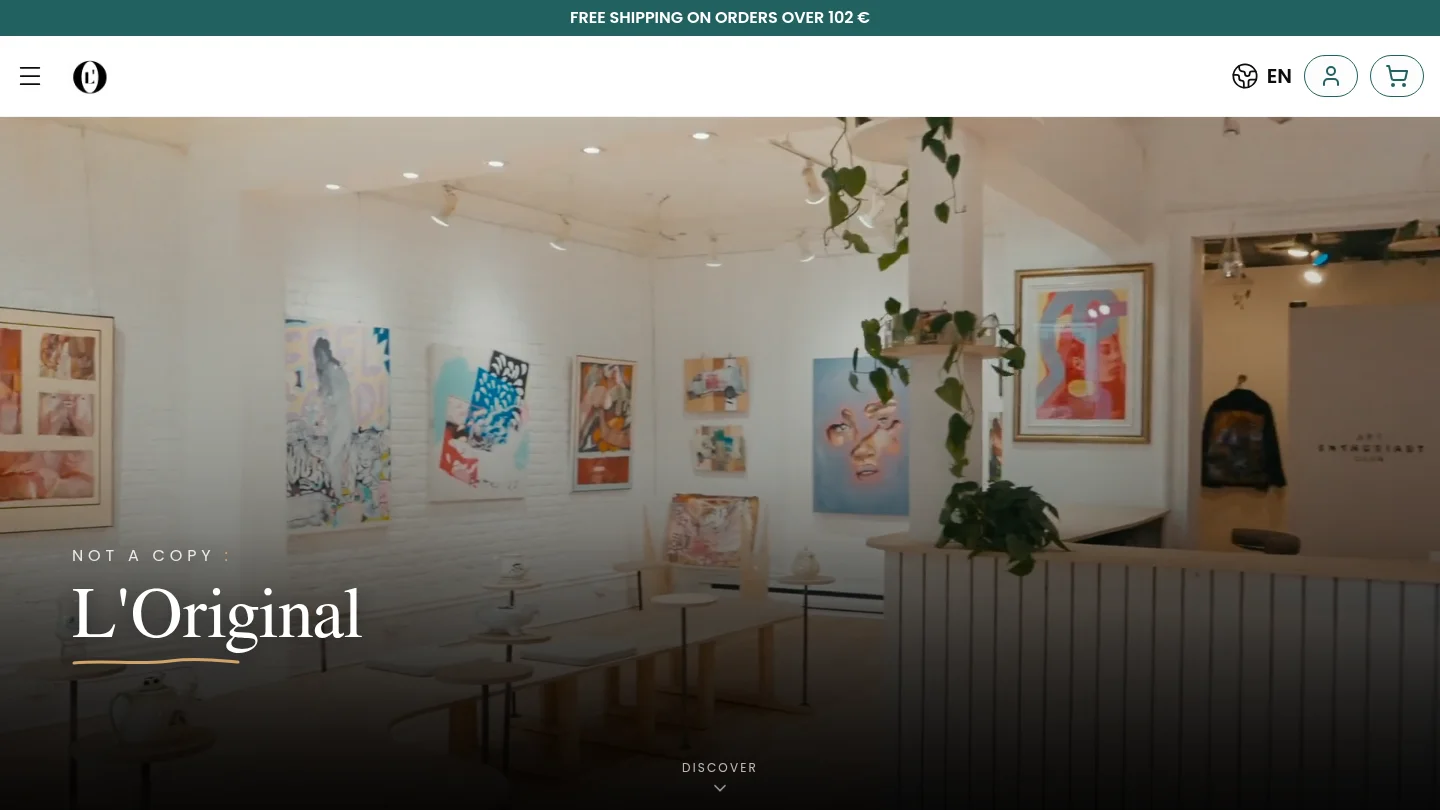
With L'Original, you can explore original paintings and sculptures, use visual matching to clarify your preferences, or discuss a custom artwork or mural. We provide artist context, listed artwork details, authenticity documentation, and guidance through the next steps. When you're ready, buy art online and let your choice begin with a work that feels genuinely right for your space.
Frequently Asked Questions
What is an online art gallery?
An online art gallery is a digital space where you can discover artists, view artworks, review details, and purchase or commission art. Some galleries focus on original works, while others mainly sell prints or reproductions.
Can you buy original art without visiting a gallery?
Yes, you can buy original art online when the gallery provides clear dimensions, technique, authenticity information, pricing, and delivery details. A video call or additional photography can also help you evaluate the work before purchasing.
How can you tell whether online artwork is authentic?
Review the artist information and confirm whether the work is described as an original, edition, or print. Ask whether you'll receive a certificate of authenticity or signed documentation, and clarify who is responsible for the sale.
What should you ask before buying artwork online?
Ask about dimensions, materials, weight, framing, hanging readiness, colors, packaging, insurance, delivery estimates, and return conditions. For custom work, also ask about approvals, timing, revisions, and commercial-use rights.
Does L'Original sell art online?
Yes, L'Original presents original paintings and sculptures by living artists through its online catalogue. You can also visit its Montreal galleries, use PickArt for visual discovery, or discuss a custom artwork or mural project.