
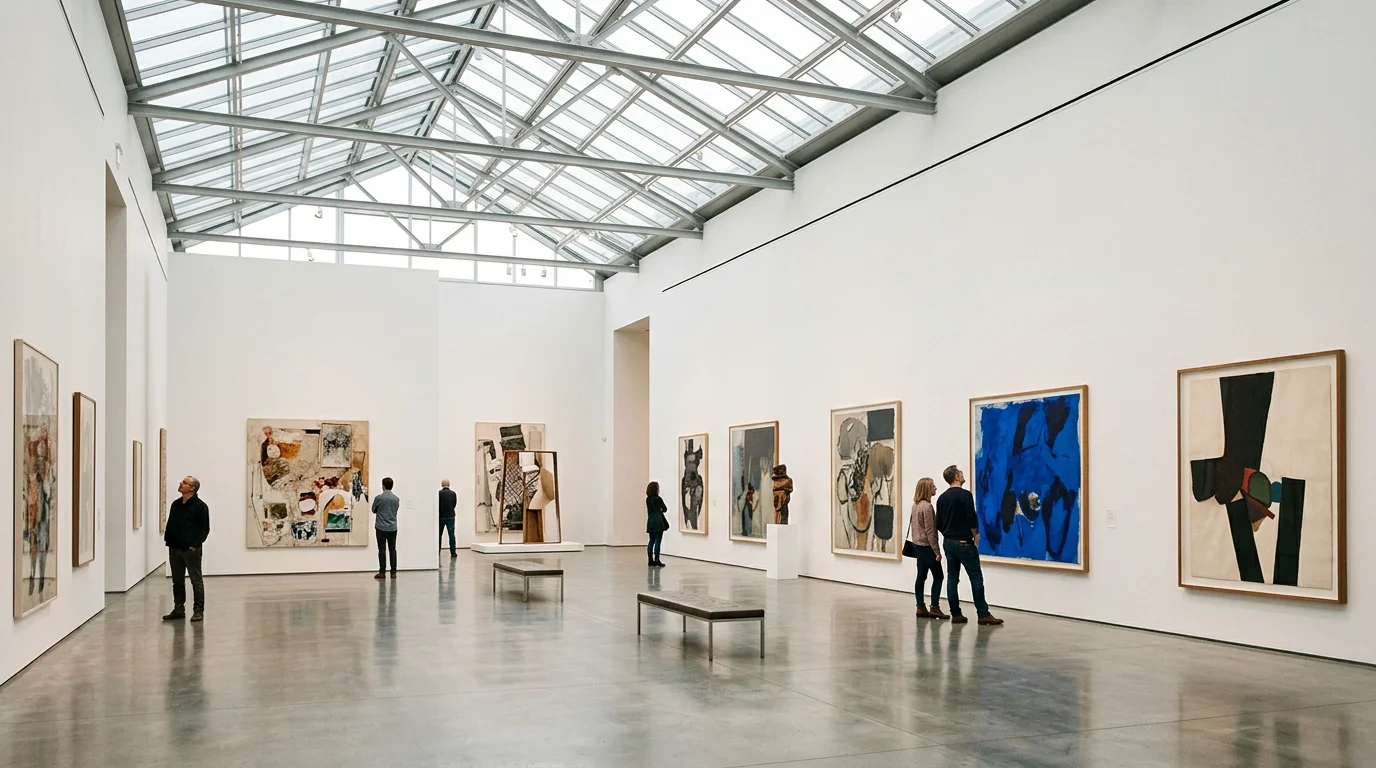

In 2025, more than 200 million people streamed through the world's 100 most-visited art museums, a number that still hasn't fully returned to its pre-pandemic peak. That figure hints at something bigger: a worldwide hunger to stand in front of real art. And behind many of those artists sit the famous art galleries that discovered, represented and championed them long before the crowds arrived. If you want to know where you can explore and collect, our art gallery guide to explore and collect is a good place to start.
Galleries and museums often get lumped together, yet they play very different roles. According to The Art Newspaper, attendance is climbing again as new venues open across Asia, the Middle East and beyond. Understanding what makes a gallery worth your time, and how to actually buy from one, changes how you experience art entirely.
Galleries vs museums: what's the real difference?
Here's the quick version. A museum preserves and displays a permanent collection for the public, usually charging admission and rarely selling anything on its walls. A gallery, by contrast, represents artists, mounts rotating exhibitions and sells the work directly to collectors. One is about stewardship; the other is about the living market.
The scale of museum attendance shows why the distinction matters. Artforum reported that the Louvre in Paris held its place as the most-visited museum in 2025, welcoming over 9 million people despite a difficult year. That kind of foot traffic is a museum phenomenon. A commercial art gallery measures success differently: by the artists it launches and the collectors it connects them with. If you want the mechanics of that, our page on how a contemporary art gallery works breaks it down.
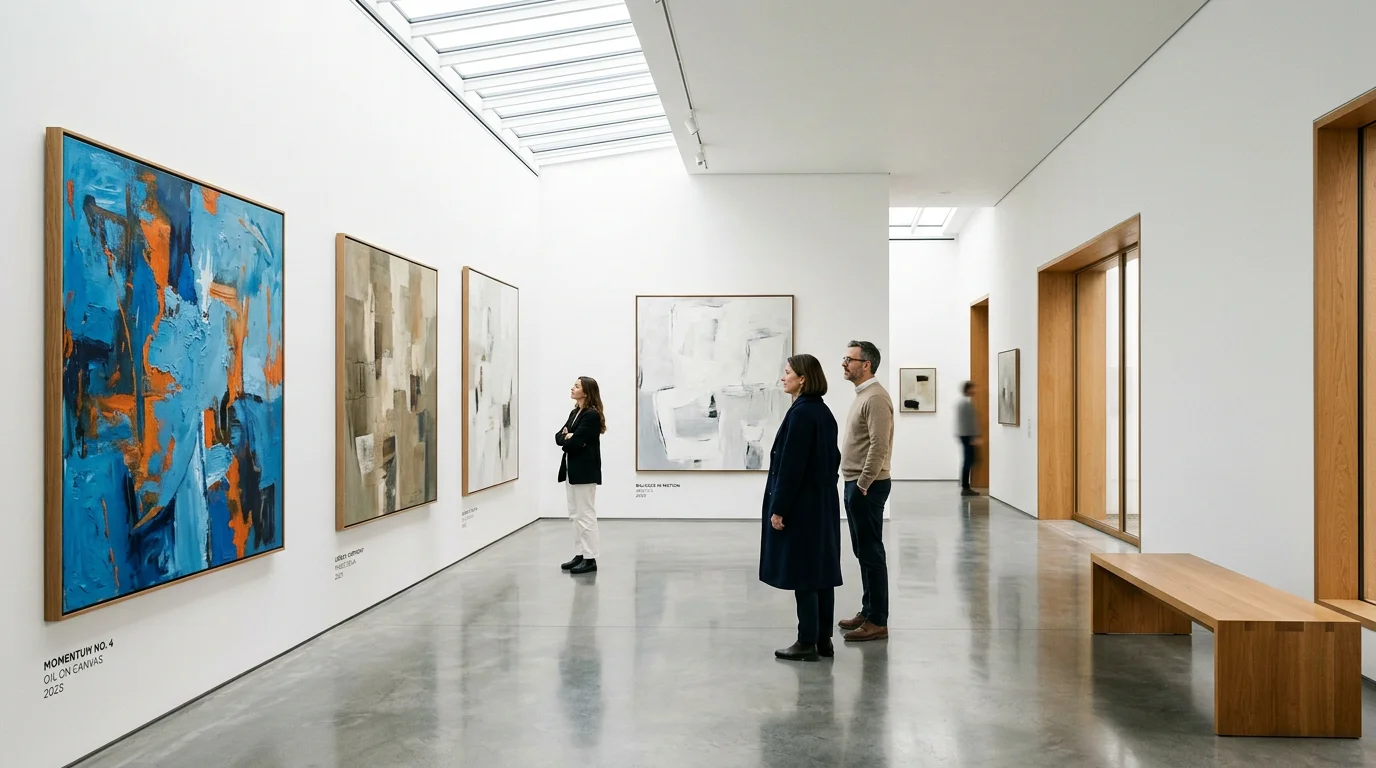
The most celebrated galleries around the world
Some gallery names carry the weight of decades. Larry Gagosian opened his eponymous space in 1980 and grew it into a network of exhibition venues designed by architects like Jean Nouvel and Richard Meier. White Cube launched in London in 1993 as a proving ground for young British artists before reaching international acclaim. Others started tiny: Emmanuel Perrotin began showing art in his own Paris apartment at the age of 21.
What unites these spaces isn't size but the artists they back. Hauser & Wirth, founded in Zurich, now represents more than 80 artists across cities from Hong Kong to Gstaad. David Zwirner famously represents Yayoi Kusama, whose immersive installations pull enormous crowds. These galleries also broke ground beyond their home cities, from Addis Fine Art championing artists from the Horn of Africa to Casa Triângulo leading the São Paulo scene since 1988.
A gallery's reputation is built one artist at a time. The famous names you know today were often the risky bets of a small room decades ago.
Why new galleries and museums are booming
The art world isn't just resting on its classics. ARTnews noted that while the 2025 total of roughly 200 million visitors trailed the 230 million recorded in 2019, freshly opened institutions in the Middle East and Asia are pulling record crowds. Demand in those regions, the survey found, "seems almost unlimited."
The clearest example is South Korea. NPR reported that the National Museum of Korea in Seoul jumped 72% year over year to become the world's third most-visited art museum, one of the largest absolute rises ever recorded. This surge in public appetite spills directly into the gallery world, where more people than ever are moving from simply looking to actually collecting.

How to explore, choose and buy from a gallery
Walking into a famous gallery can feel intimidating, but it doesn't have to be. Most galleries are free to enter, staff are there to talk, and asking the price of a work is completely normal. The bigger challenge is often knowing which artist actually fits your taste and your space, especially when you're commissioning something custom rather than buying off the wall.
That's where a guided approach helps. Rather than browsing endlessly, we match you with the right artist first, then let you buy an original directly or commission a made-to-measure piece. Every work is made by hand, with no prints involved. Here's how a matched, artist-first path compares with more traditional routes to owning art.
| Approach | What you get | Custom work | Starting point |
|---|---|---|---|
| L'Original (our matching + originals) | Hand-made originals, artist matched to your taste in about 2 minutes | Yes, murals and paintings, 2 to 6 weeks | From 680 $ CAD |
| Blue-chip commercial gallery | Represented artists, curated exhibitions | Rarely offered | Varies widely |
| Online print marketplace | Reproductions and posters | No | Low, but not original |
If you already own a piece you love, you can even upload a photo and we'll find works that complement it. For the full walkthrough of exploring, collecting and buying, our art gallery guide (explore, collect and buy) covers each step.
What to look for when visiting famous galleries
A great gallery visit rewards a little preparation. Check which artists a gallery represents before you go, since that tells you far more than the building itself. Note whether the current show is a solo or group exhibition, and whether the work is permanent or on rotation. Don't be shy about asking for a price list or a viewing room appointment.
And remember that fame isn't the only measure of quality. Smaller galleries often represent emerging artists whose work is both more affordable and more personal. The goal isn't to tick off famous names; it's to find work that genuinely moves you and, ideally, that you can bring home.
Bringing it all together
The world's famous art galleries are more than tourist stops; they're the engines that discover artists and connect them with collectors. Museums preserve the past, but galleries shape the living market, and the record crowds visiting art spaces in 2025 show that interest has rarely been higher. Whether you're planning a trip to White Cube in London or simply want an original for your own wall, the smartest move is to lead with the artist and the work, not the label. Explore widely, ask questions freely, and buy what you love.
Take action with L'Original
Loving the idea of owning real art but not sure where to start? You don't need to fly to a famous gallery to find a piece that's genuinely yours. We represent living artists and sell original, signed works, so you can skip the intimidation and go straight to what fits your space and taste.
With our PickArt matching flow, it takes about two minutes to be paired with your artist, free and with no sign-up. From there you can buy an original artwork directly, or commission a custom painting or mural made just for you, with end-to-end follow-up from brief to delivery. Every piece is made by hand, never printed, starting from 680 $ CAD.
Frequently Asked Questions
What's the difference between an art gallery and a museum?
A museum preserves and exhibits a permanent collection, usually charging admission and rarely selling work. A gallery represents living artists, rotates exhibitions and sells the art directly to collectors. One focuses on stewardship, the other on the active market.
Are famous art galleries free to enter?
Most commercial galleries are free to visit, including many of the biggest names in London, New York and Paris. They earn revenue from selling artworks, not admission. You can browse, ask questions and request prices without any obligation to buy.
Which is the most visited art museum in the world?
The Louvre in Paris held the top spot in 2025, welcoming over 9 million visitors according to The Art Newspaper's annual survey. It has consistently ranked first even as attendance patterns shifted after the pandemic.
Can I buy original art without visiting a physical gallery?
Absolutely. With our PickArt matching flow you can be paired with an artist in about two minutes, then buy an original or commission a custom piece online. Every work is made by hand and shipped to you, with follow-up from brief to delivery.
How do I choose the right artist or artwork for my space?
Start with what genuinely moves you rather than famous names, and consider scale, color and where the piece will hang. If you already own art you love, uploading a photo can help surface complementary works. Matching with an artist first also narrows the field fast.