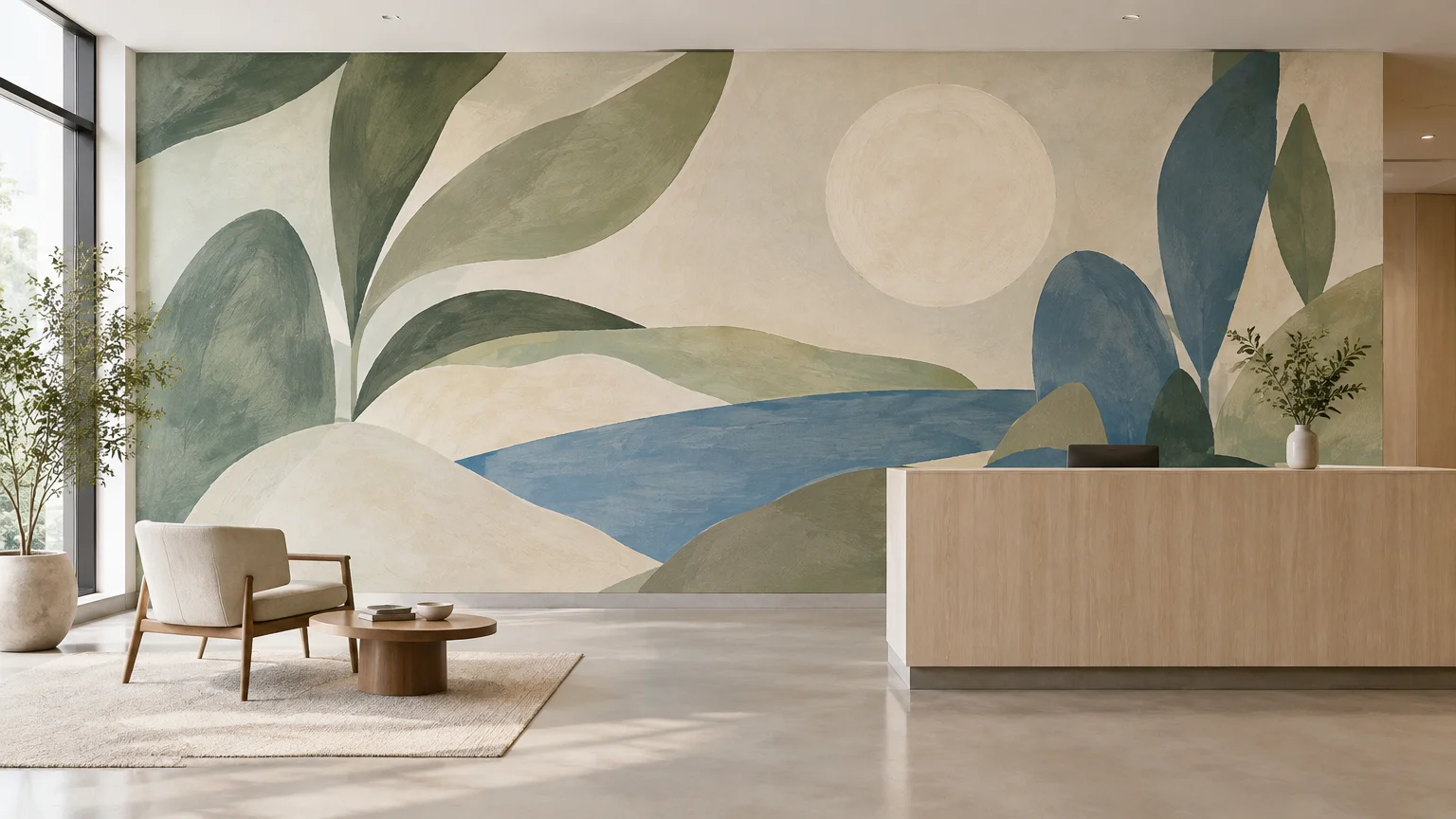

What should a visitor feel when they enter your office, and what should employees see every day? A mural works when it gives the wall a clear job, whether it welcomes visitors, marks a shared space, or reflects how your team works. Our mural options for your office start with your space, intended effect, and the artist’s style, not a ready-made office template.
A strong brief connects the image to the room’s function, the people who use it, and the wall’s actual condition. The right custom murals for offices are planned around viewing distance, lighting, surface preparation, schedule, and commercial-use rights. That planning matters more than choosing a fashionable image, because a mural needs to work as both artwork and part of a working environment.
Start with the work the wall must do
Imagine a visitor arriving in your reception area. A mural there might express your organization’s character before anyone speaks. In a conference room, it might create a considered backdrop for meetings. In a shared space, it could give employees a visual point of connection.
Choose one main purpose first. A wall asked to carry your logo, company history, mission statement, product imagery, and several messages can quickly feel crowded. Decide what someone should notice from the doorway, then give that idea room to read from the usual viewing distance.
Think about who sees the wall and when. A reception mural speaks to visitors, while a break room mural is experienced repeatedly by employees. These spaces can call for different levels of detail, color, and visual energy. Treating them as separate design tasks makes the concept more useful than applying one image everywhere.
When does an original painted mural make sense?
Workplace art research offers context, not a guarantee that a mural will change productivity. In a 2022 experiment with 413 participants, those exposed to diverse representations reported lower stress. The study tested several workplace features, not custom murals as a standalone intervention, as described in the 2022 experiment.
Use that finding as a reason to consider representation and meaning in your concept, not as a promised business outcome. Ask whether the imagery feels relevant to the people who use the office, and whether it belongs in the space for the long term.
A hand-painted, original mural suits a project where you want an artist to shape a one-off composition around the wall and your story. A printed wall covering may suit a brief centered on repeatable graphics or consistent brand assets. These approaches differ in execution and feel, so choose according to the result you need rather than assuming one method fits every office.
In 2026, Corgan’s research overview highlights placement, duration, and design intent as practical considerations when planning art for workplaces. That supports a simple principle: decide where people will encounter the artwork and what role it should play before settling on a concept. Our mural options for your office connect a custom project with an artist whose style fits your space.
Build a concept your team can recognize
Ask employees what the space should feel like before you settle on imagery. You do not need a committee to design the mural, but a few focused conversations can reveal what feels authentic, what could distract, and which stories matter to the team.
Make a short design brief with the wall’s purpose, preferred mood, visual references, colors to include or avoid, and any brand elements that must appear. Distinguish essential content from optional details. That gives the artist room to create while keeping the concept connected to your workplace.
Consider the surroundings, too. Furniture, lighting, doorways, displays, and sightlines can interrupt a design or compete with it. Share photos and dimensions, and point out anything that will sit in front of the wall. If you’re assessing an artist for a commissioned project, read our advice on how to choose a trusted mural artist.
Price the complete project, not just the paint
Two walls of the same size can require different amounts of work. Design detail, wall condition, access, preparation, materials, and project logistics all affect the scope. A detailed image or a difficult-to-reach wall, for example, needs different planning from a simple design on an accessible surface.
Ask for a written proposal that explains what is included, which preparation tasks are required, what materials and finishes are planned, and how access or scheduling affects the work. A single square-foot figure does not show whether design, wall preparation, equipment, or installation is included. Compare proposals by their scope, not just their headline price.
Our mural projects are quoted after we understand the wall, desired effect, and project format. We match you with an artist, prepare a proposal, and provide a quote before sketching begins. Payment is 50% initially and 50% after the finished mural matches the signed-off brief and you approve it.
Paint selection should reflect the wall surface, room conditions, and intended finish. Before approving the proposal, ask what paint system is specified and why. Our guidance on choosing paint for a mural can help you prepare informed questions.
Check the wall and workday before scheduling
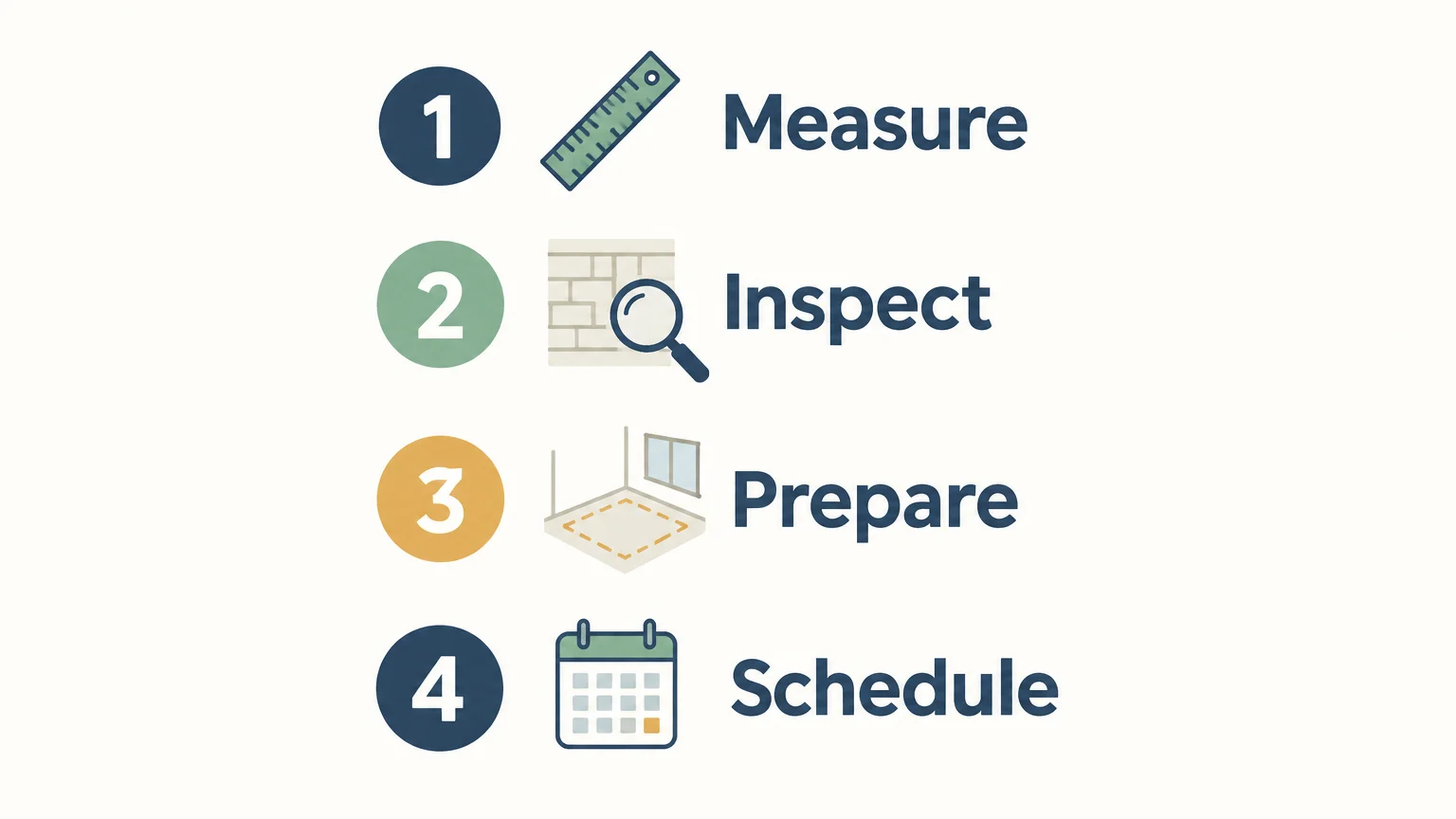
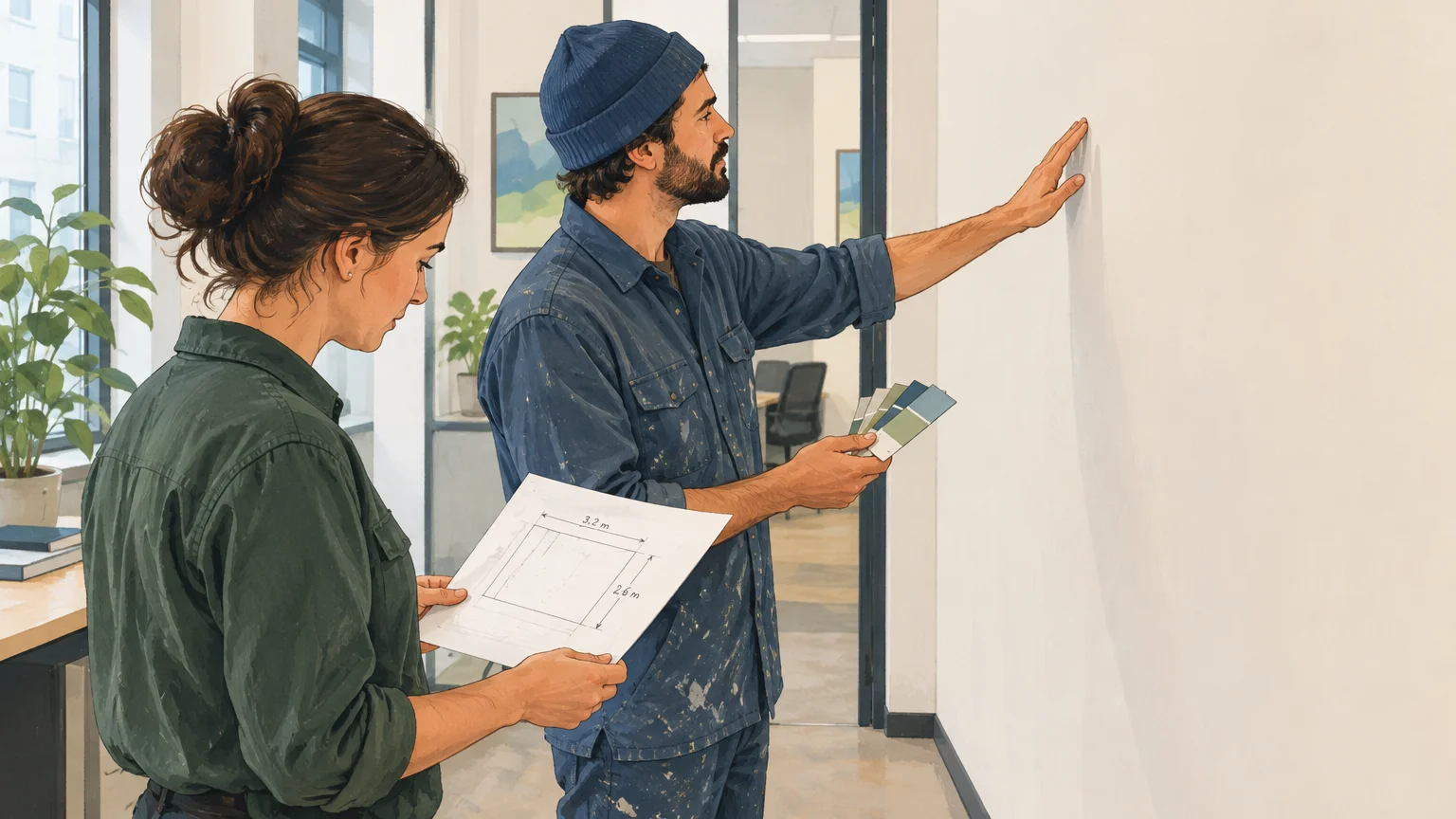
Before you book an installation, confirm wall dimensions, surface condition, nearby fixtures, and safe access. Our mural clients must provide a clean and accessible wall. After assessment, we determine whether your team or our specialists will handle any necessary preparation. If preparation is required, the specifications include proper primer.
Plan the work around the office calendar. Confirm when the space needs to be clear, how materials can reach the wall, and whether the work area needs protection. If the office stays occupied, agree on access and working hours before the project begins.
In 2026, Gensler’s survey reported that about two-thirds of global office workers adjust their workspaces to compensate for design shortfalls. A mural cannot resolve every workplace issue, so first identify the specific need the artwork should address. Use the 2026 workplace survey as a reminder to consider how the room works as well as how it looks.
Most of our mural projects are scheduled for 2 to 5 working days, though size, design complexity, and access can affect the schedule. We provide a precise schedule before work begins. Delivery times are estimates and may vary, so leave room in your office plan for project-specific timing.
Plan for care and commercial-use rights
Choose maintenance requirements with the wall’s location in mind. A mural in a busy corridor faces different contact and cleaning conditions from one in a private office. Ask what finish is appropriate for the project and what care instructions apply. We assess protective options according to location rather than assuming every mural needs the same coating.
It also helps to distinguish the artwork on the wall from images of that artwork used elsewhere. If you plan to photograph the mural for your website, social channels, or advertising, confirm the permitted commercial use in writing. Our mural projects include an agreement that addresses copyright and commercial use of artwork images.
For projects that need added protection, review the options for protective finishes for murals with the artist. Ask how the proposed finish fits the wall and intended use, and keep the agreed maintenance guidance with your project records.
Make the wall work for your office
A custom office mural is most effective when its purpose, design, surface, schedule, and usage rights are considered together. Start with the story the wall should tell, involve the people who use the space, and approve a written proposal that makes preparation and project scope clear.
Plan a mural for your office
If you have an office wall in mind but no finished concept, our process starts with a description of the space, wall surface, desired atmosphere, and project format. We match the brief with an artist, assess feasibility and preparation, and prepare a proposal before work is approved.
Our custom mural service includes project scheduling, workspace protection, paint selection, on-site creation, follow-up, and appropriate protective finishes. We carry full liability insurance for mural projects, and an agreement clarifies copyright and commercial use of artwork images. Most projects are scheduled for 2 to 5 working days, with the precise schedule provided before work begins. To discuss your office, explore our custom office mural services.
Frequently Asked Questions
What kinds of office walls can support a mural?
Drywall, brick, and concrete are among the surfaces considered in mural planning, but each wall needs assessment for condition, access, and preparation. Share clear photos and measurements before approving a concept.
How is a painted mural different from a printed wall covering?
A painted commission is created as an original artwork for the specific wall and brief. A printed covering uses a reproduced design, which may suit projects focused on repeatable graphics or consistent brand assets.
What affects the price of an office mural?
Wall size, design detail, surface preparation, access, materials, finishes, and project logistics all affect the scope. Ask for a written quote that states what is included rather than comparing a price without its details.
How long does an office mural project take?
Most of our mural projects are scheduled for 2 to 5 working days, but size, complexity, and access can change the timeline. Delivery times are estimates and may vary, so confirm the project schedule before work begins.
What should you confirm about image rights and cancellation terms?
Our project agreement addresses copyright and commercial use of artwork images, so define intended uses such as website photos or promotional materials before signing. Made-to-order artworks are generally non-refundable and non-exchangeable except in exceptional circumstances.