
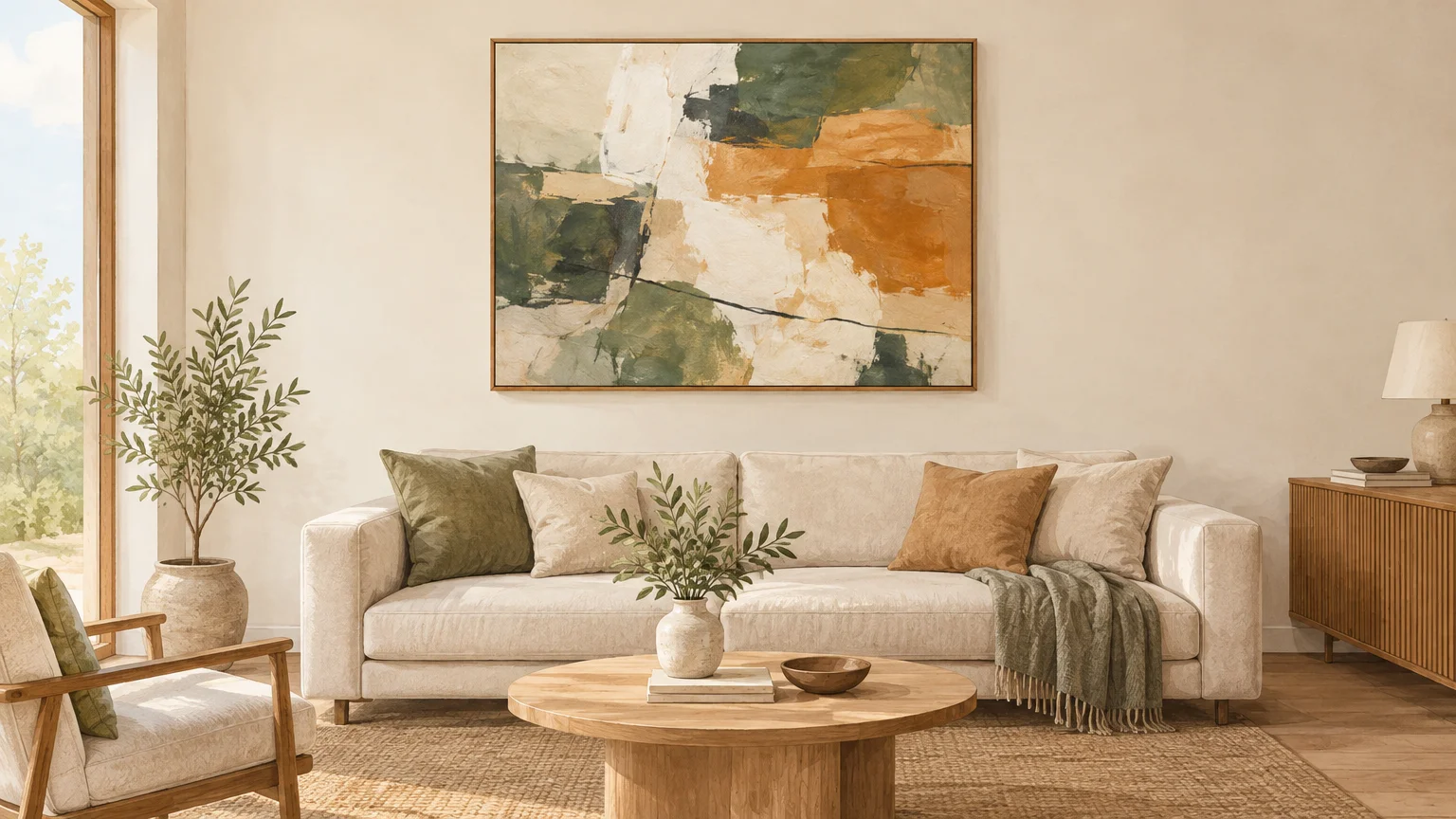

What if the art above your sofa felt like it belonged there, not just like it filled a blank space? Custom art for your living room starts with your room, your preferences, and the effect you want the piece to create. It can be a painting, sculpture, or, for a wall that calls for a more permanent change, a mural.
Before you commission anything, consider what matters most: a particular mood, an unusual wall size, a personal subject, or the experience of owning a one-off work. A ready-made piece or print might suit you better if you want to choose from available designs or have a clear budget limit. The right choice depends on how personal the artwork needs to be, and how it will fit the room in everyday use.
When does custom art make sense for a living room?
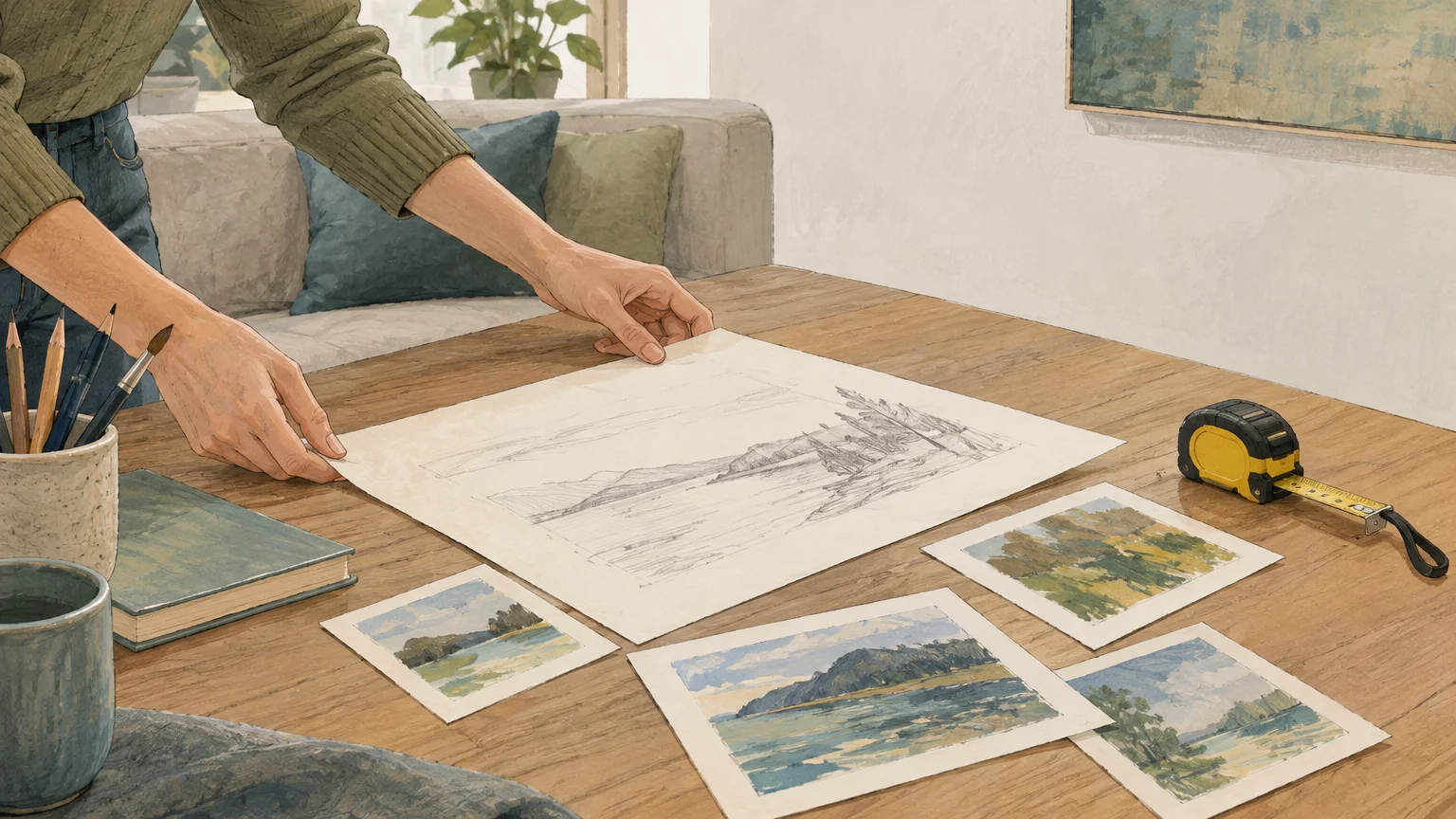
Imagine you have a wide wall, a strong idea for its mood, but no available piece feels quite right. That’s when a custom commission may be worth exploring. You can describe the wall, format, inspiration, and desired effect, then choose an artist whose style fits the project.
Custom work is not the only way to make a room personal. A one-off original may suit you if you find an existing painting or sculpture you love. A print can work when you want a particular image or an easier-to-plan purchase. Think of the difference this way: a commission starts with your brief, while ready-made art starts with the artwork already available.
Personal preferences matter more than a passing trend. A 2019 analysis of images of 50,000 living rooms found that the use of wall art and other decorative features differed across the cities studied. That’s a useful reminder that there isn’t one look that suits every home. The living-room study considered photographed listings, so it describes observed patterns rather than what every resident prefers.
At L’Original, we match your description with artists whose styles fit, then provide a quote before sketching begins. You can discuss the idea in a free 20-minute Zoom consultation before deciding whether to proceed. If you’re still weighing formats, our guide to choosing between a painting and a mural covers the difference between a movable artwork and a wall-specific treatment.
How do you choose a style and subject you’ll enjoy?
Start with the feeling you want when you enter the room. For a quieter atmosphere, you might gravitate toward soft contrasts, open compositions, or familiar natural subjects. For more energy, consider bolder color, stronger shapes, or a scene that draws the eye. These are starting points, not rules: choose what feels right to you.
Next, look at the room as it is. Note the sofa, rugs, wood tones, existing artwork, and the wall’s natural light at different times of day. Decide whether the art should echo the palette already present or introduce a deliberate contrast. Bring a few reference images to a commission discussion, but describe what you like about them rather than asking an artist to copy another person’s work.
Design forecasts can offer inspiration, but they don’t define what belongs in your home. In a 2026 report, 55% of surveyed designers expected to create living rooms for clients that year, compared with 63% who had done so in 2025. Those figures describe designers’ project plans, not the preferences of all homeowners. Let them serve as context, then prioritize a subject and mood you’ll be glad to live with.
If you want a more structured way to plan a group of pieces, browse our wall art gallery ideas. A gallery wall can make room for several sizes and subjects while still feeling coherent. Choose one piece or theme to anchor the arrangement, then repeat a color, frame style, or visual rhythm across the others.
What size and format will suit your wall?
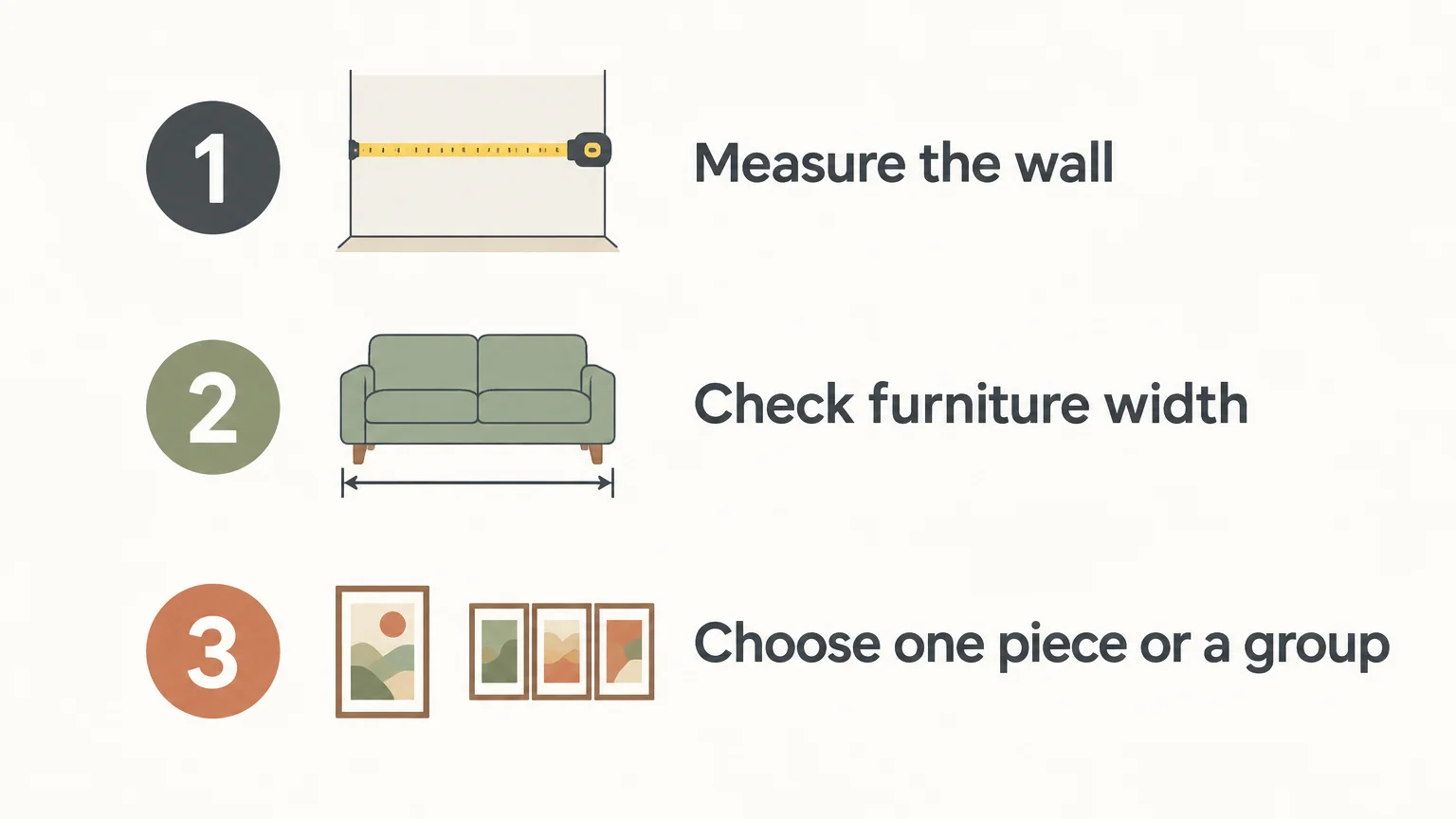
Measure the open wall and the furniture beneath it before settling on a format. Above a sofa, a piece or grouping that spans roughly two-thirds of the sofa’s width is a useful starting point. Step back to check the viewing distance, too: a large work needs enough room to take in its composition.
Then decide whether one focal piece, a pair, or a gallery arrangement suits the wall. A single work keeps the composition simple. A pair can add width above long furniture, while a gallery wall lets you combine different formats. Leave enough breathing room around the art so it doesn’t feel crowded by shelves, lamps, or doorways.
In its 2026 U.S. study of homeowners who renovated, Houzz reported that 42% bought artwork in 2025. That figure is about purchases by renovators, not all households, but it shows that art can be part of a broader home update. Use your own measurements and the intended viewing distance to make the choice practical.
How should you compare originals, prints, and commissions?
Compare the artwork itself as well as how it will arrive and hang. An existing original is ready to choose from the works available. A print reproduces an image and may offer a different price point or presentation. A custom work is developed from your description, so you discuss the concept, size, medium, and budget before the work begins.
Ask what the price covers, whether framing is included, and how the piece will be packaged and delivered. Check the listing for the artwork’s dimensions, medium, and whether it is an original or a print. At L’Original, original catalogue paintings are one-off physical works made and signed by represented living artists; listings identify prints as prints.
A commission is quote-based, not a fixed-price product. At L’Original, you receive a quote before sketching begins, and video refinement supports discussion of the proposal. Made-to-order artworks are generally non-refundable and non-exchangeable except in exceptional circumstances. Delivery times are estimates and may vary, so confirm the specific schedule and terms before approving your order.
For a wall that calls for something more permanent than a framed piece, consider surface suitability, access, preparation, and protection. Mural projects involve a feasibility and wall-preparation assessment; the client must provide a clean, accessible wall, and preparation responsibility is determined after assessment. Project agreements also address copyright and commercial use of mural images.
What should you prepare before requesting a commission?
A clear brief helps an artist understand the room and the idea without boxing in the creative process. Gather the wall measurements, a photo of the space, and a few notes about mood, inspiration, preferred colors, format, and budget. You can also explain what you don’t want, such as a specific subject or a composition that feels too busy.
Share the practical details early. Mention whether the wall is above a sofa, whether the room gets direct sunlight, and whether the artwork needs to coordinate with existing pieces. For a grouping, describe the whole arrangement rather than treating each work as an isolated choice. Our custom painting options can help you consider the available commission formats.
- Measure the wall and the furniture below it.
- Choose a realistic budget before requesting a quote.
- Collect references that show the mood or palette you like.
- Ask about medium, framing, delivery, and approval stages.
- Review the quote, terms, and estimated timing before approving the work.
Choose art for the room you live in
The most satisfying choice is the one that fits both the wall and your daily life. Measure first, decide how personal the artwork needs to be, and compare the format, materials, price, delivery, and terms. Whether you choose an existing original, a print, or a commission, let your taste lead the decision.
Find Art for Your Living Room
If you’re ready to bring more character to a living-room wall, decide whether you want to select an available piece or develop a new idea with an artist. Your measurements, inspiration, and preferred mood are a practical place to start.
Explore our living room wall art to browse artwork for the space. If you’re considering a commission, we match your brief with an artist whose style fits and provide a quote before sketching begins. A free 20-minute Zoom consultation gives you time to discuss your idea before you commit.
Frequently Asked Questions
Is custom art worth it for a living room?
It can be a good fit when you want a piece shaped around a particular space, mood, or idea. If you already love an available work, a ready-made original or print may suit you better.
What should I include in a custom art brief?
Share wall measurements, a photo of the room, your desired mood, and any inspiration or color preferences. Include your budget and practical details such as framing and delivery needs.
How do I choose the right artwork size above a sofa?
Measure the sofa and the available wall space first. A piece or grouping around two-thirds of the sofa’s width is a helpful starting point, then check how it looks from the usual viewing distance.
What is the difference between original art and a print?
An original is a one-off physical artwork, while a print reproduces an image. Check the artwork listing to confirm its type, dimensions, medium, and presentation.
Can I discuss a custom painting before committing?
Yes. At L’Original, you can book a free 20-minute Zoom consultation to discuss your idea before deciding whether to proceed.