
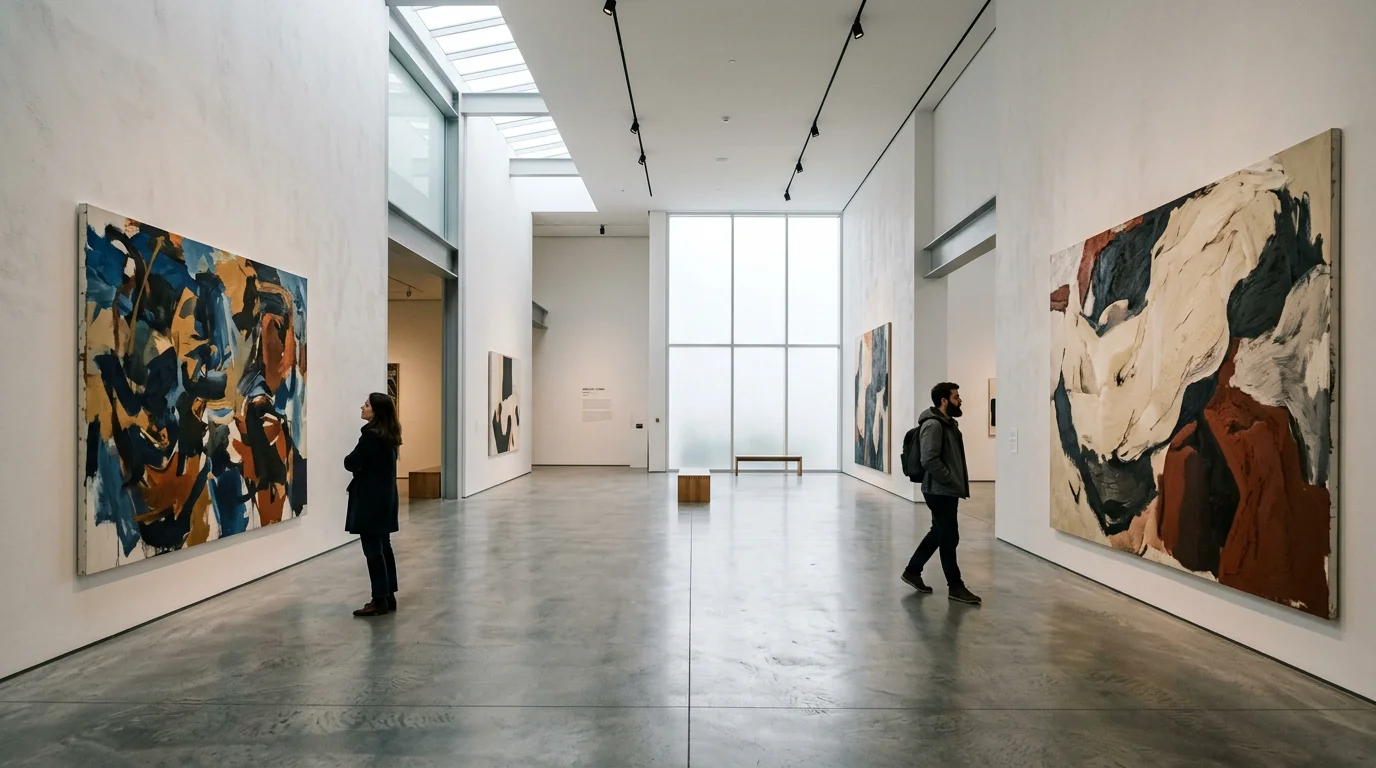

The global art market returned to growth in 2025, and the momentum has carried into 2026. That matters because the space where most people first encounter living artists is not an auction room but a gallery. If you have ever hesitated on the threshold, unsure whether you were allowed in or expected to buy, you are far from alone. Understanding how a contemporary art gallery operates removes that friction and turns a quiet room full of paintings into a place you can actually use. Our art gallery guide for collectors covers the practical side, and this article sets the wider context.
Admission is usually free, staff are there to help, and nothing obligates you to spend a cent. According to the Art Basel and UBS report, global sales rose 4% year-on-year to an estimated USD 59.6 billion in 2025, a modest recovery after two years of decline. Behind that headline sits a simple truth: galleries remain the front door.
What a contemporary art gallery actually is
At its core, a contemporary art gallery is a commercial or non-profit space that shows and sells work by living or recent artists, typically pieces made from the mid-twentieth century onward. The definition is broader than many people assume. Institutions themselves frame it that way: the Museum of Contemporary Art San Diego, for example, describes a collection of works created after 1950 across painting, sculpture, works on paper, photography, video, and installation.
Two broad models exist. Commercial galleries represent artists, mount rotating exhibitions, and earn revenue from sales. Non-profit art spaces, meanwhile, focus on public programming, commissions, and education, often with free admission every day. Both put artists at the centre, but only the commercial route lets you take a piece home. Knowing which type you are visiting saves confusion before you walk in.
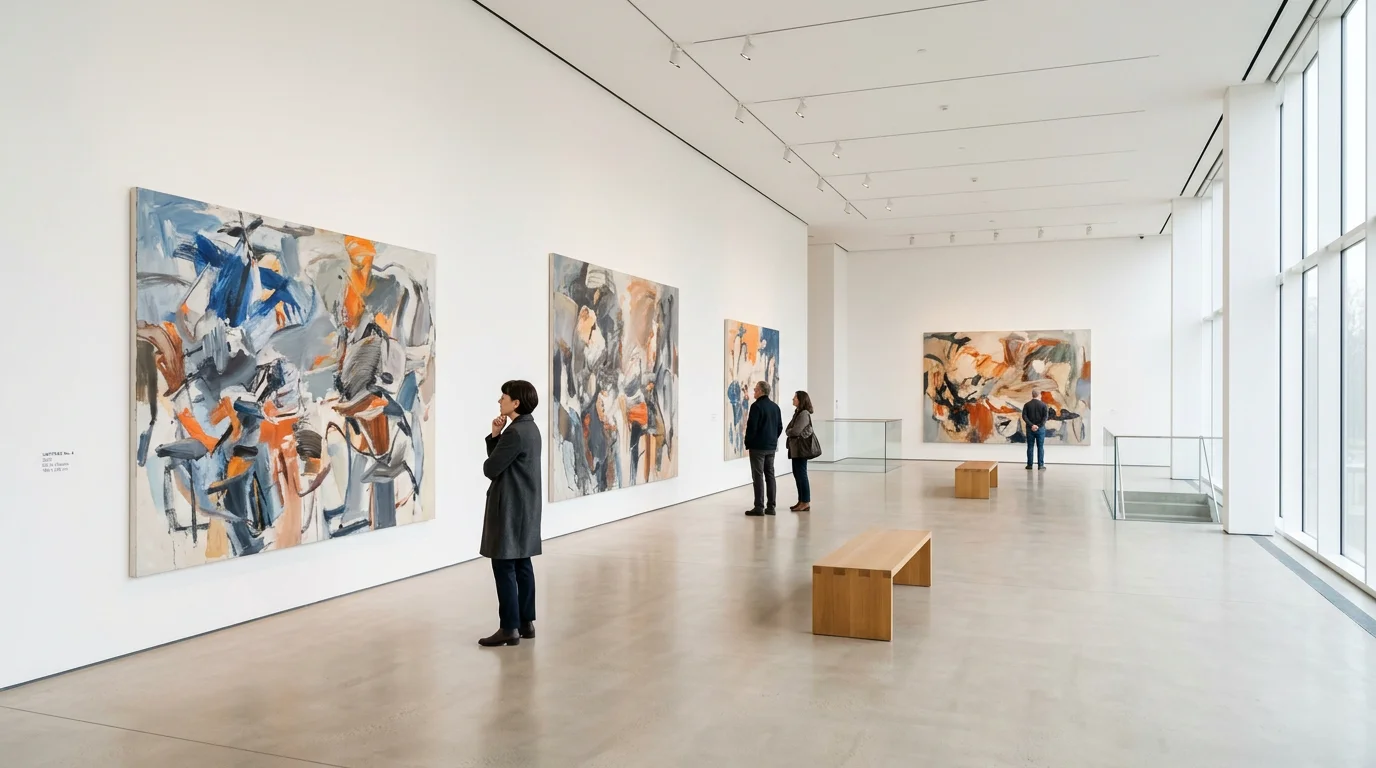
The market in 2026: why now is a good time to look
Timing shapes confidence, so start with the numbers. The arts market was valued at USD 583.42 billion in 2026 and is projected to grow at a 6.1% compound annual rate through 2030. That growth is not evenly spread, which is precisely why galleries deserve your attention over speculative bidding.
The most useful signal for a new buyer concerns price. According to the Bank of America report, in 2025 some 94% of auction transactions occurred below one million dollars, and contemporary and young contemporary works made up 43% of lots offered. In plain terms, the market is dominated by accessible price points, not the seven-figure headlines. Galleries sit right in that accessible band, which is where original work by emerging living artists is easiest to find and fairly priced.
What you'll find inside a gallery
Picture the range. One wall might hold large abstract canvases, another a series of photographs, a plinth in the centre a sculpture, and a back room devoted to street art or works on paper. Contemporary spaces deliberately mix mediums because the field itself is porous. That variety is the point, not a distraction.
Exhibitions rotate, usually every few weeks or months, so no two visits feel identical. Some galleries also publish editions, artists' books, and catalogues you can buy affordably. If you want to browse a curated selection of original paintings and canvas wall art before visiting in person, you can buy an original artwork from our matched artists and see how a handpicked range differs from a crowded online marketplace.
How to buy and collect with confidence
Buying from a gallery is more straightforward than the mystique suggests. Ask the price, ask about the artist, and ask about provenance; none of these questions marks you as an amateur. Staff expect them. Where auctions reward established names, galleries often reward discovery, letting you support an artist early.
The broader market rewards that patience too. The Arts Economics analysis noted a shift in 2025 from contraction toward modest growth, with buyers favouring quality over speculation. Female artist representation also strengthened, reaching 50% among primary-market galleries. For a collector, that means a wider, more balanced field to choose from. Here is how the main acquisition routes compare.
| Feature | Auction house | Online marketplace | Our gallery model |
|---|---|---|---|
| Original, hand-made works | Yes, often high-priced | Mixed with prints | Yes, no prints, every piece made by hand |
| Entry price point | Variable, often high | Low to mixed | From 680 $ CAD |
| Custom commissions | No | Rare | Yes, 2 to 6 weeks, end to end |
| Artist matching | No | Limited | Yes, PickArt in about 2 minutes |
Commissioning custom work: the made-to-measure route
What if the piece you picture does not exist yet? This is where galleries that represent working artists earn their keep. A commission turns your brief into an original painting, sculpture, or mural, built for a specific wall, room, or brand story. It is a service, not just a sale.
Expect a clear process: a brief, a concept, revisions, then delivery, typically over a few weeks. We handle custom murals and made-to-measure pieces with follow-up from brief to delivery, and you can also upload a photo of a work you already own so we find pieces that complement it. That end-to-end support is what separates a represented artist from an anonymous print shop.

Making the most of a gallery visit
A good visit rewards a little preparation. Check opening hours, since many galleries close early in the week, and note that admission is frequently free. Give yourself time to sit with a few works rather than rushing every wall. Slow looking is how a piece earns a place in your home.
Talk to the staff, take notes, and follow the artists whose work stays with you. Art fairs matter here too: fair sales climbed to 35% of dealer turnover in 2025, their highest level since 2022, so galleries increasingly meet buyers at events as well as on-site. If you would rather start in person, you can explore our two Montréal galleries in Vieux-Montréal and the Plateau-Mont-Royal.
Where this leaves you
A contemporary art gallery is not a private club; it is an open, mostly free space built to connect you with living artists and original work. The 2026 market favours quality, accessible price points, and discovery over speculation, which plays directly to a gallery's strengths. Walk in without pressure, ask plain questions, and let a few pieces earn your attention. Whether you buy today or simply learn what moves you, every visit sharpens your eye and makes the next decision easier.
Take action with L'Original
If reading about galleries has left you wanting a work that feels genuinely yours, the hardest part is usually knowing where to start. You do not need to scroll endless listings or guess which artist fits your taste and your space.
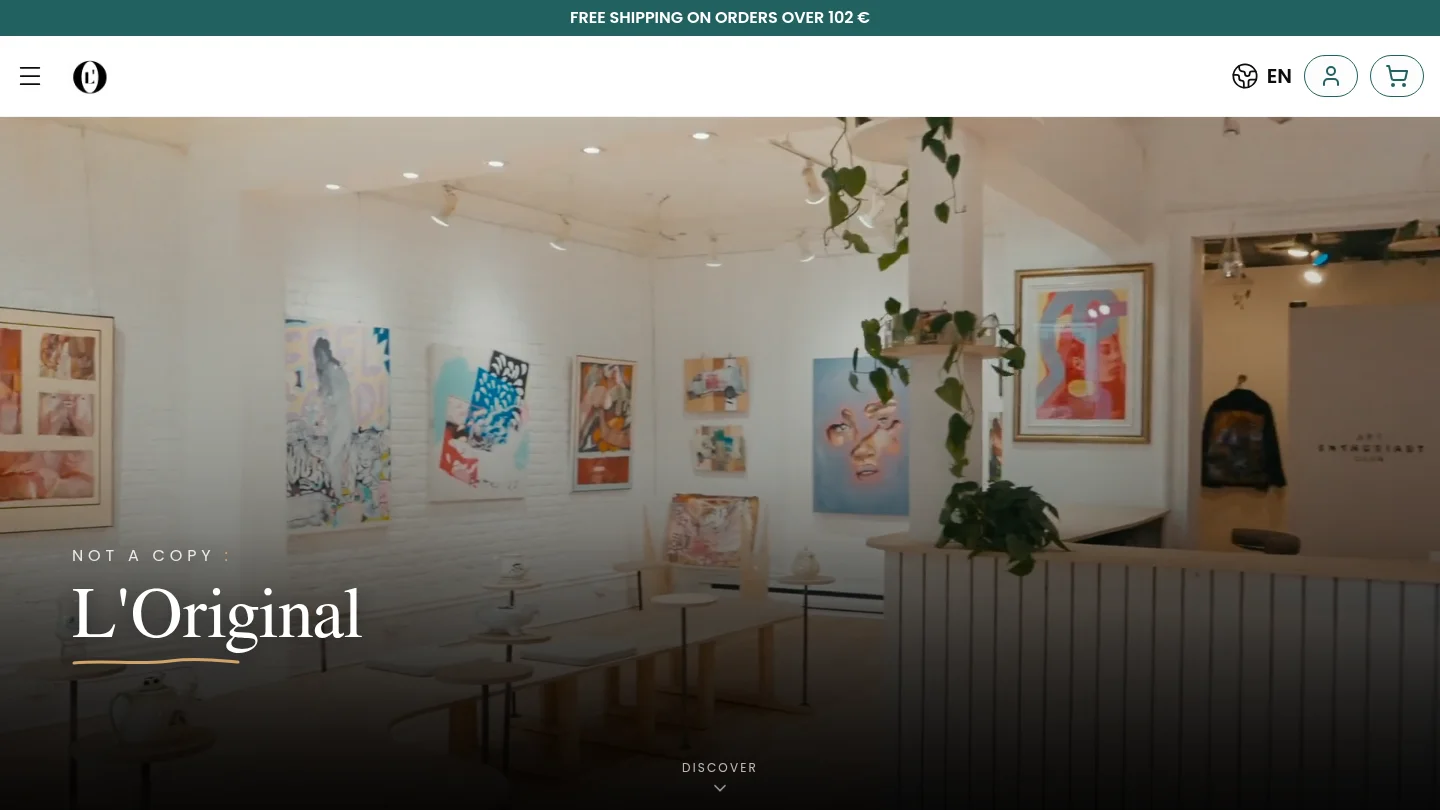
We represent 230 professional painters and sell only originals, no prints, with pieces from 680 $ CAD and custom murals delivered in two to six weeks. In about two minutes, and with no sign-up, you can match with your artist through PickArt, then buy an original, share your top three, or commission a made-to-measure piece with follow-up from brief to delivery.
Frequently Asked Questions
Do I have to buy anything to visit a gallery?
No. Most contemporary galleries welcome visitors for free and expect plenty of people to browse without buying. Looking, asking questions, and leaving empty-handed are all completely normal.
How is a contemporary gallery different from a museum?
A museum preserves and exhibits a permanent collection, while a commercial gallery represents artists and sells their work. Galleries rotate exhibitions more often and let you take a piece home, whereas museums focus on public display and preservation.
Is contemporary art expensive to buy?
Not necessarily. In 2025, the vast majority of art transactions happened below one million dollars, and gallery pieces by emerging artists start far lower. We offer originals from 680 $ CAD, so entry points are more accessible than headlines suggest.
Can I commission a custom piece instead of buying what's on display?
Yes. Many galleries that represent working artists take commissions for paintings, sculptures, or murals. We manage the full process from brief to delivery, typically within two to six weeks, so the finished work fits your space exactly.
How do I choose an artist if I'm new to collecting?
Start by noticing which works hold your attention and talk to gallery staff about them. Our PickArt flow can also match you with an artist in about two minutes, giving you a shortlist to explore before you commit.