

What exactly are you giving a gallery permission to do, and what does it owe you in return? If you’re comparing galleries for emerging artists, weigh the written scope, commission, rights, and exit terms alongside the gallery’s audience.
Artist representation can describe a one-time consignment of selected works or an ongoing relationship covering broader parts of your career. Those arrangements are not interchangeable. Your agreement should name the work and activities involved, define what the gallery will do, and explain how money, expenses, and responsibilities are handled.
What does artist representation include?
Start by identifying the type of relationship. A consignment agreement usually covers specific works, their display period, and the gallery’s authority to sell them. A broader representation agreement may cover ongoing promotion, sales, exhibitions, or a defined territory.
Ask which works and activities fall within the agreement. Does it cover only paintings you deliver, or also new work, commissions, or sales introduced through other channels? The College Art Association advises artists to put exhibition and consignment arrangements in writing. Its guidelines also distinguish occasional consignments from longer-term dealer relationships, which need clearly defined terms.
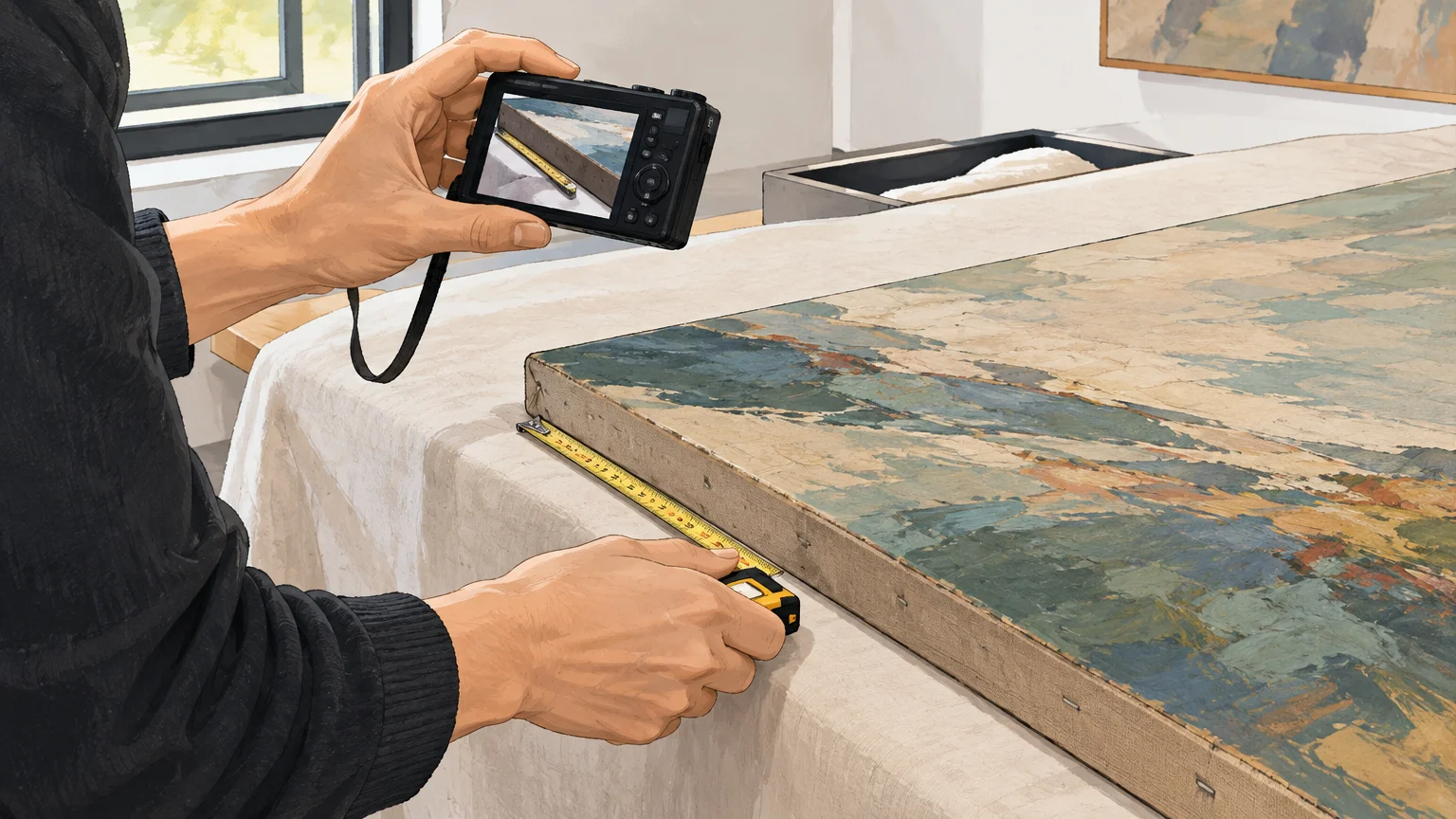
Make an inventory before handing over artwork. Record each work’s title, medium, dimensions, condition, price, and delivery date, and keep a copy signed by both parties. This gives you a shared record if a work is sold, damaged, or returned.
How should commission, fees, and prices be set?
Your contract should show how a sale is divided and whether other costs come out of your share. Ask whether the commission applies to the listed price, a discounted price, custom work, sales you refer, or purchases made outside the gallery. Clarify when any discount needs your approval.
For artists accepted into our Artist Partnership Program, the artist receives 62% of each sale and the gallery retains 38%. That split is separate from participation-plan costs. Our monthly plans include a $22 option and an $8 option; the $8 plan requires a dedicated page on your personal website and includes the same benefits as the $22 plan.
Our program requires listing prices to exceed $1 per square inch, stay consistent across your sales channels, and include our commission. Prints and digital reproductions are not accepted into the program. If you’re comparing online display options, our page on online art galleries for artists offers a separate starting point.
Ask for a written list of additional charges, such as shipping, storage, framing, photography, or insurance. If a plan has a recurring subscription, check its billing period and cancellation terms. For our subscriptions, cancellation takes effect after the current billing period ends.
Does the agreement limit where you can sell?
Exclusivity can apply to a territory, a type of work, a sales channel, or particular works listed in an inventory. It does not always mean that every work you make must go through one gallery. Check the exact wording before agreeing to exclusivity, especially if you already sell through your own website or take direct commissions.
The National Association for the Visual Arts recommends that artists and galleries put the territory, period, artworks, and scope of representation in their written agreement. Its guidance also advises artists to clarify whether the gallery’s authority covers exhibiting, selling, or commissioning work. Use those points to define what you can continue doing independently.
If you keep your own website or social accounts, spell out how direct inquiries will be handled. You could agree that the gallery receives commission only for sales it negotiates, or define a referral arrangement for specific clients. Our article on websites to showcase your work can help you consider your own online presence alongside gallery representation.
Who handles payment, artwork, and image rights?
Specify when payment is due after a sale, what records you receive, and how the gallery reports discounts, taxes, or deductions. The Art Dealers Association of America’s code says its members should agree with artists in advance on expenses, prices, compensation, and when and how payment and accounting will occur.
For each consigned work, write down who arranges and pays for transport, packing, storage, insurance, installation, and return shipping. Clarify when responsibility for a work begins and ends, and what happens if it is lost or damaged. Keep copies of condition photographs and delivery records with your inventory.
Ownership of the physical artwork and permission to reproduce its image are separate matters. State whether the gallery may use photographs of your work in listings, press materials, social media, or advertising, and whether that permission continues after the agreement ends. Reserve any rights you have not expressly granted.
What should the gallery commit to doing?
Replace broad promises such as “promote your work” with activities you can discuss and review. Ask which sales channels will carry your work, how often listings are updated, how inquiries are handled, and whether the gallery plans specific exhibitions or outreach. A written commitment should describe actual services, not suggest that visibility guarantees sales.
Match expectations to the gallery’s actual model. Our Artist Partnership Program includes curation, online listings, Artsy access, and sales paperwork and pickup logistics. Physical-gallery exposure may be available for established artists or those showing strong online performance. Otherwise, artworks are shown online through L’Original and Artsy, with gallery screens displaying online works. Sales are not guaranteed.
Ask how often you’ll receive updates and what information a sales statement includes. You might also agree on a process for reviewing prices, adding new work, or responding to a client interested in a commission. Clear routines help both sides understand what a useful working relationship looks like.
When should you negotiate or walk away?
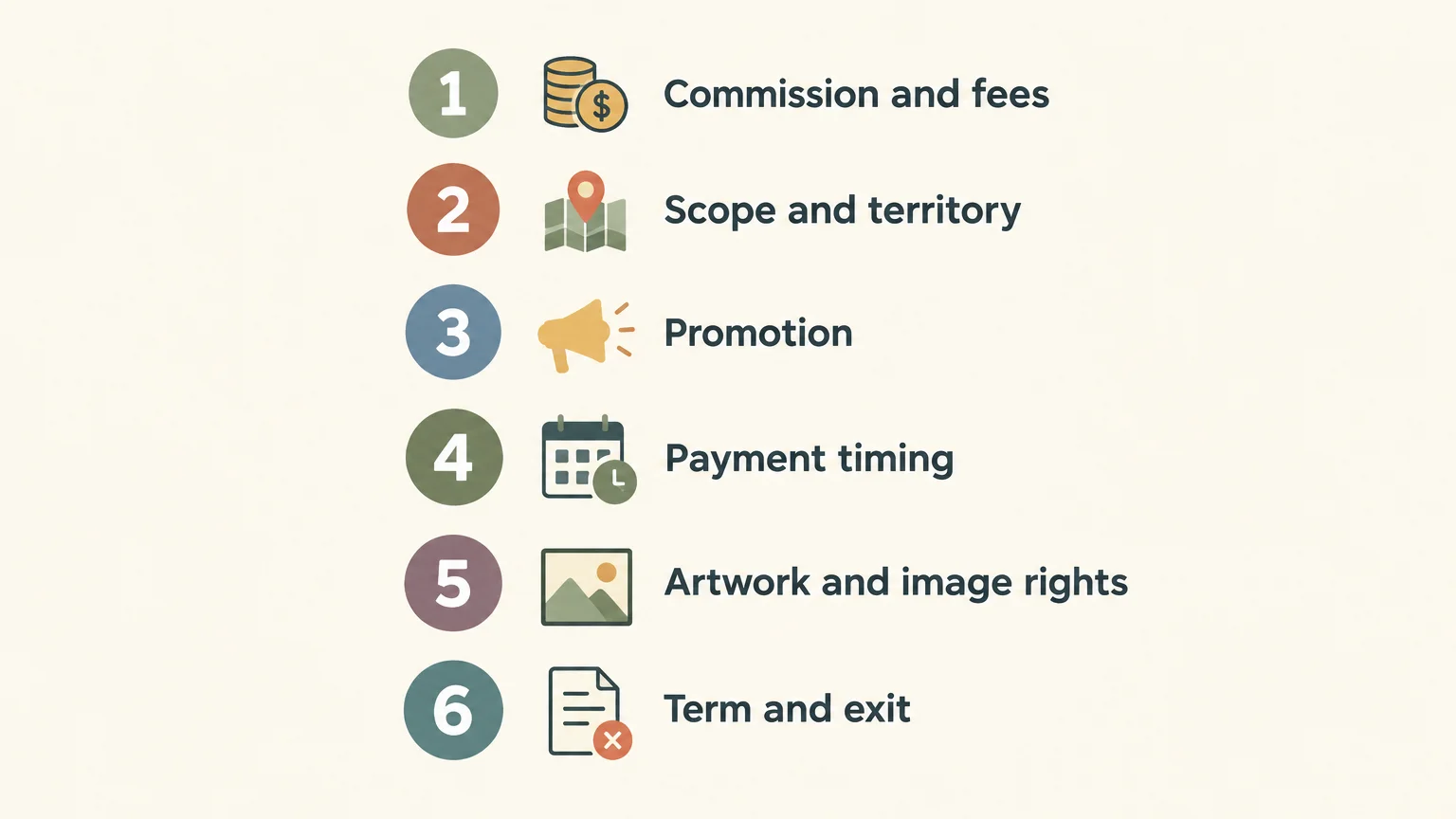
Before signing, compare the written agreement with what you discussed. Pause if it leaves the commission, exclusivity, expenses, payment schedule, or return of unsold work unclear. Ask for revisions in writing rather than relying on a verbal assurance that a detail will be worked out later.
- Scope and term: Name the works, territory, channels, start date, end date, and renewal process.
- Money and expenses: Record the commission, fees, discount rules, deductions, and payment deadline.
- Promotion and reporting: Describe the gallery’s activities and how it will report inquiries and sales.
- Care and rights: Assign shipping and insurance responsibilities, and define image permissions.
- Ending the agreement: Set notice requirements and a process for returning unsold work and closing outstanding sales.
Read the whole document, including any inventory or policy attached to it. If a term is unclear or the stakes are significant, seek independent advice in your jurisdiction before signing. Keep the final signed copy and all later amendments.
Make the terms clear before you commit
A useful gallery representation agreement makes the scope, money, rights, responsibilities, and exit process understandable to both sides. Compare those written commitments with the support you actually need, and keep your own records of work, sales, and communications. If a key term is missing, ask for it to be settled in writing before you hand over artwork or agree to exclusivity.
Explore our artist partnership
If you want to compare a real program with the terms you’ve reviewed, our Artist Partnership Program is one option to assess. Living artists can apply online from anywhere, and the team evaluates the work itself rather than requiring a résumé.
Accepted artists receive curation, listing opportunities, Artsy access, and help with paperwork and pickup logistics for sold works. The artist receives 62% of each sale, while the gallery retains 38%; sales are not guaranteed. Review the program details and apply to our Artist Partnership Program if its terms suit your goals.
Frequently Asked Questions
Is gallery representation the same as consignment?
Not necessarily. A consignment usually covers specific works for a set period, while representation may also cover ongoing promotion, sales, or a territory.
Should you agree to exclusive representation?
Only after you understand exactly what is exclusive, where it applies, and how long it lasts. Define any direct sales, existing clients, or other channels you can continue using.
What should you compare when reviewing commission?
Compare your share after commission, any separate fees, allowable discounts, and expenses. Check when payment is due and what sales records you’ll receive.
Can a gallery guarantee that your work will sell?
A gallery can describe the services it will provide, but representation does not itself ensure sales. Our Artist Partnership Program does not guarantee sales.
Can you keep selling your work online?
That depends on the agreement’s exclusivity, territory, and channel terms. Write down how your website, social accounts, direct inquiries, and existing buyers will be handled.