
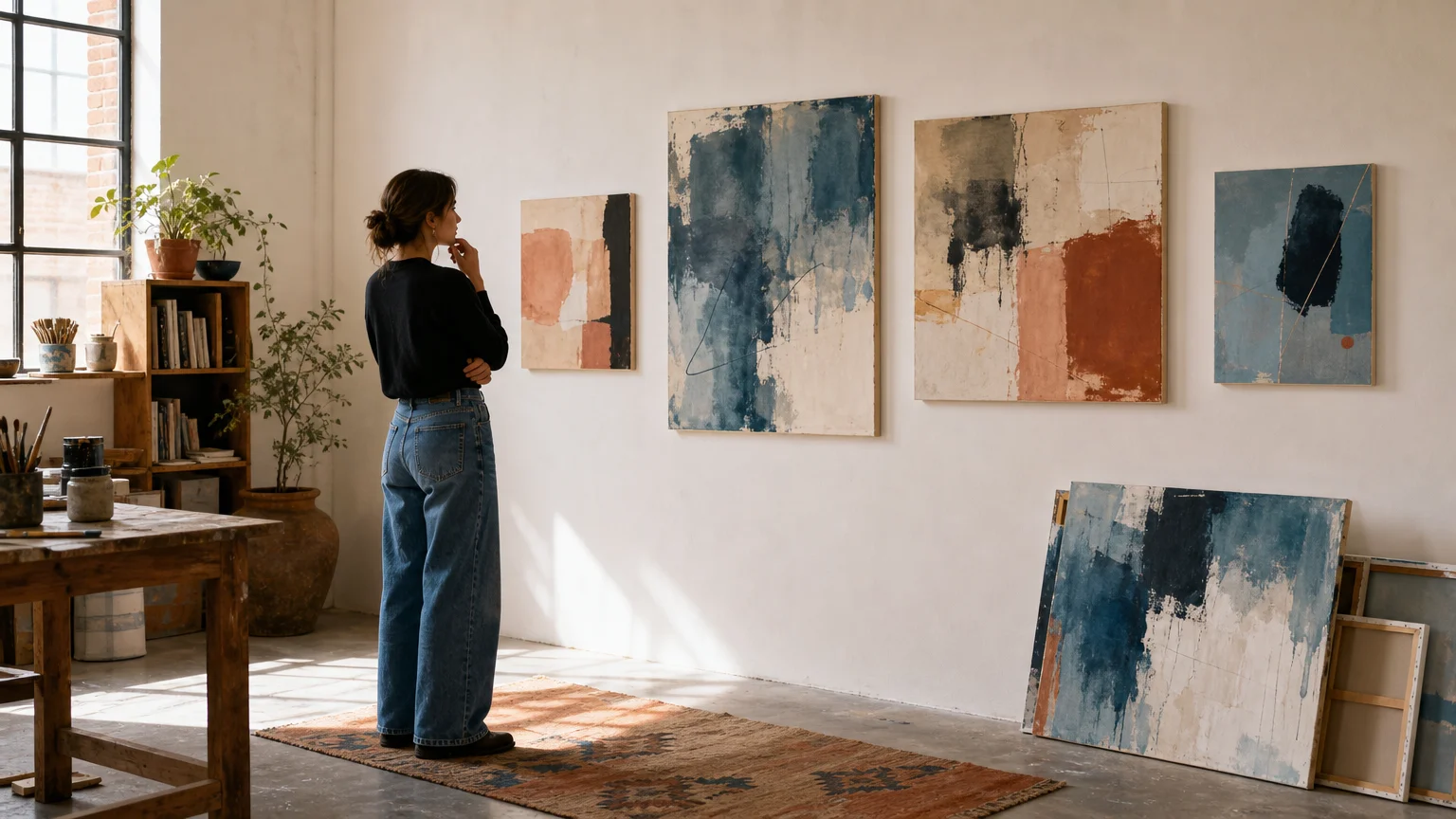

What does a gallery actually contribute beyond a wall and a price tag? For many artists, the answer includes access to collectors, professional presentation, sales administration, logistics, and a long-term artist-gallery relationship. If you are exploring how to join an art gallery in Montreal, the most useful starting point is not prestige. It is understanding what the partnership requires from both sides.
The global art market reached $59.6 billion in 2025, according to the 2026 Art Basel report. That figure does not mean every represented artist will sell consistently. It does show why galleries, online catalogues, direct sales, and independent practices continue to compete and collaborate for attention in 2026.
What does gallery representation include?
Gallery representation usually means an ongoing commercial relationship rather than a single exhibition. The gallery may present your work in a physical space, list it online, introduce it to collectors, organize exhibitions, advise on pricing, manage enquiries, and coordinate sales or shipping.
The exact arrangement varies widely. Some galleries represent artists exclusively within a city, region, or category. Others work on a non-exclusive basis, accept selected works, or begin with a group exhibition before discussing longer-term representation. A gallery may also offer a consignment arrangement, where specific works are entrusted to it for sale without giving the gallery broad rights over your entire practice.
Your responsibilities matter just as much. You may need to provide new work, maintain consistent prices, supply high-quality images, meet delivery deadlines, attend openings, and communicate quickly. Representation does not remove the need for self-promotion. It changes where your time is spent and gives you a professional partner for selected parts of the process.
The best arrangement creates a clear exchange. You bring a distinctive practice, reliable communication, realistic pricing, and work that fits the gallery’s programme. The gallery brings relevant audiences, sales expertise, presentation, operational support, and a credible plan for developing your career.
Is representation right for your career stage?
Representation can be useful at different stages, but the reason you seek it should be specific. An emerging artist may want help reaching first-time collectors. A mid-career artist may need stronger international exposure, institutional connections, or support with larger projects. An established artist may seek a gallery with the resources to manage fairs, shipping, publications, and multiple markets.
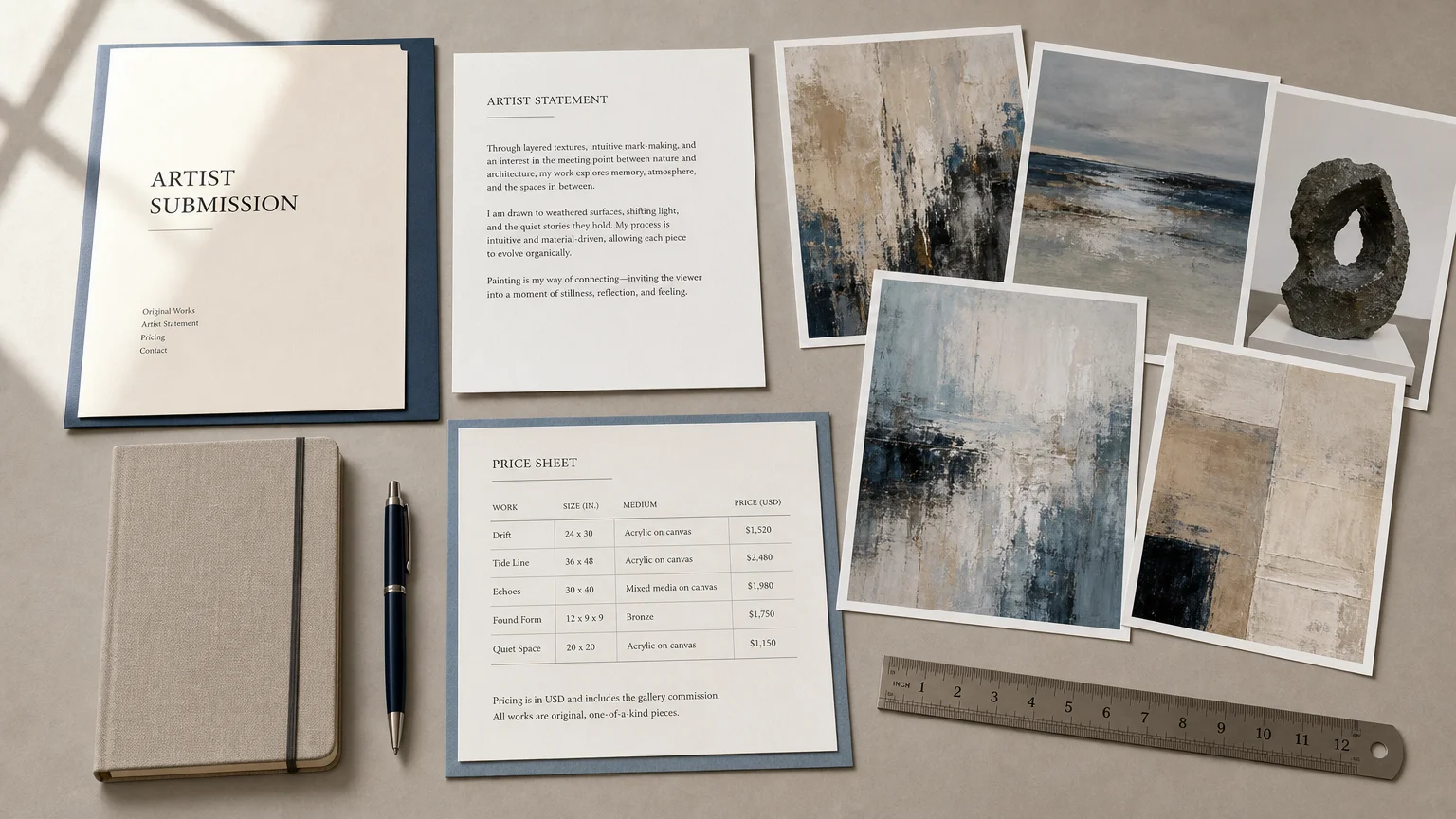
Look honestly at your current body of work. Do you have a cohesive body of work, or are you still testing unrelated styles? Can you explain the ideas, materials, dimensions, and prices clearly? Do your photographs show the work accurately? Galleries often need evidence that your practice is focused enough to present and sell.
Access is not always neutral or evenly distributed. A 2026 study in Nature Communications examined 65,768 contemporary artists across 20,389 institutions and identified gender differences in artist populations, exhibitions, and auction opportunities. The 2026 visual art study is a reminder to assess the quality of a gallery’s selection process, not only its reputation.
You also need to decide what kind of support you actually need. If your main challenge is finding buyers, prioritize collector access and sales follow-up. If administration consumes your studio time, look for help with inventory, shipping, certificates, and payments. If you need visibility, ask how the gallery promotes artists beyond simply listing their work.
How should you approach a gallery?
Start with research, not mass emailing. Review each gallery’s artists, mediums, price levels, exhibition history, geographic focus, and visual identity. Your goal is to identify a genuine match, not to send the same portfolio to every gallery you can find.
- Study the programme. Confirm that your work belongs beside the gallery’s current artists and exhibitions.
- Prepare your portfolio. Include strong images, titles, dates, dimensions, media, prices, a biography, an artist statement, and relevant exhibition history.
- Follow submission rules. If the gallery has an open call, answer precisely and send only the requested materials.
- Write a tailored message. Explain why your work fits that gallery. Avoid vague claims about being the next major artist.
- Build the relationship gradually. Attend exhibitions, speak respectfully with the team, and stay informed without repeatedly demanding an answer.
Your portfolio should make evaluation easy. Use consistent filenames, accurate measurements, and photographs that show the work without distracting backgrounds. Keep your public prices aligned across your website, social channels, galleries, and online marketplaces. Inconsistent pricing can undermine trust before a conversation even begins.
If you are weighing different sales channels, our guide to selling art through a gallery or online can help you compare the practical responsibilities of each route. You can also ask a gallery whether it expects exclusive access to your work or simply wants to list selected pieces.
Gallery representation, independence, or a hybrid model?
You do not need representation to build a serious art career. Independent artists can sell directly, organize exhibitions, develop collector relationships, and retain full control over their prices and communication. The trade-off is that they must also manage marketing, enquiries, contracts, packaging, shipping, payments, and customer service.
A hybrid model combines both approaches. You might work with a gallery for large paintings, institutional opportunities, or international fairs while selling smaller works directly. You could also use a gallery for selected geographic territories and maintain independent activity elsewhere, provided the agreement permits it.
| Criterion | Gallery representation | Independent practice | Hybrid practice |
|---|---|---|---|
| Collector access | Uses the gallery’s existing relationships and sales channels. | Built directly through personal outreach, content, events, and referrals. | Combines gallery networks with direct collector development. |
| Creative control | Shared through discussions about pricing, series, inventory, and exhibitions. | Retained by the artist, subject to market response and personal strategy. | Shared only for the works, markets, or projects covered by the agreement. |
| Costs | Usually includes a sales commission and possibly agreed participation costs. | There is no gallery commission, but the artist pays in time or money for operations. | Costs vary by channel and may require careful price coordination. |
| Administration | The gallery may handle sales, logistics, paperwork, and collector communication. | The artist manages the full process or hires separate support. | Responsibilities are divided by project, channel, or territory. |
| Flexibility | Limited by exclusivity, inventory, pricing, and contract terms. | High, provided commitments to buyers and venues are respected. | Flexible when the contract clearly defines what remains independent. |
The choice is not permanent in every case. You can build an audience independently before seeking representation, test a gallery relationship through a group exhibition, or negotiate representation for a defined series instead of your entire practice.
What should you check in a representation agreement?
Never rely on a verbal promise that the gallery will “take care of everything.” A written representation agreement should explain what each party will do, how money moves, and how the relationship ends.
- Commission: Confirm the percentage, the sales price it applies to, and whether discounts require your approval.
- Payment schedule: Identify when you are paid after the buyer completes payment.
- Exclusivity: Check whether the gallery controls a city, country, medium, series, or all of your work.
- Duration: Look for a defined term, renewal process, and reasonable termination conditions.
- Inventory: Record which works are held, where they are stored, and when unsold pieces return to you.
- Expenses: Clarify responsibility for framing, transport, insurance, storage, marketing, and exhibition production.
- Copyright: Make sure image use, reproduction, licensing, and commercial permissions are clearly limited.
- Price consistency: Agree how prices are set and updated across every sales channel.
A 2025 study from the French professional gallery association found that arrangements with greater exclusivity can also involve broader support, including relationship management, logistics, storage, production, communication, and institutional outreach. The gallery and artist study supports an important principle: restrictions should be judged alongside the actual support you receive.
Ask for examples before signing. How many exhibitions could be expected in a typical year? Who pays for shipping? What happens if a collector contacts you directly? What happens if the gallery closes, changes direction, or stops promoting your work? If the answers are vague, the contract needs more detail.
How important is online visibility in representation?
Online visibility is now part of the gallery relationship, even when the gallery has a physical space. Collectors may discover your work through an online catalogue, social media, a marketplace, a digital exhibition, or a recommendation before they ever visit a gallery.
Your website should make your practice understandable within a few minutes. Show recent work, consistent prices, accurate dimensions, a concise biography, an artist statement, and a clear contact route. Avoid publishing work as available if it has already sold or is subject to a gallery agreement.
That online presence does not need to replace physical exhibitions. It can support them by helping collectors research your work before an opening, compare available pieces, and understand your larger practice. Our resource on online art gallery options for artists explains how digital exposure can complement gallery relationships.
We also recommend treating your website as a professional record, not only a sales page. Our guide to websites for artists to show their work online in 2026 focuses on presenting your work clearly while keeping your independent identity visible.
For accepted artists, our Artist Partnership Program combines curation, online listings, potential Artsy exposure, transaction logistics, and possible physical exhibition. Physical display depends on factors such as career development and online performance, so no artist should treat it as an automatic outcome.
How can you evaluate a gallery before committing?
Look beyond the gallery’s location and follower count. Speak with artists on its roster, visit exhibitions when possible, and ask whether the team communicates consistently. A professional gallery should be able to explain its sales process, pricing expectations, promotion strategy, storage arrangements, and payment procedures.
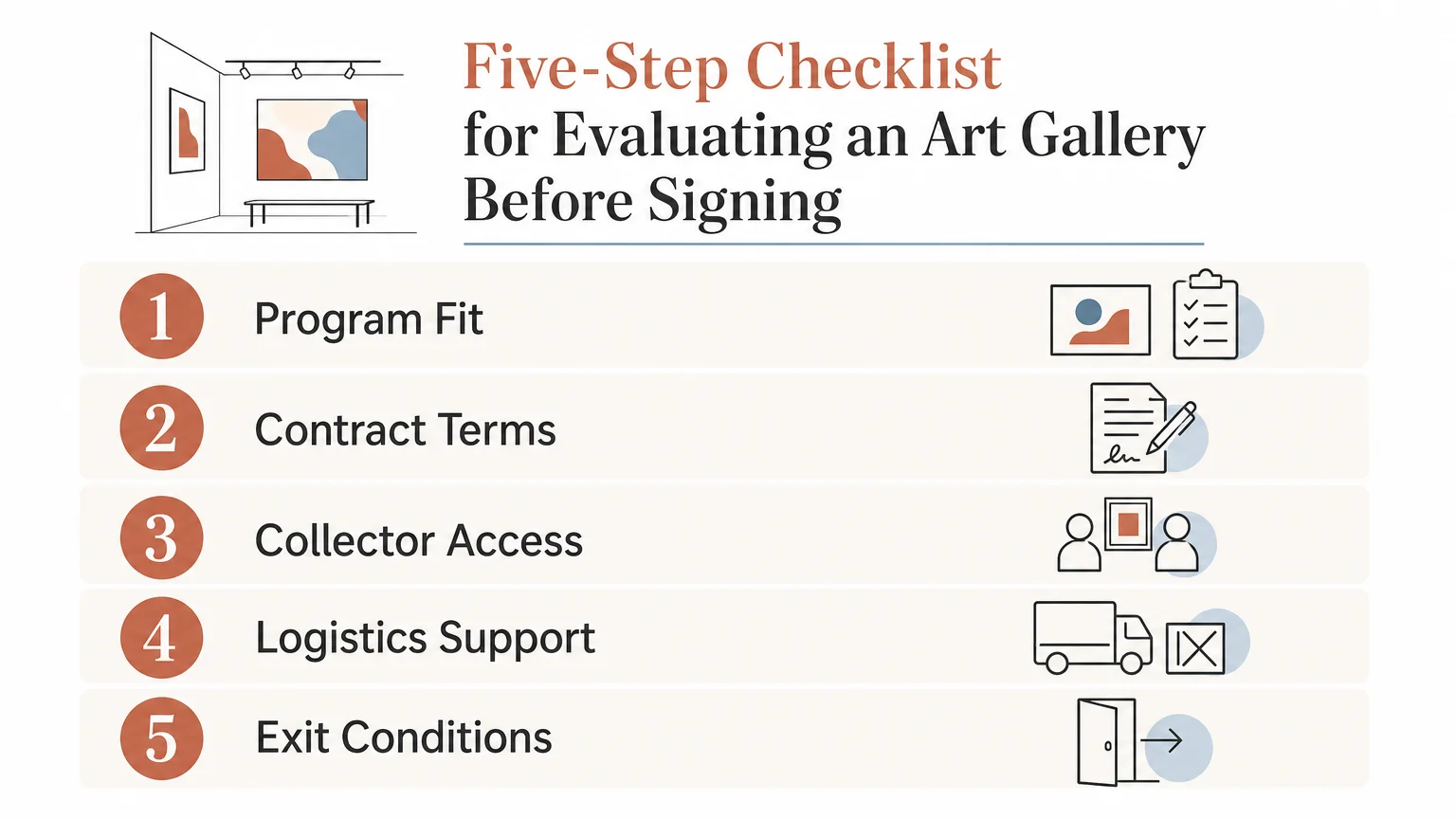
Ask what the gallery expects from you and what it commits to doing. A gallery that promises exposure without explaining the audience, channel, timing, or follow-up is difficult to evaluate. Likewise, a gallery that asks for exclusivity should explain why that restriction is necessary and what concrete support accompanies it.
Sales are never guaranteed. Even a respected gallery may have quiet periods, changing collectors, limited exhibition space, or competing priorities across its roster. Your decision should rest on the quality of the working relationship, the clarity of the agreement, and the realistic value of the support, not on a promise of immediate success.
For artists comparing programmes, practical terms can matter as much as artistic prestige. For example, our accepted artists receive 62% of each sale, while the gallery retains 38%. The programme evaluates the work, photography, pricing consistency, and artistic coherence rather than relying only on a résumé. Participation remains subject to acceptance, and the programme does not guarantee sales or physical exhibition.
Choose the structure that supports your practice
Artist gallery representation can help you reach collectors, present your work professionally, and reduce the administrative load around sales. It is not automatically the right path, and it should never require you to surrender your goals without receiving meaningful support in return. Compare the gallery’s programme, audience, commission, contract, communication style, and operational capacity. If those elements fit your practice, representation can become a useful partnership. If they do not, independent or hybrid work may give you more control and a better foundation for future growth.
Explore Gallery Representation for Your Art
If you are ready to show your work to a wider audience, look for a representation path that values your artistic coherence and supports the practical side of selling original art. The application process should be clear, accessible, and based on the work itself.
We accept applications from living painters, sculptors, and mural artists worldwide. Accepted artists receive curation, online listing opportunities, collector exposure, transaction and logistics support, and access to a digital catalogue. Applications can be submitted online from anywhere. Join the gallery as an artist and review the programme terms before applying. Sales are not guaranteed, and physical exhibition depends on the artist’s development and programme fit.
Frequently Asked Questions
What is artist gallery representation?
Artist gallery representation is an ongoing professional relationship in which a gallery promotes, presents, and sells an artist’s work. The agreement may also cover exhibitions, pricing, collector communication, logistics, shipping, and geographic or artistic exclusivity.
Do I need gallery representation to succeed as an artist?
No. You can build a career independently through direct sales, exhibitions, commissions, online channels, and collector relationships. Representation is one possible structure, not a requirement for having a serious or sustainable practice.
How do galleries choose artists?
Galleries usually consider the fit between your work and their programme, the coherence of your practice, the quality of your images, your pricing, and your ability to communicate professionally. A résumé can help, but it is not always the main factor.
What commission does an art gallery usually take?
There is no single universal rate because commissions depend on the gallery, market, services, contract, and type of sale. Review the percentage, discount rules, expenses, payment schedule, and pricing responsibilities before committing.
Can I apply to L’Original from outside Montreal?
Yes. Artists can apply and communicate online from anywhere, so a Montreal visit is not required to submit an application. Accepted artists may receive online exposure, Artsy access, transaction support, and possible physical exhibition, but acceptance, sales, and physical display are not guaranteed.