
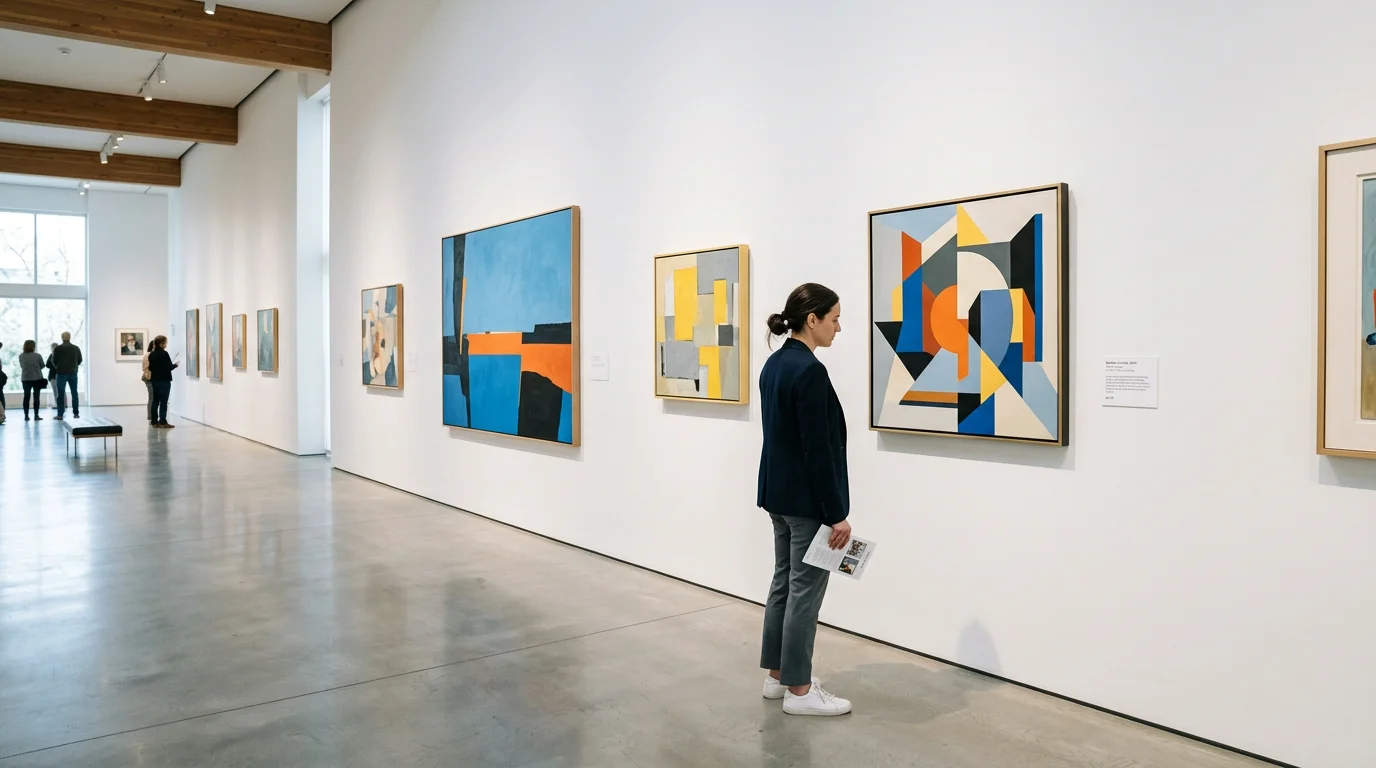

Here's a number worth sitting with: the average visitor gives any single label about ten seconds before moving on. That tiny window is where a sale is won or lost. A great art gallery description has to inform, connect, and nudge someone toward a decision, all in the space of a breath. Get the words wrong and even a stunning canvas can slide past unnoticed.
The good news is that writing gallery text is a craft with rules you can learn. As The Art Newspaper put it in 2026, the label is the beginning of a relationship, not the end of an explanation. Below, we break down what belongs on every label, how long it should run, and how to write descriptions that actually move original work.
What a gallery description is really for
At its simplest, an art gallery description is the text that lives beside an artwork and tells the viewer what they're looking at. But it does more than list facts. It answers the questions a visitor is too shy to ask out loud: Who made this? What is it made of? Why should I care? And, quietly, is it for sale?
Think of your wall label as a silent salesperson working the room while you're busy elsewhere. It builds trust through accuracy and warmth through story. When those two jobs pull in the same direction, a browser becomes a buyer.
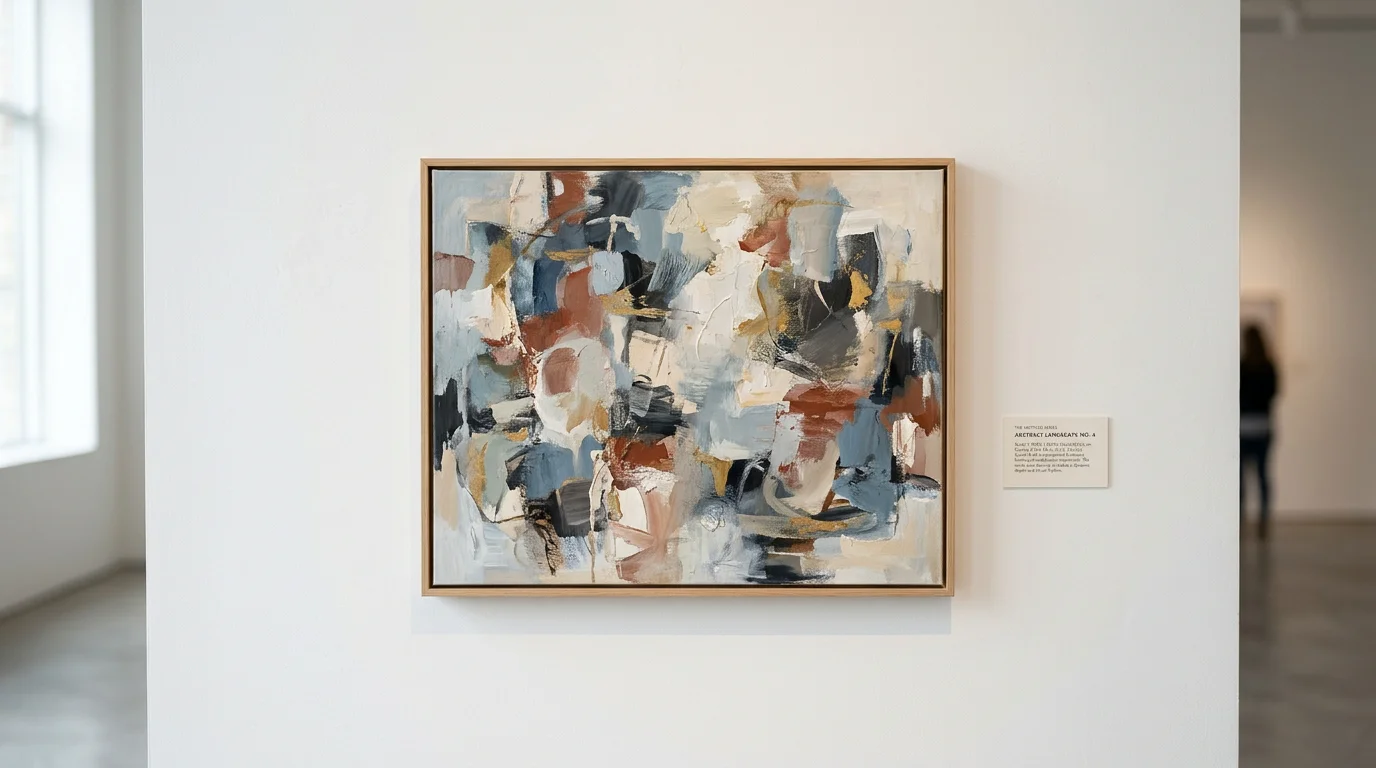
The building blocks every label needs
Before you get poetic, nail the facts. The core details, sometimes called the tombstone information, follow a consistent order across most galleries and museums. Keep them in the same sequence for every piece so visitors can scan without thinking.
- Artist's name, often with birth year for a living artist
- Title of the work, usually in italics
- Date the piece was completed
- Medium and materials, from "oil on linen" to more specific mixes
- Dimensions, listed height then width, then depth if relevant
- Price or credit line, placed at the bottom
That skeleton is non-negotiable. Everything else, the storytelling, the context, the emotional hook, hangs off it. Skip a field and you leave a collector guessing, which is the fastest way to lose a sale.
Why shorter labels almost always win
Here's where many galleries trip up: they write too much. A 2026 academic study published on Taylor & Francis, using mobile eye tracking at the Belvedere in Vienna, found that reader dropout climbs steadily as text gets longer, and that visitors engaged most with references to image details and technique.
Institutions have reached the same conclusion. A public gallery text guide from the Denver Art Museum notes that people read more and linger longer when labels are short and clear, and that a 2022 in-house evaluation showed visitors feel overwhelmed by too much information. A practical target is 70 to 80 words per artwork label, and 100 to 200 words for an introductory panel.
Write for someone with little to no art-history background. Cut the jargon. Tell one story, well, instead of five stories, badly.
Writing descriptions that connect
Facts inform, but story sells. The most effective exhibition text gives context without trying to explain every brushstroke, then points to something the viewer can actually find in the work. Describe the process, the moment it came from, or a single visual choice, and let the reader draw their own conclusion.
A few habits that keep descriptions human:
- Lead with the detail a visitor will notice first.
- Name the technique in plain language.
- Offer one story hook, not a biography.
- Read it out loud; if it sounds stiff, rewrite it.
When you're describing a custom or commissioned piece, this matters even more. A buyer who ordered a made-to-measure mural wants the description to reflect their brief. This is exactly the kind of end-to-end storytelling we build into every commission we handle, from the first concept to the finished wall.

Price it, and say so
One field does heavy lifting: the price. Hiding it behind "price on request" feels exclusive, but it often kills momentum. According to gallery marketing data compiled in 2026, 95% of surveyed collectors say seeing a listed price matters when buying online, and works with visible prices are reported to be roughly six times more likely to sell.
The lesson carries straight onto your physical labels. If a piece is for sale, put the number where a buyer can find it. Transparency signals confidence, and confidence closes. When work isn't for sale, simply leave the line blank or note the lender with a courtesy credit.
Adapting descriptions across formats
Your label doesn't live in one place anymore. The same core text may appear on a wall card, on the back of a canvas, on a website, and on a QR-linked page. Keep the tombstone facts identical everywhere, and adjust only the length of the story to fit the space.
For digital listings, you have room to expand the narrative and add provenance. For a crowded group show, trim to the essentials. The one rule that never bends: consistency of order and voice, so a collector who follows a piece from wall to website never feels like they've switched galleries.
Bringing it all together
A memorable gallery description is equal parts discipline and warmth. Lock down the tombstone facts, keep the story tight enough to survive a ten-second glance, write for a curious newcomer rather than an expert, and never make a buyer hunt for the price. Do those four things consistently and your labels will quietly do the selling for you, turning attention into genuine connection and connection into a sale.
Take action with L'Original
Great descriptions matter most when the work behind them is real. If you're looking for original, hand-made pieces or want to commission something built around your own concept, the words on the wall should reflect a genuine relationship with a living artist.
That's what we do. Through our PickArt artist matching, you can connect with a painter in about two minutes, buy an original signed artwork with no prints involved, or commission a custom painting or mural with end-to-end follow-up from brief to delivery. With 230 professional painters and 1,200 murals created worldwide, we help you find work worth describing, and a story worth telling.
Frequently Asked Questions
How long should an art gallery description be?
Aim for around 70 to 80 words on an individual artwork label, and 100 to 200 words for an introductory panel. Studies consistently show that shorter, clearer text keeps visitors reading longer, so trim anything that isn't earning its place.
What information must every artwork label include?
The essentials are the artist's name, the title, the date, the medium and materials, the dimensions, and the price or credit line. Keep this order consistent across every piece so visitors can scan effortlessly from one work to the next.
Should I display the price on the label?
Yes, if the work is for sale. Visible pricing builds buyer confidence and is strongly linked to higher conversion, while "price on request" often stalls interest. If a piece isn't available, simply leave the price line blank.
How do I write a description that feels emotional, not dry?
Give context without explaining every mark, then point to a single visual choice the viewer can actually find in the work. Describe the process or the moment behind the piece, and let the reader reach their own conclusion.
How do descriptions for commissioned work differ?
Commissioned and custom pieces should reflect the client's brief and the story of how the work came to be. For made-to-measure paintings or murals, we build that narrative in from the first concept, so the finished description mirrors the finished piece.