
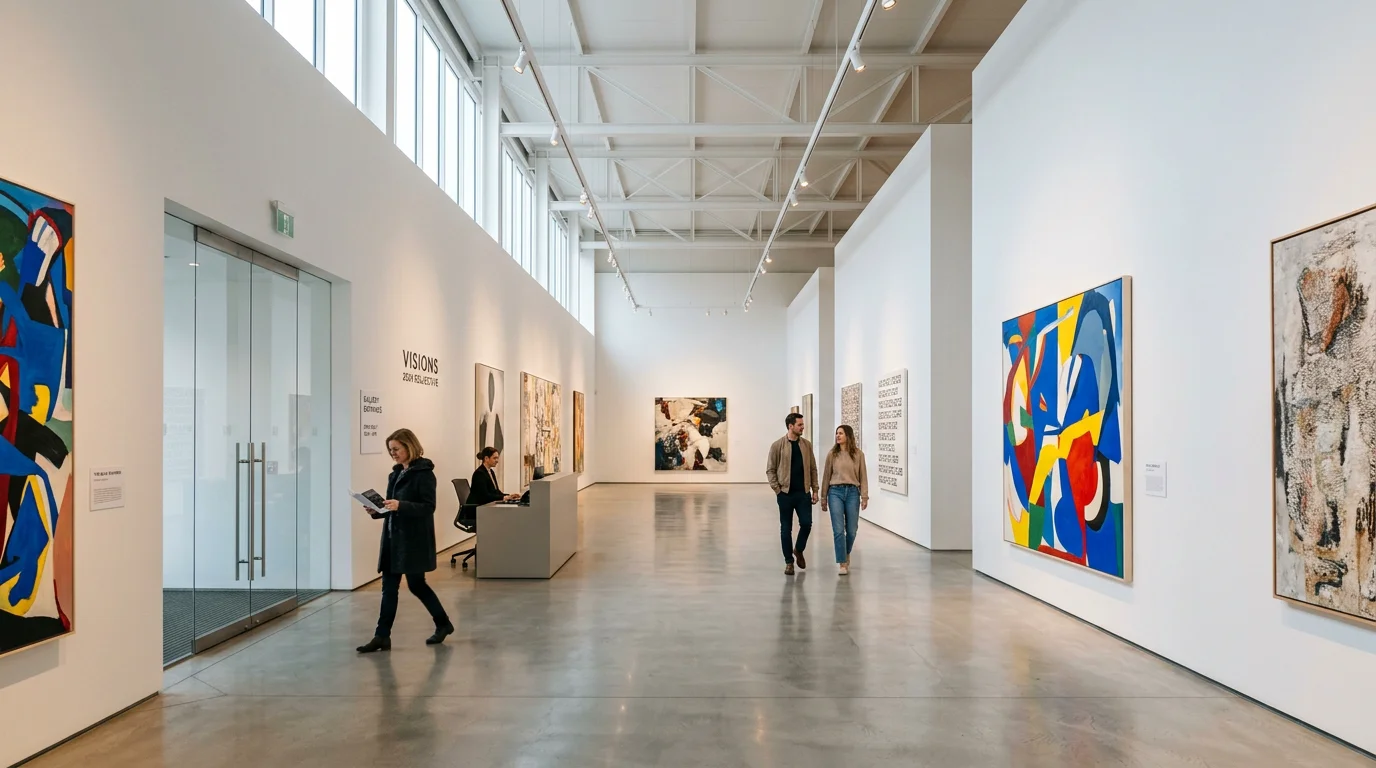

Ever walked past a gallery window, felt drawn in, then hesitated at the door? You're not alone, and you're not underqualified. An art gallery exists to connect people with original work, whether you're a first-time buyer or a seasoned collector. If you want a head start, you can Explore our galleries to see how a curated space actually feels in practice.
The stakes are bigger than they look. According to the Art Basel and UBS report, global sales rose 4% year-on-year to an estimated $59.6 billion in 2025, ending two straight years of decline. Behind that number sit thousands of galleries, artists and buyers navigating a market that's shifting back toward face-to-face discovery. Understanding how these spaces operate helps you buy smarter and enjoy the experience more.
What an art gallery actually does
At its core, a commercial gallery represents artists and sells their work. It's different from a museum, which collects and preserves rather than sells. A gallery curates shows, promotes its represented artists, prices the pieces and handles the sale, typically splitting revenue with the artist.
Galleries also tend to stick around. Artlyst reports that the average gallery has operated for twenty-six years, far longer than the typical lifespan of businesses in the US and UK. That longevity matters when you buy, because a stable dealer supports the artist's career and, indirectly, the long-term value of what you take home.
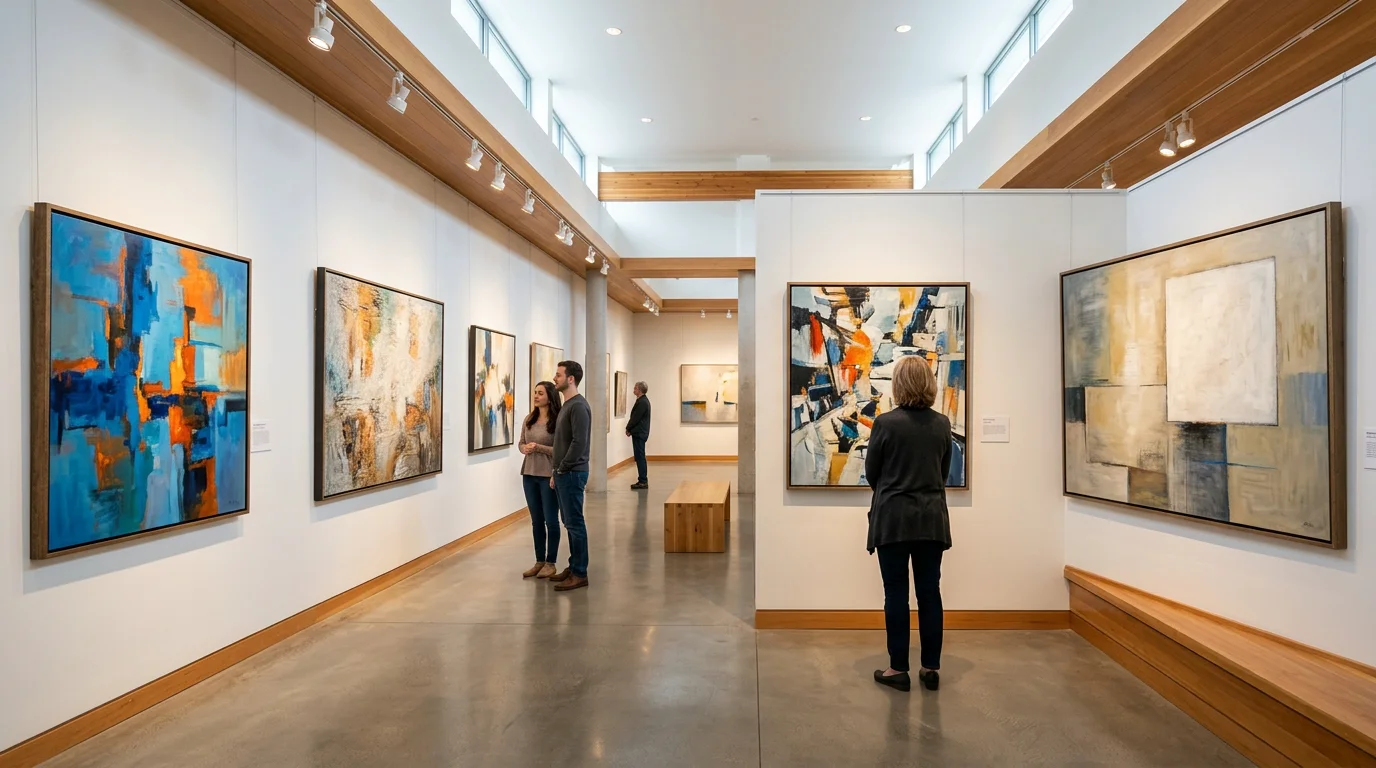
There's a broad spectrum here. Some spaces focus on contemporary art, others on street art, sculpture or works on paper. Mid-sized galleries make up a large share of the field, and many now blend physical exhibitions with online viewing rooms and fair appearances.
Where the art market stands in 2026
Numbers help set expectations before you buy. Analysts at Straits Research estimate the broader art market at $622 billion in 2026, projected to reach roughly $1,002 billion by 2034 at a 6.15% CAGR. That's the wide lens, covering galleries, auctions, fairs and services.
Zoom into galleries and the story gets more textured. Confidence is rebounding: heading into 2026, 43% of dealers expected their sales to improve, up ten points from a year earlier. Yet the recovery isn't evenly shared. Small and mid-tier galleries showing emerging artists remain the most exposed, and last year saw a number of high-profile closures.
Buyers are also staying closer to home. Galleries reported that local buyers and new collectors made up 49% of their clientele in 2025, a response to rising shipping, tax and logistics costs on cross-border deals. If you're shopping, that's good news: your regional scene probably has more depth than you'd guess.
Online versus in-person: the pendulum swings back
Remember when everyone predicted galleries would go fully digital? It didn't happen. Online sales declined to $9.2 billion in 2025, or 15% of the market, according to Art Basel's summary, the lowest share since 2019 and well below the 25% pandemic peak in 2020.
Meanwhile, art fairs strengthened their role, reaching 35% of dealer sales in 2025, up from 31% the year before. The takeaway is simple: people want to stand in front of the work. Scale, texture and color rarely translate through a screen, especially for higher-value pieces.
That doesn't make digital useless. Online viewing rooms are great for early research and for discovering artists you'd never find locally. The smart approach blends both, browsing online to shortlist, then visiting in person to decide. If you're curious about a niche, our Best street art gallery selection is a good place to start narrowing your taste.
How to buy from a gallery without feeling lost
Walking in and asking questions is expected, not rude. Galleries want engaged visitors. Start by telling the staff what draws you and what you're curious about; a good dealer will guide, not pressure.
A few practical habits go a long way:
- Ask about the artist: career stage, exhibition history and whether prices are rising over time.
- Request provenance and documentation: a certificate of authenticity and a clear invoice protect you later.
- Confirm what's included: framing, delivery, installation and any return or exchange terms.
- Prioritize originals: a handmade, signed piece carries value that a mass print can't match.
Budget doesn't have to be intimidating either. Entry-level originals from represented artists are more accessible than headlines suggest, and buyers today are notably deliberate about quality and provenance. Buy what you genuinely love, then let value follow.
Commissions, custom pieces and gallery spaces
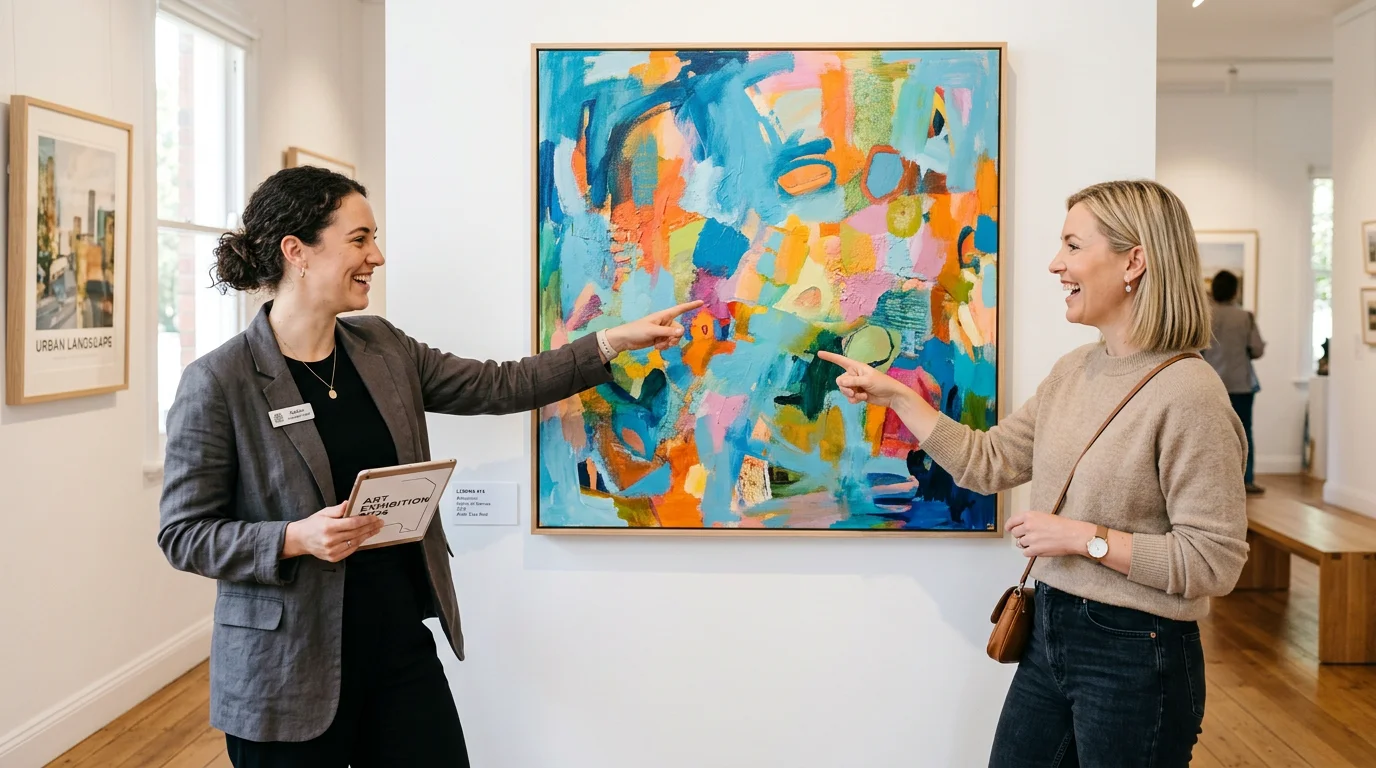
Sometimes the perfect work doesn't exist yet. That's where commissioning comes in. You share a concept, an artist develops it, and you get a made-to-measure piece built for your wall, lobby or facade. Timelines usually run a few weeks, and pricing depends on scale and medium.
This is where a matching approach helps. Instead of scrolling endlessly, our PickArt flow pairs you with an artist in about two minutes, then lets you buy an existing original or commission something custom with follow-up from brief to delivery. It removes the guesswork from finding the right hand for your idea.
Galleries also serve creators and businesses, not just buyers. If you're an artist or organizer needing a wall and an audience, our Gallery rental option turns a curated space into a venue for your own show or event.
How different gallery models compare
Not every gallery works the same way. Here's a quick comparison of common models against what we offer, so you can match a space to your goal.
| Model | Best for | Buying originals | Custom commissions |
|---|---|---|---|
| L'Original | Buyers and commissioners wanting a guided, handmade-only experience | Yes, matched to your taste | Yes, brief to delivery |
| Museum | Viewing and education | No | No |
| Auction house | Resale and rare lots | Yes, competitive bidding | No |
| Online-only platform | Broad browsing | Yes, remote purchase | Limited |
The right choice depends on whether you want speed, discovery, resale potential or a piece made specifically for you. For many first-time and returning collectors, a gallery that pairs handmade originals with commission options covers the most ground.
Bringing it all together
An art gallery is far more approachable than it appears from the sidewalk. The 2026 market rewards curiosity: sales are recovering, in-person discovery is back in favor, and local scenes are rich with talent. Ask questions, insist on documentation, and lean toward original, handmade work. Whether you browse to learn or buy to keep, treating a gallery as a conversation rather than a test is the fastest way to build a collection you'll actually love living with.
Take action with L'Original
Ready to move from browsing to owning something you love? We connect you with living artists and sell only signed, handmade originals, no prints, so every piece carries a real story. Whether you know exactly what you want or need a little guidance, we make the first step simple.
With PickArt, you can match with an artist in about two minutes, free and with no sign-up, then buy an original directly or commission a custom painting, sculpture or mural with follow-up from brief to delivery. Two Montréal locations, 230 professional painters and 1,200 murals worldwide back it up. When you're ready to buy an original artwork, we're here to help.
Frequently Asked Questions
What's the difference between a gallery and a museum?
A gallery represents artists and sells their work, usually taking a commission on each sale. A museum collects, preserves and exhibits art for the public but doesn't sell from its collection.
Do I need to be wealthy to buy from a gallery?
No. Entry-level originals from represented artists are more accessible than most people assume, and prices vary widely by artist and size. Our matched originals start around 680 $ CAD, so there's room for many budgets.
Is it better to buy art online or in person?
Both have a place, but in-person viewing is back in favor: online sales fell to 15% of the market in 2025. Browse online to shortlist, then visit to judge scale, texture and color before deciding.
Can I commission a custom piece instead of buying an existing one?
Yes. Many galleries, including ours, let you commission made-to-measure paintings and murals. You share a concept, an artist develops it, and delivery typically takes a few weeks depending on scale.
What documents should I get when I buy art?
Always ask for a certificate of authenticity and a detailed invoice showing the artist, title, medium and price. These protect your purchase and support resale value or insurance later.