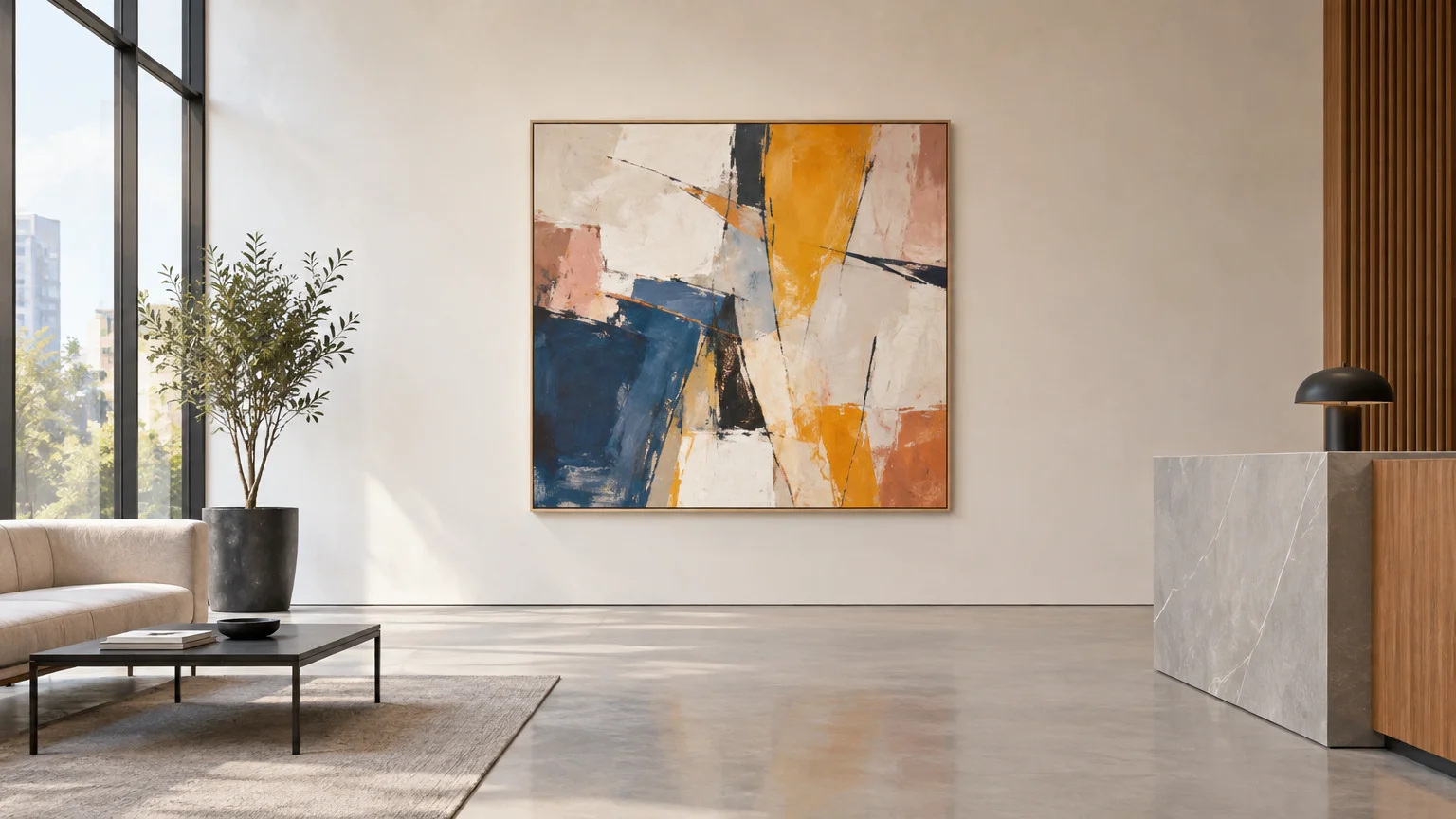

A blank lobby wall, a quiet meeting room, and a busy coworking area each call for a different visual choice. Start with what the space needs to communicate and how people use it, then consider whether an existing work, a custom piece, or a mural fits. If you’re planning an office project, art services for offices can help you explore options for the setting.
Art for business spaces is not one-size-fits-all. A painting or sculpture gives you a movable focal point; a commission lets you shape the subject and format; a mural becomes part of the wall itself. To narrow the choice, consider the audience, room function, available dimensions, surface, access, budget, and how the work will be maintained. These details matter as much as color or style, especially when the artwork sits in a shared or public-facing area.
Choose a format that suits the space
Imagine you’re furnishing a reception area with one broad wall and a clear focal point. An existing painting or sculpture could give the room presence without a site-specific installation. For smaller or changing spaces, a physical artwork is also easier to relocate if the layout changes.
- Original paintings and sculptures suit businesses looking for a one-off physical work. Check the listed dimensions, weight, mounting or display needs, and the wall or floor space available.
- Custom commissions are useful when you have a specific mood, subject, size, or business story in mind. You can describe the space and desired effect, then review a proposal and quote before work begins.
- Site-specific murals make use of a large wall and can be designed around the space, its audience, and its purpose. If you’re weighing that option, our article on custom murals for offices covers design, budget, and installation considerations.
A mural is not a substitute for a movable artwork: it is tied to its wall and depends on the surface and site conditions. For a public-facing outdoor example, Murale marine — Nanaimo shows a coastal scene created on a retaining wall. Treat it as an example of a specific installation, not a template for every business setting.

Design around people and the room’s purpose
A reception area makes a first impression; a meeting room supports discussion; a break area offers a pause from screens and tasks. Think about what people see from the entrance, where they sit, and how they move through the room. Choose a focal point that belongs in those sightlines, and leave enough visual breathing room for the space to feel considered rather than crowded.
Use the business identity as a guide, not a script. A color from your visual identity might appear in a painting, but repeating a logo or slogan is not the only way to make a room feel connected to your business. Consider the atmosphere you want, the people who use the space, and whether the subject feels appropriate in a client-facing setting. For hotels, restaurants, and other guest environments, you can also explore art services for hospitality spaces.
Look at the room’s existing materials, lighting, and furniture before settling on a palette. Strong contrast can make a work stand out, while related colors can help it sit naturally within the interior. View a potential piece at the distance people will see it, and check how changing daylight or artificial lighting affects its appearance.
Check dimensions, wall conditions, and access
Before you select a work, measure the wall and note doors, windows, furniture, switches, and circulation routes. Compare the artwork’s dimensions with the available area, and consider whether people will view it up close or from across the room. For a sculpture, also assess its footprint, visibility, and position relative to pedestrian flow.
For a mural, confirm the wall surface and site access before finalizing the design. The client must provide a clean and accessible wall. After assessment, you and the mural team determine who will handle any necessary preparation. A project plan should also address workspace protection, paint selection, and an appropriate protective finish for the location.
For a larger office project, record the wall measurements, surface, access constraints, and preferred installation window in one brief. That gives the artist or project team concrete information for assessing feasibility and preparing a proposal. It also makes it easier to identify questions before scheduling work.
Set expectations for budget, timing, care, and rights
A useful budget covers more than the artwork itself. Include framing or display needs, transport, installation, wall preparation if required, and any protective treatment. For commissioned work, ask what the quote includes and approve the proposal or concept before work begins.
For mural projects, most installations are scheduled for 2 to 5 working days. Size, design complexity, and access affect the timeline, so use the precise schedule provided before work starts. Keep the space accessible as agreed, and plan around the activity in nearby rooms. Delivery times for artworks are estimates and may vary.
Discuss care and image use before approving the project. Ask which finishes suit the location and what maintenance the work will need. For a mural, the agreement should clarify copyright and commercial use of artwork images; reproduction without authorization is prohibited. Made-to-order artworks are generally non-refundable and non-exchangeable except in exceptional circumstances, so review the approved specifications carefully.
Use a clear brief to guide your choice
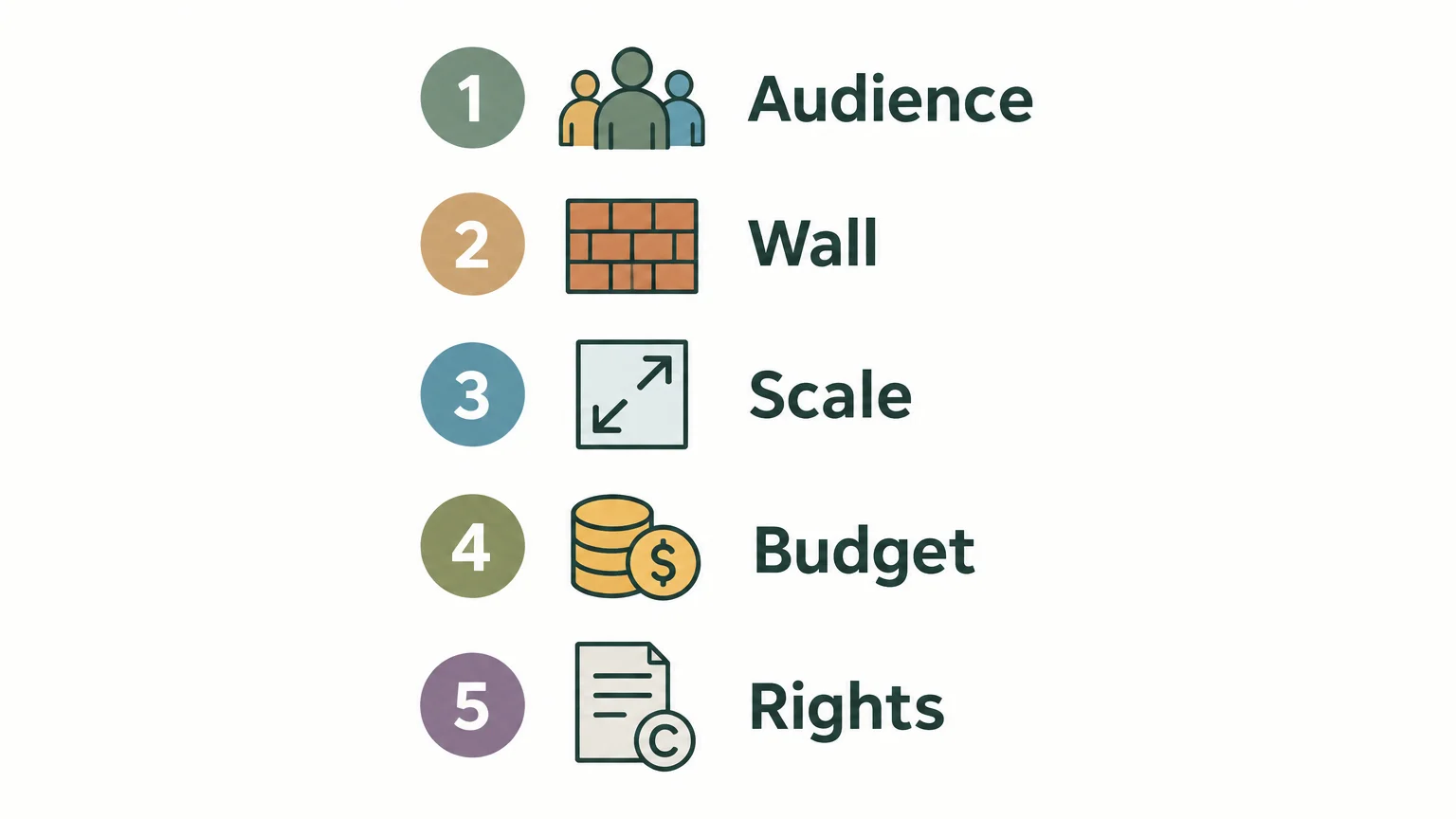
A strong project brief connects the room’s purpose with practical site details. Before you request a proposal or choose a listed work, write down:
- Audience and purpose: Who uses or visits the space, and what should the artwork contribute to the room?
- Style and atmosphere: Which subjects, colors, and visual qualities feel appropriate?
- Dimensions and surface: What are the measurements, wall material, and display constraints?
- Budget and schedule: What costs should the project include, and when does the space need to be ready?
- Care and image rights: What protection or maintenance is appropriate, and how may images of the work be used?
For a commission or mural, share reference images and explain what you want people to notice or feel. Our custom mural process includes artist matching, a proposal, a feasibility and wall-preparation assessment, scheduling, and project follow-up. You can discuss the idea and review the quote before committing.
Make the choice fit the space
Choose business artwork by matching its format and scale to the room, its audience, and the wall or display conditions. Measure first, decide what the project must include, and clarify timing, care, and image-use rights before approval. A concise brief gives you a practical basis for choosing an existing work, commissioning a piece, or planning a mural.
Plan art for your business space
If you have a blank office wall, a lobby to furnish, or a commercial surface to transform, start with the room’s purpose, measurements, and the atmosphere you want. We can help you consider existing original works, custom paintings or sculptures, and murals in relation to the space and project requirements.
Explore our business art services to discuss a project for an office, lobby, coworking area, hospitality setting, or another commercial environment. For mural work, we assess feasibility and wall preparation, clarify who handles preparation, coordinate scheduling, protect the workspace, and address protective finishes and commercial image use in the project agreement. You can request a consultation before deciding how to proceed.
Frequently Asked Questions
What type of art works well in a business space?
It depends on the room, audience, available space, and the atmosphere you want. Choose between an existing painting or sculpture, a custom commission, or a mural based on those needs.
Should I choose original art or commission a piece?
An existing original work is a practical option when its dimensions and style suit the space. A commission gives you a chance to describe a desired subject, mood, or format before reviewing a proposal and quote.
What should I check before commissioning a mural?
Confirm wall measurements, surface condition, site access, timing, and the project budget. The client must provide a clean and accessible wall, and preparation responsibility is determined after assessment.
How long does a business mural installation take?
Most mural projects are scheduled for 2 to 5 working days, with size, design complexity, and access affecting the schedule. You receive a precise schedule before work begins.
Can I use images of commissioned artwork in business materials?
Clarify copyright and commercial image use in the project agreement before using images of the artwork. Our custom mural service includes an agreement addressing copyright and commercial use of artwork images.